
Why Does My Eggless Cake Crack on Top? 5 Reasons to Check
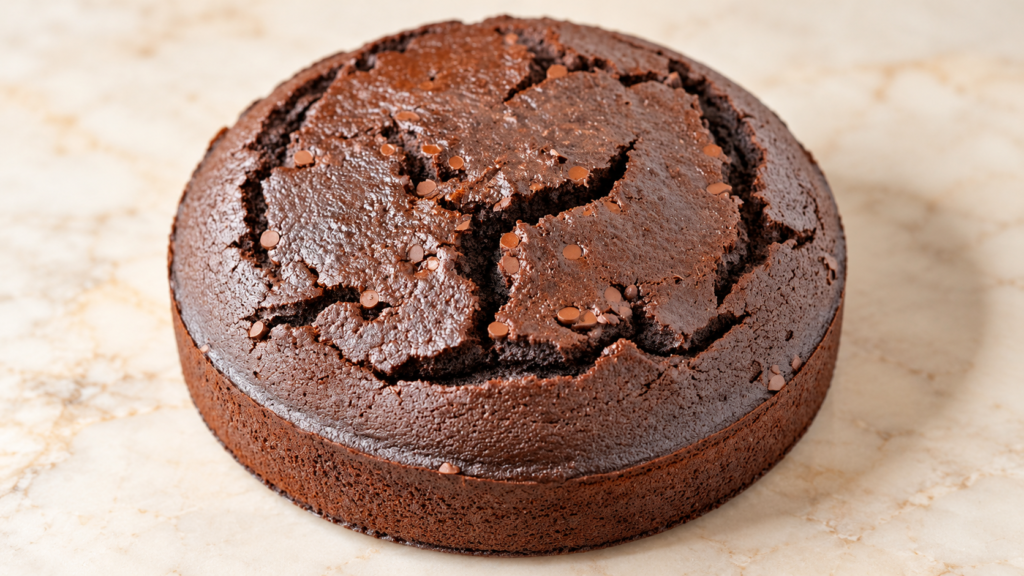
Why does my eggless cake crack on top even when I follow the recipe correctly? If you have experienced eggless cake cracking on top, the answer may lie in the oven temperature, batter depth, raising agents or the way the cake’s structure develops during baking.
A crack does not automatically mean the cake has failed. The crust, the shape of the crack and the texture of the crumb can help you identify what happened and how to fix a cracked eggless cake without changing several ingredients unnecessarily.
This article is part of my Eggless Baking Guide: Common Problems, Causes & Easy Fixes.
How to Diagnose a Cracked Eggless Cake
Before changing your recipe, examine the finished cake. These common causes of cracked cake can produce similar-looking results, so start with the clue that most closely matches what you see.
- Deep crack, dark crust and firm edges: Check whether the top browned unusually quickly. Inspect the oven temperature and heating mode first.
- High dome with a deep centre crack: If your eggless cake has a high dome, check the tin size and batter depth. A deep layer takes longer for heat to reach the centre.
- Rapid rise followed by sinking: Check the amount of baking powder or baking soda, then check whether the centre was fully baked.
- Dense crumb throughout: Review how you measured the flour and whether the ingredient proportions followed the recipe.
- Small crack with an evenly baked, tender crumb: The crack may be a normal result of expansion, so no adjustment may be necessary.
Use these clues to choose where to start. Change one factor at a time so you can identify what actually improves the result.
1. The Oven Is Too Hot
When an eggless sponge goes into the oven, the batter begins to expand while its structure gradually sets. If the surface sets before the centre has finished expanding, the growing cake may split the top as it continues to rise.
What to inspect first: Compare the browning on the top with the sides of the cake. If the top is noticeably darker, firmer or browning much faster, excessive heat or strong top heating is worth investigating.
Check the actual eggless cake oven temperature with an oven thermometer, if available, before changing the recipe. Then check the heating mode, rack position and distance between the cake tin and the top heating element. If the temperature is correct, the heating mode or rack position may be causing the surface to brown too quickly.
For practical guidance on preheating, rack placement and heating modes, see how to use an oven for baking correctly.
2. The Pan Is Too Small or the Batter Is Too Deep
The depth of the batter affects how quickly the centre heats and sets. In a deep layer of batter, the outside may be baked while the middle is still expanding. This difference in timing can contribute to a high dome or a deep crack across the top.
An overfilled tin presents a separate clue: the cake may rise above the rim or spill over the sides.
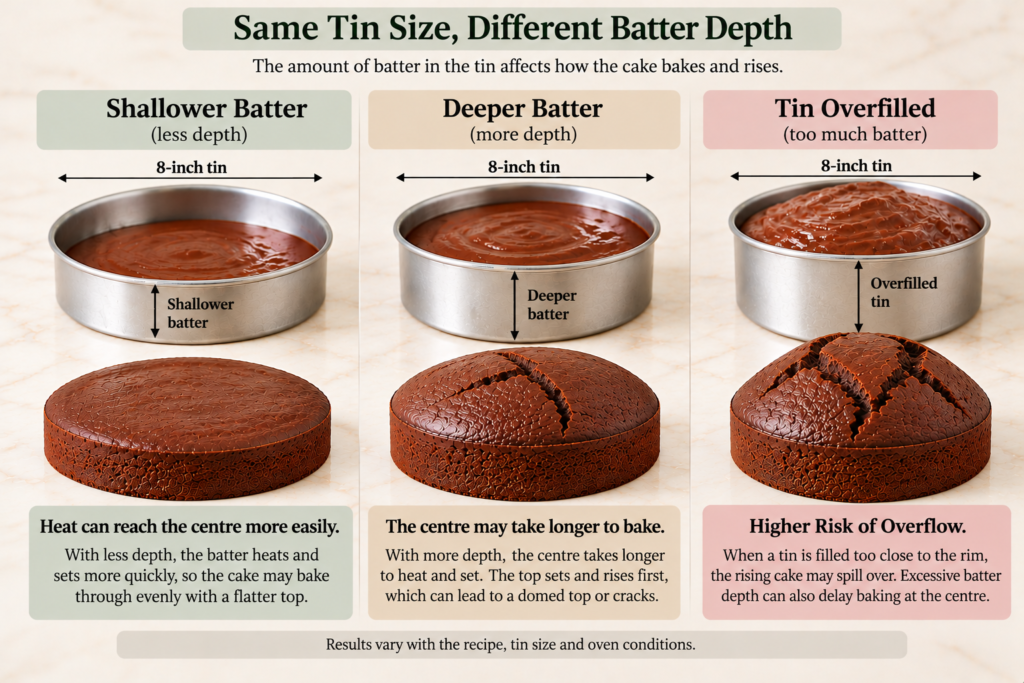
What to inspect first: Compare the tin with the recipe’s recommended size. Check whether the batter was deeper than intended or filled the tin too close to the top.
Use the correct tin size and leave enough room for the batter to rise. Do not change the raising agent simply to compensate for an unsuitable pan.
3. Too Much Baking Powder or Baking Soda
Raising agents help an eggless cake expand, but an excessive quantity can make it rise too quickly before its structure is strong enough to hold that expansion.
If your eggless cake rises and then sinks, look at the sequence of events. Did it rise unusually fast, develop a high dome and then collapse? A coarse crumb or an unpleasant bitter or alkaline taste can provide additional clues.
What to inspect first: Check the quantities of baking powder and baking soda against the recipe. Also check whether the centre was fully baked before you removed the cake from the oven.
Measure accurately and do not interchange the two raising agents without adjusting the recipe. If your cake rises and then collapses, read why does my eggless cake sink?
4. Too Much Flour Can Make the Sponge Heavy
A light sponge needs a balance between expansion and structure. During baking, the batter expands and gradually sets into a crumb that can hold its shape. Too much flour can make the batter heavier and the crumb tighter, leaving the cake less tender. The goal is not simply to make the cake rise, but to help it rise and retain a soft, even structure.
Excess flour is one possible reason for a compact, less tender crumb, but mixing, ingredient proportions, raising agents and baking conditions also affect the finished texture.
What to inspect first: Review how you measured the flour. Scooping directly from the packet can pack extra flour into a measuring cup. Weighing it according to the recipe is more reliable.
If your eggless cake batter seems unusually thick compared with the consistency described in the recipe, check the flour measurement and ingredient proportions before adding more liquid. The correct consistency depends on the particular recipe.
If you are wondering, “Why is my eggless cake dense?”, check the flour measurement and the balance of the other ingredients. For more help, read why is my cake dense?
5. The Crack May Be a Natural Part of Baking
Examine the cooled cake before deciding that the crack needs correcting. Sometimes, an eggless cake cracks on top as the batter expands during baking, and the crack does not necessarily indicate a problem.
What to inspect first: Cut into the cake and look at the crumb. If it is tender and evenly baked, with no gummy centre or unusually firm edges, a small crack is unlikely to require any correction.
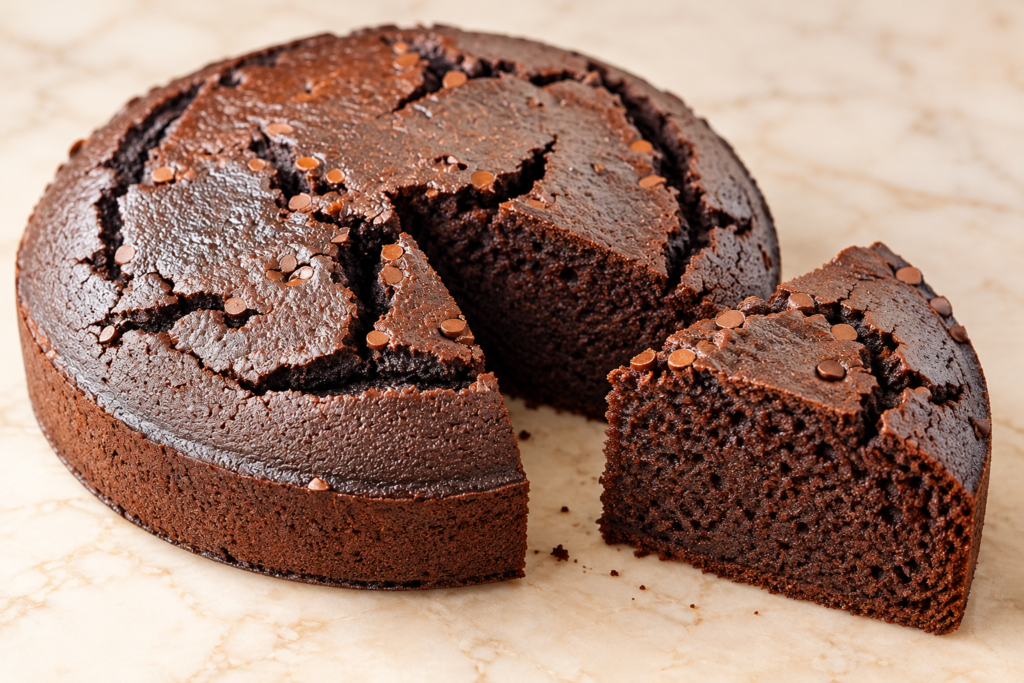
If the crack accompanies a dark crust or an underbaked centre, investigate the baking conditions instead. If the middle is gummy, read why does my eggless cake become gummy in the middle?
How to Stop Your Eggless Cake from Cracking
To reduce avoidable cracking in your next bake:
- Preheat the oven and check the temperature.
- Use the correct tin size and avoid overfilling.
- Measure flour and raising agents accurately.
- Check that the centre is fully baked before removing the cake.
These steps can help prevent cracking caused by baking conditions or ingredient imbalance, although a small crack may still occur naturally.
Can You Eat an Eggless Cake That Has Cracked on Top?
Yes. A crack on its own does not make an eggless cake unsafe to eat. If the cake is fully baked and has been handled and stored safely, the crack is usually a matter of appearance or texture.
If the cake is also dry, crumbly or hard after cooling, investigate the texture separately:
- Why is my eggless cake dry?
- Why does my eggless cake crumble?
- Why does my eggless cake become hard after cooling?
- How to bake a light, airy eggless sponge cake
Frequently Asked Questions
Why does my eggless sponge cake crack in the middle?
If your cake develops a deep crack on top, it may be expanding while the surface is setting. Excessive heat, a deep layer of batter or rapid expansion may contribute. Compare the crust, dome and crumb before deciding what to adjust.
Why does my cake crack and become hard?
A crack accompanied by a hard crust may indicate that the surface has been exposed to excessive heat or has baked for too long. Check the oven temperature and baking time. For a cake that becomes firm after cooling, see why does my eggless cake become hard after cooling?
Is it normal for an eggless cake to crack on top?
Yes. A small crack can be a normal part of expansion. If the cake has a tender, evenly baked crumb, there may be no problem to correct.
Final Thoughts
A cracked top is one clue; the crust, dome and crumb help you understand what happened inside the sponge. Inspect the evidence first, then make one targeted adjustment rather than changing several ingredients or oven settings at once.
Sharmila Sengupta | Baking Expert & Educator | 25+ Years of Baking Experience