
Why Is My Eggless Cake Sticky on Top? Diagnose the Real Cause
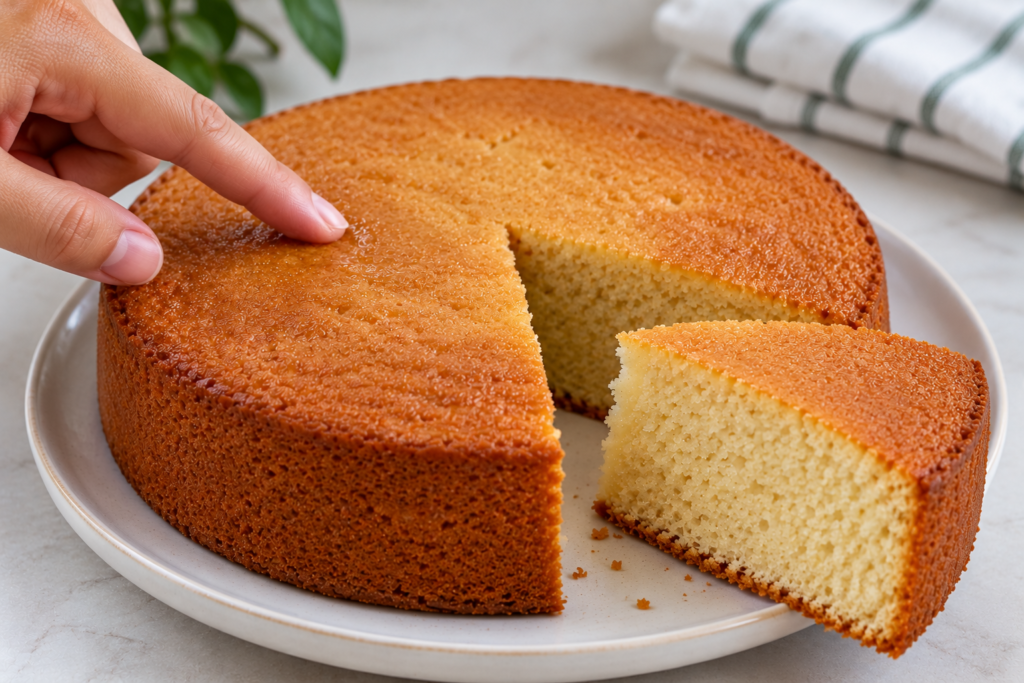
Your eggless cake looks perfectly baked, but the top feels sticky when you touch it. Should you put it back in the oven?
Not necessarily.
If you are wondering, “Why is my eggless cake sticky on top?”, begin by checking two things: when the stickiness appeared and what the crumb looks like underneath. These clues help you distinguish a cake that has not baked through from one whose surface has become tacky during cooling or storage.
During baking, the batter gradually develops its structure. If the centre has not baked sufficiently, the crumb may remain wet or unset. An unsuitable balance of liquid and dry ingredients can also leave the crumb overly moist or gummy. However, a sticky surface alone does not prove that the cake is underbaked or contains too much liquid.
If you are wondering why your eggless cake is sticky on top, humidity, cooling conditions and storage are also worth investigating. Identify the symptom before changing the recipe.
What Does the Sticky Top Tell You?
A sticky top does not always mean that your eggless cake is underbaked. First, check whether the centre is fully baked and the crumb has set. If the centre is still wet, investigate the baking time, actual oven temperature and batter depth. If the cake is fully baked but the surface remains tacky after cooling, the cause may be different.
Use the guide below to identify what you notice and what to investigate first.
| What you notice | What to investigate first |
|---|---|
| Sticky top with a wet or unset centre | Baking time, actual oven temperature and pan depth |
| Properly set crumb but tacky surface after cooling | Cooling conditions, recipe and humidity |
| Surface becomes sticky in humid weather | Possible moisture absorption from the air |
| Cake is dry before covering but sticky afterwards | Storage conditions and possible condensation |
| Sticky top with a gummy or pasty crumb | Baking conditions and recipe balance |
| Surface becomes sticky the next day | Storage, humidity and the cake’s original texture |
These observations help narrow down the possibilities, but they do not confirm a cause on their own.
1. Is the Centre Wet or Unset?
If the top looks done but the centre is still wet, underbaking is one possibility. Before extending the baking time, consider why the centre has not set.
Check the actual oven temperature. An oven that runs cooler than its setting may need more time to bake the centre. If the top browns quickly while the middle remains wet, the oven may be running too hot, the pan may be too close to the top heating element, or the cake may be too deep for the baking conditions.
Check the pan size and depth. Batter in a deeper pan takes longer to bake through than the same batter spread in a shallower pan.
Check your liquid measurements. Too much milk, water, yoghurt or another liquid can change the batter’s consistency and affect the crumb. The result may be an overly moist or gummy cake, particularly if it has not baked sufficiently. Excess liquid should not, however, be assumed to be the cause of a sticky top when the crumb is properly set.
Check the baking time. If the centre is still unset, follow the recipe’s doneness checks and allow more baking time as needed. Do not rely on the colour of the top alone.
If you bake regularly in an OTG, an oven thermometer can help you check whether the actual temperature matches the setting. My guide to the best OTG ovens for baking in India explains what to consider when choosing an oven for home baking.
If the crumb is properly set and only the surface feels tacky, more baking may dry out the cake without solving the problem.
2. Does the Surface Become Sticky During Cooling?
If the cake comes out of the oven with a normal-looking surface but becomes tacky as it cools, check the crumb before assuming that it needs more baking.
Once the cake has cooled sufficiently, inspect a slice.
- The crumb is set and holds its shape: Underbaking is less likely to be the main explanation. Examine the cooling conditions, recipe and possible environmental influences.
- The centre is wet or pasty: Revisit the baking time, actual oven temperature and ingredient measurements.
- The crumb is gummy throughout: Investigate the recipe balance and baking conditions rather than treating the surface as an isolated problem.
Follow the cooling instructions for your recipe. If the cake needs to cool on a wire rack, use one to allow air to circulate around it.
Avoid returning a fully baked cake to the oven simply because its surface feels sticky. Additional baking can dry the crumb without correcting the reason the surface became tacky.
3. Could Humidity Be Making the Cake Top Sticky?
Yes, humidity may contribute to a sticky cake surface. Sugar attracts moisture, and under humid conditions a cake can absorb moisture from the surrounding air. This may make the surface feel tacky even when the crumb is properly baked.
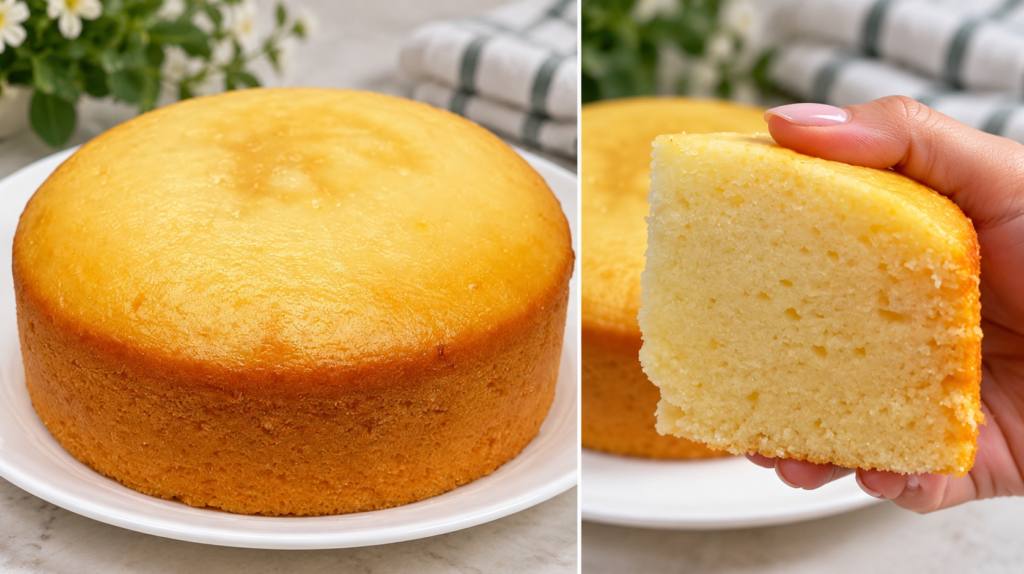
To investigate whether humidity is contributing, look for a pattern:
- Does the same recipe behave differently on humid and relatively dry days?
- Is the crumb properly baked when the surface becomes sticky?
- Has the recipe or cooling method changed?
- Does the stickiness develop while the cake is exposed to the air?
If the problem occurs mainly during humid weather, environmental moisture may be contributing. Compare the result with a successful batch before changing the recipe.
Do not reduce sugar or alter the flour blend simply because the top feels sticky. Those ingredients influence more than surface texture, and an unsupported adjustment may create a different problem.
4. Does the Cake Become Sticky Only After Storage?
If the surface was dry before covering but became sticky afterwards, check whether moisture collected inside the storage container.
A cake covered while still warm can release moisture that condenses on the cooler lid or container surface. That moisture may settle back onto the cake and make the top tacky.
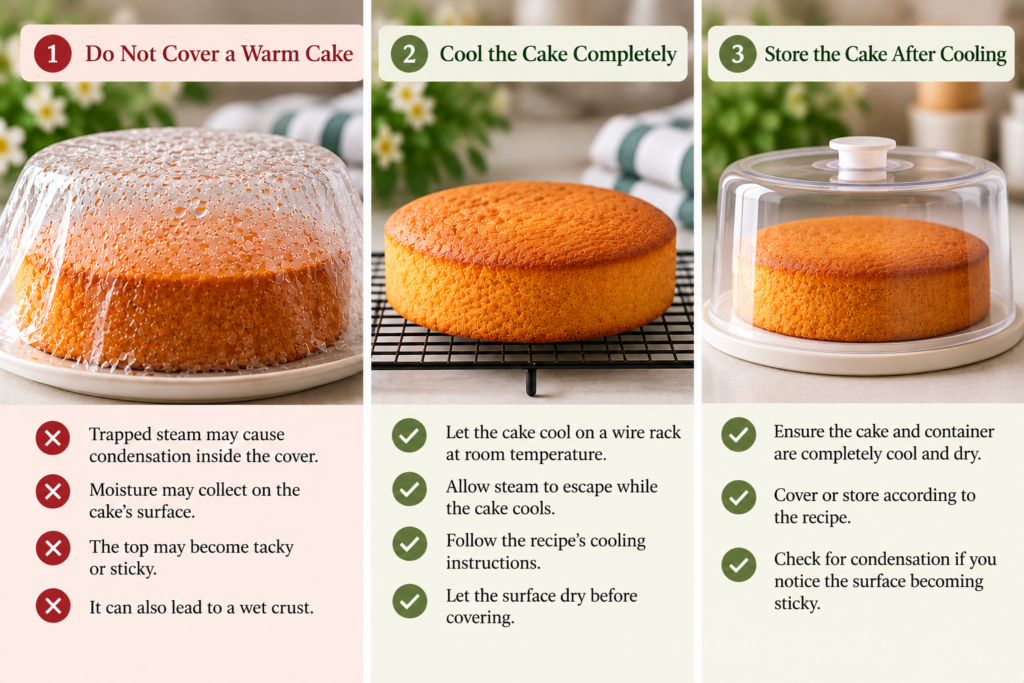
Check whether the cake was completely cool before covering, whether the container was clean and dry, and whether there was condensation on the lid or inside the container.
If the cake was completely cool and the container was dry, condensation is a less obvious explanation. Consider humidity, the recipe and the cake’s surface texture instead.
A dry surface that becomes sticky after covering points towards storage conditions, while a surface that was already sticky before storage needs a different investigation.
5. Is the Crumb Gummy as Well?
A sticky surface and a gummy crumb are not the same problem.
A cake can have a tacky top while the crumb underneath is properly baked. A gummy cake, on the other hand, may have a wet or pasty centre, feel dense and sticky inside, or leave a heavy residue on a knife even after cooling.
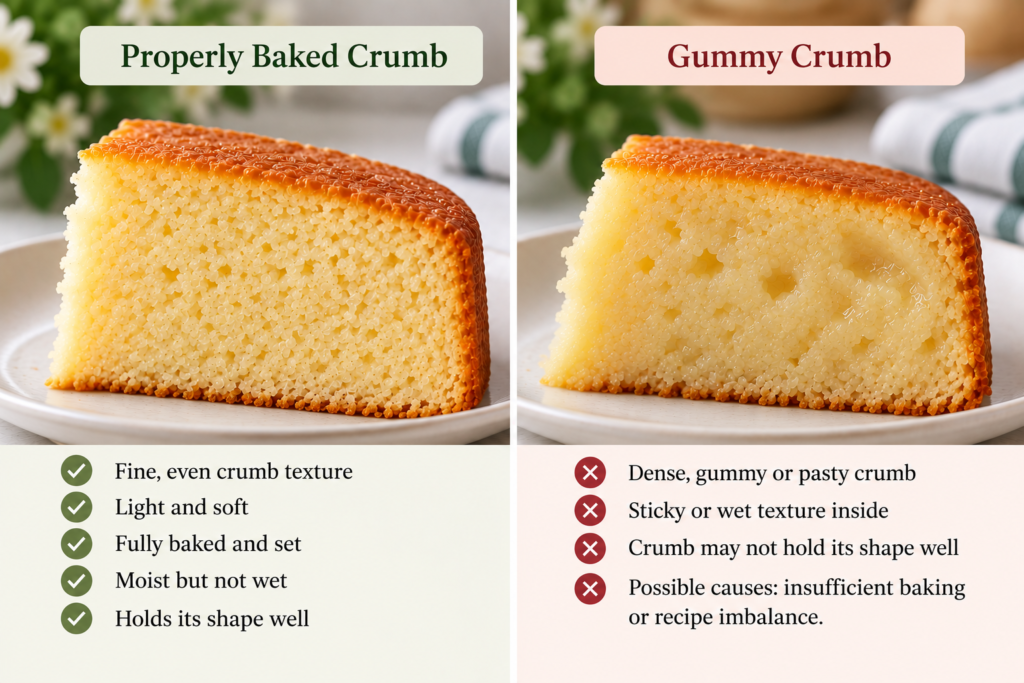
If the crumb itself is gummy, review the baking time, actual oven temperature, pan depth and accuracy of your ingredient measurements. Also consider whether the flour blend, starch, liquid quantity or another ingredient has changed.
In eggless and gluten-free baking, the flour blend, starches and binders influence moisture absorption and crumb structure. Their effects depend on the overall recipe, so a gummy crumb may require a closer look at the formulation rather than a single ingredient adjustment.
For a more detailed investigation of this separate symptom, read Why Is My Eggless Cake Gummy in the Middle?
6. Does the Problem Keep Returning?
If the same cake repeatedly develops a sticky top, compare a problem batch with one that turned out well. Look for differences before changing several ingredients or baking conditions at once.
Ingredients and measurements: Check whether the liquid quantities, flour blend, starches or sugar measurements have changed.
Baking conditions: Compare the actual oven temperature, pan size, rack position and baking time.
Cooling and storage: Consider whether the cake was cooled in the same way, covered at the same stage and stored under similar conditions.
Environmental conditions: Note whether the weather was more humid or the cake was exposed to the air for longer.
Make one change at a time and observe the result. This is more reliable than changing the liquid, sugar, flour blend and baking time together, because you will have a better idea of which adjustment made a difference.
Frequently Asked Questions
Why is my eggless cake sticky on top but cooked inside?
If the crumb is properly set, underbaking is not the only possible explanation. Check whether the surface became tacky during cooling, in humid conditions or after storage. The timing and texture together provide better clues than the surface alone.
Why is my cake sticky after storing overnight?
Check whether the cake was completely cool before covering and whether moisture collected inside the container. If the cake and container were dry, consider humidity and the recipe’s effect on surface texture.
Should I reduce sugar or oil if my eggless cake has a sticky top?
Not without identifying a likely cause. Sugar, fat and liquid all influence cake texture, but changing ingredients without checking the crumb, baking conditions and storage may create new problems.
Should I bake the cake longer if the top is sticky?
Only if there are signs that the cake is not fully baked. A wet or unset centre warrants checking the baking time and oven conditions. If the crumb is properly set and only the surface is tacky, more baking may dry out the cake unnecessarily.
The Takeaway
A sticky top does not automatically mean that your eggless cake is underbaked. Check the crumb and note when the stickiness appears. A wet centre points towards baking conditions and measurements; a surface that becomes sticky during cooling or after storage calls for a different investigation.
Identify the likely cause before changing the recipe. You will be better placed to make a useful correction in your next bake.
For more practical troubleshooting, explore the Eggless Baking Guide, where I cover common eggless baking problems and how to investigate them.
Sharmila Sengupta | Baking Expert & Educator | 25+ Years of Baking Experience