

Best OTG Oven in India for Baking (2026): Top Picks
Choosing the best OTG oven in India for baking can be confusing, especially when several models offer similar features but differ in capacity, heating controls, accessories and price.
If you enjoy baking cakes, cookies, bread, pizza or homemade snacks, the right oven can make your baking routine more convenient. But an OTG bought mainly for grilling, toasting or general cooking may not offer all the controls you prioritise for regular baking. When choosing an oven for cakes, bread and cookies, pay particular attention to temperature control, heating-element settings, usable interior space and rack position.
As a baking educator with over 25 years of experience, I recommend looking beyond the advertised capacity. An oven should accommodate your baking tins, give you practical control over the heat and suit the way you work in the kitchen.
In this guide, I have shortlisted six OTG models to suit different baking needs and budgets. I will also explain which features matter most for baking, how to choose the right capacity and what to check before making your purchase.
Which OTG Oven Should You Consider?
Your ideal OTG depends on what you bake most often, how much you bake and whether you need features such as convection.
-
For smaller batches: Consider the Pigeon 30-litre OTG if your regular baking tins fit comfortably.
-
For a larger oven with convection: Consider the AGARO Marvel 48-litre OTG.
-
For multiple heating options and a stainless steel interior: Consider the Croma 48L OTG.
-
For a 50-litre option: Consider the Pigeon 50L OTG if its heating functions, timer and warranty meet your baking requirements.
-
For a 52-litre oven: Consider the Morphy Richards 52RCSS after checking its heating options and usable interior dimensions.
-
For larger batches: Consider the Glen SA5060 60-litre OTG if you have sufficient kitchen space and electrical capacity.
My advice: If baking is your main purpose, choose an OTG based on the cakes, cookies and breads you make most often. Check the temperature control, heating options and usable interior dimensions rather than relying on capacity or advertised features alone.
Which OTG Is Right for Your Baking Needs?
The best OTG for home bakers is not necessarily the largest or most expensive model. Start by considering your usual recipes and equipment.
If you mainly bake cakes: Prioritise temperature control, suitable heating-element settings and enough room around your cake tin.
If you bake cookies and biscuits regularly: Look for a suitable baking tray, adequate rack space and enough usable width for the batches you prepare.
If you bake bread: Check the internal height and depth, especially if you use loaf tins or bake larger loaves.
If you bake eggless or gluten-free cakes: Look for practical temperature control and suitable heating options. Remember that ingredient ratios, moisture, tin size and baking technique also influence the final texture.
If you bake in larger batches: Compare the usable interior dimensions and rack arrangement, not just the litre capacity.
Before choosing a model, identify the items you bake most often and measure the largest tin you regularly use. These two details will help you narrow your options more effectively than capacity alone.
Planning to Bake Eggless Cakes in Your New OTG?
Choosing the right OTG is important, but consistent baking results also depend on understanding your ingredients, measurements, mixing methods and oven temperature.
Eggless cakes can sometimes turn out dense, dry, sunken or gummy, even when you follow a recipe carefully. The reasons may lie in ingredient proportions, mixing methods, raising agents or baking conditions.
In my Eggless Baking Guide: Common Problems, Causes & Easy Fixes, I explain why these problems occur and share practical ways to correct them.
Whether you are buying your first OTG or upgrading your existing oven, this knowledge will help you get more out of your baking.
OTG Ovens in India: Six Models to Compare
The following models cover different capacity ranges and features. This comparison is intended to help you shortlist options; it does not imply that every model has been independently tested for baking performance.
1. Pigeon OTG 30 Litre with Rotisserie
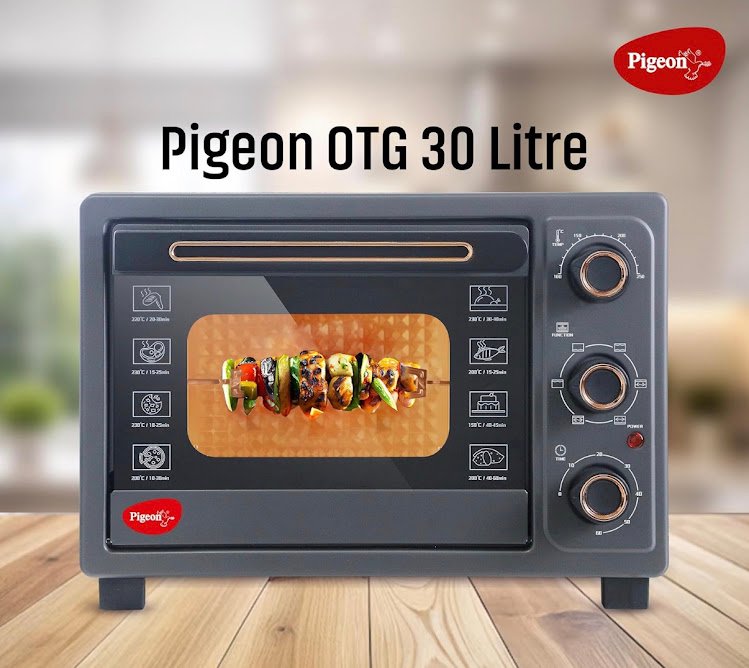
Best for: Home bakers who want a more compact oven.
The Pigeon 30-litre OTG is worth considering if you bake in smaller quantities and do not need a large oven cavity. Its listed features include adjustable temperature control, a 60-minute timer, a heating-element selector, a removable crumb tray and a rotisserie.
Key specifications
- Capacity: 30 litres
- Temperature range: 100°C–250°C, as listed
- Timer: 60 minutes
- Heating-element selector: Three-stage switch
- Additional features: Rotisserie, indicator light and removable crumb tray
- Listed warranty: One year
Why consider it?
A 30-litre oven may be sufficient for smaller cakes, cookies and everyday home baking, depending on the dimensions of your tins. It can be a practical starting point if you are learning to bake at home.
Before buying: Check the available heating combinations, included accessories and current selling price.
Check the Pigeon 30-litre OTG on the manufacturer’s website
2. AGARO Marvel 48 Litres OTG
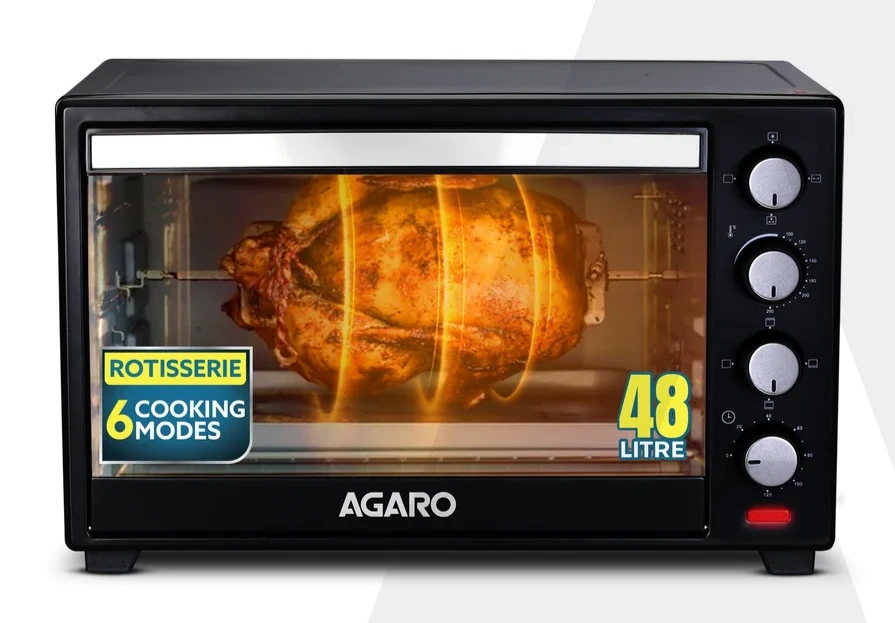
Best for: Home bakers who want a larger oven with convection and multiple heating options.
The AGARO Marvel 48-litre OTG offers a combination of capacity and features that may suit households baking a variety of items. Its product listing specifies convection, rotisserie and three heating modes.
Key specifications
- Capacity: 48 litres
- Power: 2,000W
- Temperature range: 100°C–250°C
- Heating modes: Top, bottom, and top-and-bottom heating
- Additional functions: Convection and rotisserie
- Timer: Up to 120 minutes
- Listed warranty: One year
Why consider it?
The larger capacity may be useful if you regularly bake larger cakes, pizzas or multiple items, provided they fit comfortably inside the cavity. The heating-element selector gives you more control over which elements operate.
Convection circulates hot air inside the oven and may help distribute heat. It does not eliminate the need for correct rack placement, preheating and recipe-specific temperature adjustments.
Before buying: Verify the current price, delivery availability, accessories and warranty terms.
Check the AGARO Marvel 48-litre OTG
3. Croma 48L OTG
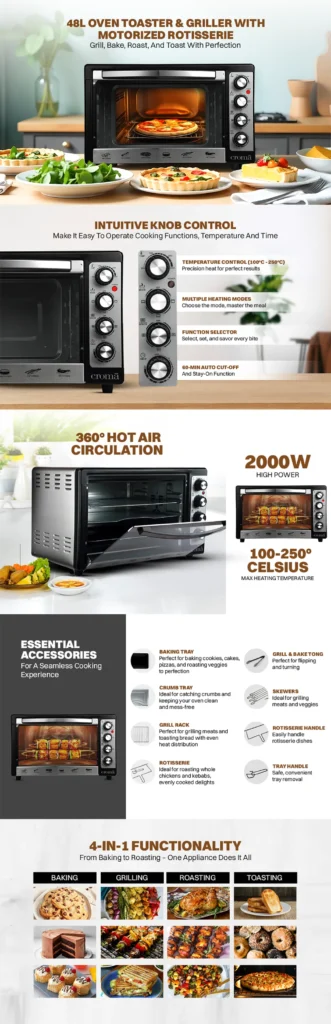
The Croma 48L OTG is worth considering if you want an appliance for home baking as well as grilling, toasting and roasting. It offers four heating modes, convection functionality, adjustable temperature control and a motorised rotisserie.
Here is what I would consider before choosing this model, particularly if you plan to bake cakes, cookies and breads.
1. Heating Modes and Temperature Control
This Croma OTG has four heating modes and adjustable temperature control up to 250°C.
When choosing an OTG for baking, I would first look at the heating options. Different recipes need different heating arrangements, so it is important to understand which elements operate in each mode and which setting the manufacturer recommends for baking.
Before buying, check the instruction manual for the exact heating combinations. This will help you choose the appropriate setting for cakes, cookies and breads.
I also strongly recommend using an independent oven thermometer. Set the OTG to 180°C, allow it to preheat fully and then check the actual temperature inside. Repeat the test to see whether the oven maintains a reasonably consistent temperature. This will help you understand how closely the selected temperature matches the actual oven temperature.
2. Convection Heating: What Should a Baker Know?
This Croma OTG is listed as a convection model. Convection heating uses a fan to circulate hot air inside the oven. It can be useful for baking and roasting, but its effect depends on the oven design, fan operation and recipe.
I would not automatically rule out a convection OTG for delicate cakes. If you regularly bake eggless or gluten-free cakes, observe how the convection setting affects browning and baking time.
The following symptoms can offer clues about how your oven is performing. They are not proof of a particular oven fault; recipe formulation, tin size, rack position and baking technique can also affect the result.
- Cake browns on top but remains underbaked inside: Check the rack position, the distance between the tin and upper heating element, and whether you have selected the recommended heating mode. Moving the tin one rack lower may help if it is too close to the upper element, provided the manufacturer’s instructions allow it. If the problem continues, refer to the temperature check in Section 1.
- Cake is evenly browned but gummy in the centre: Check whether the cake is fully baked and whether you have used the correct tin size and depth. Allow it to cool completely before slicing, as a warm eggless cake can have a delicate crumb. If it remains sticky or pasty after cooling, look at the baking time, moisture balance and recipe structure. You can also read my guide on Why Is My Eggless Cake Gummy in the Middle? Causes and Easy Fixes.
- Cookies on one side of the tray brown faster: The oven may have a hot spot, but first rule out differences in the cookies themselves. For a useful test, keep the cookie size, thickness, spacing and tray placement consistent. Bake a small batch and note which positions brown first. Repeat the test. If the same area consistently browns faster, it may indicate uneven heat distribution.
- Cookies brown faster than usual across the entire tray: Before blaming the convection setting, compare the results with a familiar cookie recipe baked under the same conditions. Keep the dough thickness, cookie size, tray material and spacing consistent. If the cookies still brown faster, check the actual oven temperature and consider whether convection is affecting the baking time. Avoid reducing the baking temperature or time until you have identified what is causing the difference.
Before buying, I would also ask Croma whether the convection fan can be switched off and which heating settings it recommends for cakes, cookies and breads. This is particularly useful if you enjoy making delicate cakes.
3. 48-Litre Capacity: Will Your Baking Tins Fit?
A 48-litre capacity sounds generous, but I would not choose an OTG based on capacity alone. What matters is the actual usable space inside.
The listed internal cavity dimensions for this model are approximately 43.3 cm wide, 34.8 cm deep and 30.3 cm high.
Before purchasing, measure the largest cake tin and loaf pan you regularly use. Compare their length, width and height with these internal dimensions. Make sure they fit comfortably, with enough space around them for hot air to circulate.
Also check the distance between the rack positions and the upper heating elements. A tall cake tin or bread loaf should have enough clearance and should not sit too close to the top element.
If you often bake cookies or other items on trays, check whether the supplied baking tray and usable rack space will accommodate the quantities you normally bake.
These small checks before buying can save you considerable inconvenience later. After all, an OTG should suit the way you bake, not the other way around.
4. Motorised Rotisserie and Accessories
The motorised rotisserie is useful for roasting whole chicken and kebabs. The listed accessories include a crumb tray, baking tray, wire rack, grill rack, skewers, rotisserie rod, rotisserie handle, tray handle and grill-and-bake tong.
If baking is your main purpose, I would give greater importance to the baking tray, usable oven space and heating controls. The rotisserie is an additional convenience rather than a deciding factor.
5. Controls, Interior Light and Timer
The OTG has knob-operated controls for temperature, function selection and timer settings. It also includes an interior light and a 60-minute timer with a stay-on function.
The interior light is useful for checking the cake’s rise and surface colour without repeatedly opening the oven door. This lets you monitor the bake without unnecessarily disturbing the oven temperature.
Specifications at a Glance
| Feature | Details |
|---|---|
| Model | CRSO48LOGA347573 |
| Capacity | 48 litres |
| Power | 2,000W |
| Temperature control | Adjustable, up to 250°C |
| Heating modes | Four modes |
| Oven type | Convection and grill |
| Rotisserie | Motorised |
| Controls | Knob-operated |
| Timer | 60 minutes with stay-on function |
| Interior | Stainless steel |
| Internal cavity dimensions | 43.3 × 34.8 × 30.3 cm |
| Accessories | Baking tray, crumb tray, wire rack, grill rack, skewers, rotisserie accessories and handles |
| Warranty | 2 years |
My Baking Advice
If you are buying this Croma OTG mainly for baking, pay attention to the heating modes, convection settings and usable internal space. Once you start using it, keep a note of the rack positions and baking times that give you good results.
For those considering the Croma 48L OTG for home baking, here is the product link. You can check the features, specifications and current price before deciding.
Croma 48L OTG:
https://www.croma.com/croma-48l-oven-toaster-grill-with-4-autocook-menus-black-silver-/p/317313
Do check the internal dimensions and heating options to make sure they suit your baking needs.
The best way to get consistent results is to understand your oven before changing a recipe that already works.
4. Pigeon Oven Toaster Grill 50 Litres
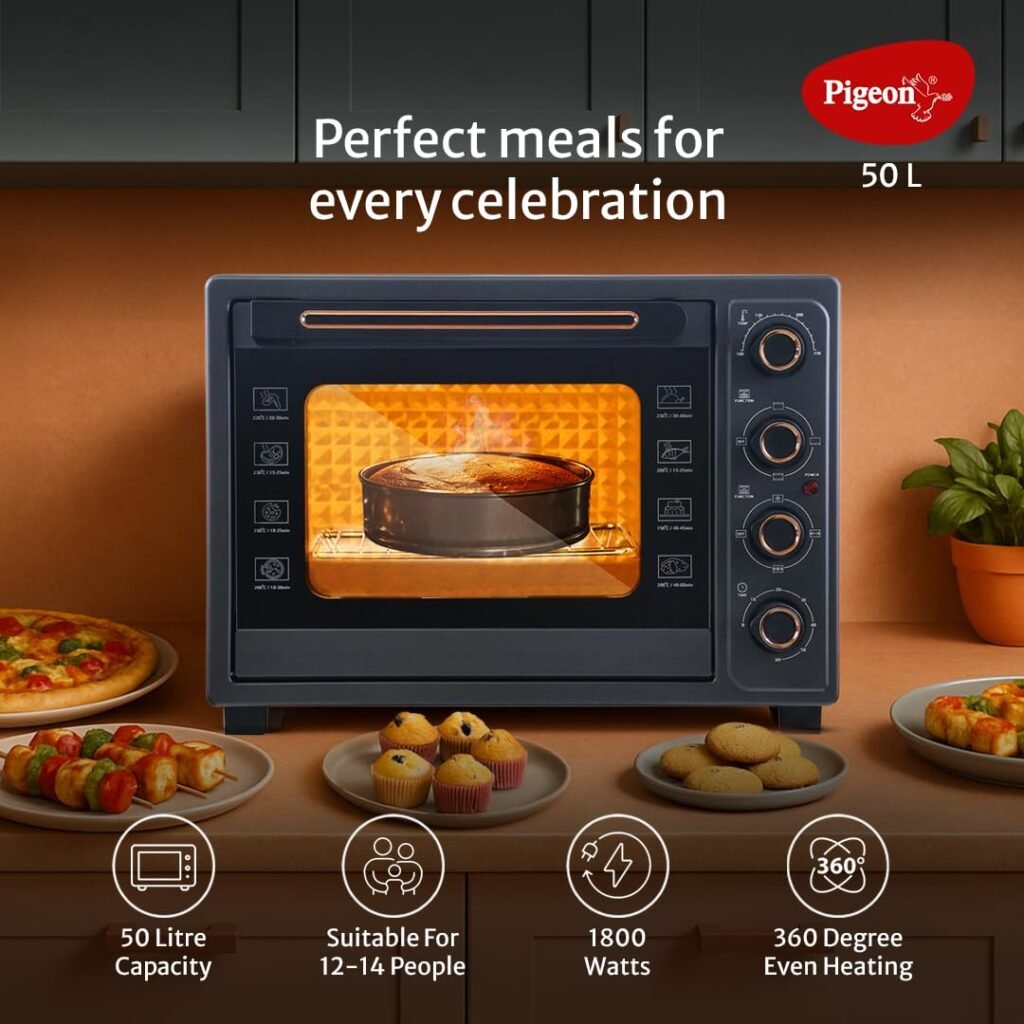
Best for: Buyers comparing larger-capacity OTGs from Pigeon.
The Pigeon 50-litre OTG is another model to consider if you want a larger oven cavity. Its heating functions and timer should be checked against the exact model listing rather than inferred from its capacity.
What to compare
- Capacity: 50 litres
- Temperature range: Confirm on the current product listing
- Heating-element selection: Confirm the available modes
- Convection: Confirm whether it is included in the exact model
- Timer and accessories: Check the current listing
- Warranty: Confirm the applicable terms
Why consider it?
A 50-litre oven may offer more flexibility when you bake larger quantities. However, usable interior dimensions matter more than the capacity figure alone when you need to fit a particular cake tin, pizza tray or loaf pan.
I would compare this model with the AGARO Marvel 48-litre OTG on actual features, usable space, warranty and price rather than assuming that the extra two litres automatically make it the better choice.
Before buying: Confirm the exact model name and specifications with the manufacturer or seller.
Check the Pigeon 50-litre Oven Toaster Grill
5. Morphy Richards 52 Litres OTG (52RCSS)
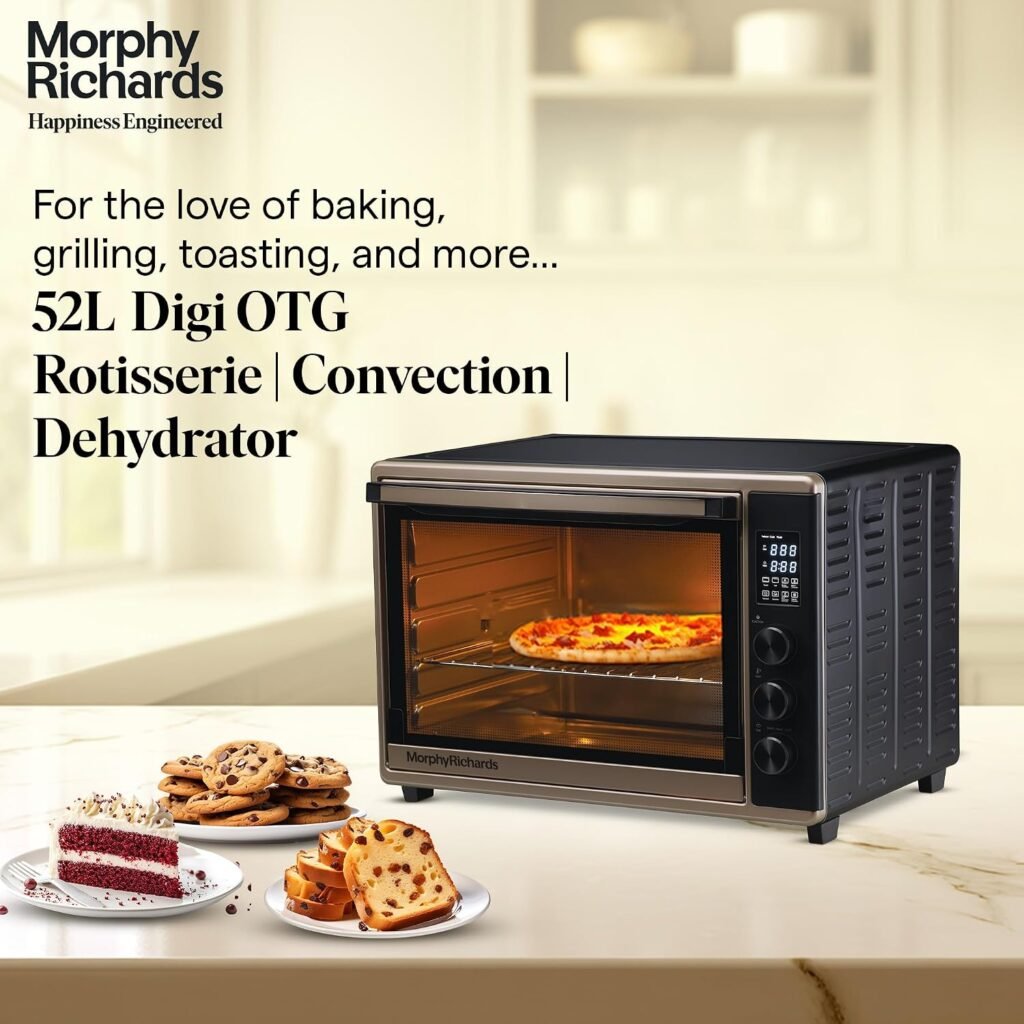
Best for: Buyers comparing a larger-capacity Morphy Richards oven.
The Morphy Richards 52RCSS is worth comparing if you want a 52-litre OTG. Before buying, confirm that the retailer’s listing refers to the exact model you intend to purchase. Specifications and warranty terms should not be transferred from another variant.
What to check
- Capacity: 52 litres
- Convection: Confirm for the exact model
- Rotisserie: Confirm for the exact model
- Power rating: Check the product label or current technical specification
- Timer and heating-element controls: Verify the available functions
- Warranty: Confirm the manufacturer’s applicable terms
Why consider it?
The 52-litre capacity may suit households that bake regularly or prepare larger batches. The important question is whether the actual features match your baking needs and whether the oven fits comfortably on your kitchen counter.
For cake baking, I would give more importance to predictable temperature control, suitable heating-element combinations and enough room around the baking tin than to the brand name alone.
Before buying: Compare the retailer’s description with the manufacturer’s model details, and confirm the power rating, warranty and included accessories.
View the Morphy Richards 52RCSS at Croma
6. Glen Oven Toaster Griller 60 Litre (SA5060)
Glen 60-litre OTG with adjustable controls, suitable for a range of cooking and baking tasks.
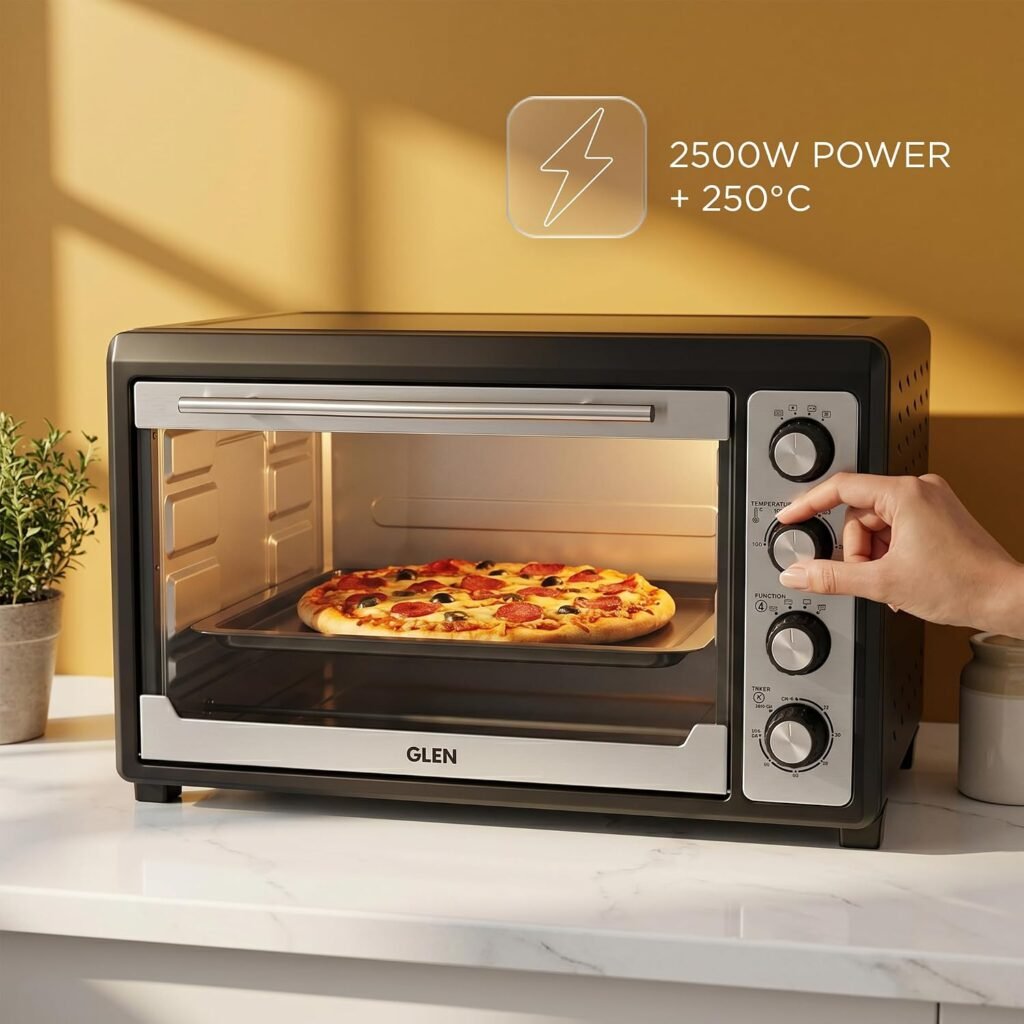
Best for: Home bakers who need more room for larger baking items and batches.
The Glen SA5060 is a 60-litre OTG with a 2,500W power rating, a convection fan and a motorised rotisserie. Glen Appliances has confirmed that it is suitable for baking cakes, breads, cookies and pizzas, as well as grilling, roasting and toasting.
Key specifications
- Capacity: 60 litres
- Power: 2,500W
- Temperature range: 90°C–250°C
- Heating elements: Top, bottom and both, as listed on the product page
- Additional features: Convection fan and motorised rotisserie
- Accessories: Oven tray and wire rack
- Warranty: Two-year standard manufacturer warranty
- Timer: Awaiting confirmation from Glen Appliances
What should you consider before buying?
If you regularly bake larger cakes, breads or bigger batches, the 60-litre capacity gives you more room to work with. The convection fan and selectable heating elements offer flexibility for different cooking tasks.
However, capacity alone should not decide your choice of OTG. Temperature accuracy and heat distribution matter just as much for baking, while tray placement and the recipe you follow also affect the results.
At 2,500W, check your kitchen’s electrical requirements before buying. Confirm the installation dimensions with Glen as well, since the height measurements supplied so far are inconsistent.
Check the Glen SA5060 60-litre OTG
Product note: Specifications above are based on information supplied by Glen Appliances and details listed on its product page. Prices and availability may change. Confirm the exact model and current terms before purchasing.
What Capacity OTG Do You Need for Home Baking?
The capacity you need depends on the size of your baking tins, the number of items you prepare and the space available in your kitchen.
| OTG capacity | May suit | What to consider |
|---|---|---|
| Around 30 litres | Smaller batches and everyday home baking | Usable cavity and tin dimensions |
| Around 45–50 litres | Regular home baking and larger items | Rack space and tray arrangement |
| Around 52–60 litres | Larger batches and bigger baking equipment | Counter space and electrical requirements |
These are broad guidelines, not guarantees. Two ovens with the same stated capacity may have different interior dimensions and rack arrangements.
Measure the width, depth and height of your largest baking tin and compare these measurements with the oven’s internal dimensions. Allow enough room for heat to circulate around the tin.
If you bake only occasionally, a very large oven may not be necessary. If you bake frequently or prepare several items in a session, extra usable space can be helpful.
Important Features to Check Before Buying an OTG
Temperature control
A clearly marked temperature dial makes it easier to follow recipes. Check the oven’s stated temperature range and whether its controls allow you to select the heat required for your recipes.
The temperature on the dial may not exactly match the temperature inside the oven. An independent oven thermometer can help you understand how your particular oven behaves.
Heating-element selection
Look for controls that allow you to select the upper element, lower element or both, where available.
Different recipes and stages of baking may respond differently to the heat source. For example, excessive upper heat can brown a cake surface before the centre has finished baking. The correct setting depends on your recipe and oven.
Convection fan
A convection fan circulates hot air inside the oven. It can help with heat distribution, although results depend on the oven design, rack position, load and recipe.
If you regularly bake cakes, cookies, pizza or roasted foods, convection may be useful. Check whether it can be switched on and off independently and whether the manufacturer provides guidance for using it.
Timer
A timer helps you monitor baking time, but it should not replace checking for doneness. Baking times vary with batter quantity, tin size, oven temperature and recipe formulation.
A longer timer may be convenient for recipes that need more time, but it does not make an oven more accurate.
Accessories and warranty
Check the accessories included with the oven, such as a baking tray, wire rack, tray handle or rotisserie attachments. Confirm the manufacturer’s warranty terms and read the exclusions.
A model with clearly specified features and accessible service support may be a better purchase than one with a longer feature list but unclear terms.
OTG vs Convection Microwave: Which Is Better for Baking?
An OTG and a convection microwave can both be used for baking, but they work differently and may suit different kitchens.
| Feature | OTG | Convection microwave |
|---|---|---|
| Main purpose | Oven-style baking, grilling and toasting | Microwave cooking, often with convection functions |
| Heating method | Electric heating elements | Microwave heating and, in convection mode, oven-style heating |
| Baking controls | Often includes separate upper and lower heating controls | Controls depend on the model |
| Kitchen space | Requires dedicated counter space | May combine several cooking functions |
| Best choice depends on | Your baking routine, tins and preferred controls | Whether you also want microwave cooking |
If your main goal is to bake cakes, cookies, bread and pizza, an OTG is often a practical choice because its controls are designed around oven-style cooking.
A convection microwave may be more suitable if you also rely on microwave heating and want a multi-function appliance.
Neither appliance guarantees better results by itself. Your recipes, equipment, temperature accuracy and baking technique matter too.
LG 32L Convection Microwave Oven: An Alternative to an OTG
If you want one appliance for everyday cooking as well as occasional baking, the LG MC3286BRUM 32L Convection Microwave Oven is worth considering separately from the OTG models in this guide.
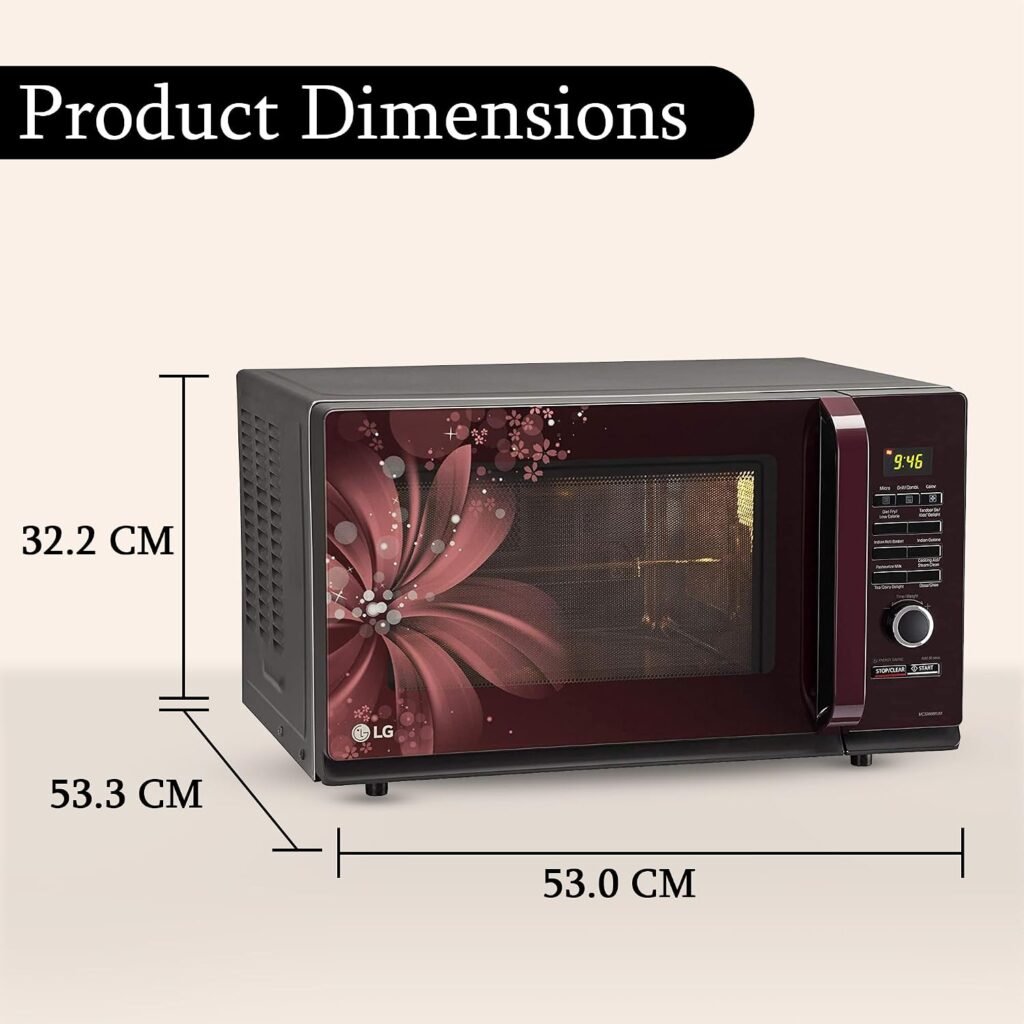
It combines microwave and convection cooking and includes a 360° motorised rotisserie and automatic cooking programmes. These features may appeal to households that want a multipurpose appliance rather than an oven primarily dedicated to baking.
Before choosing it for regular baking, consider the types of cakes, cookies and breads you make, the size of your baking tins and the available temperature settings.
My advice: If baking is your main priority, compare the OTG models featured in this guide first. If you also want microwave cooking and other functions in the same appliance, explore the LG MC3286BRUM as an alternative.
Check the LG MC3286BRUM on the official LG India website for current specifications.
Choosing an OTG for Eggless and Gluten-Free Baking
Eggless and gluten-free baking can be more sensitive to ingredient balance, moisture, structure and baking conditions. The oven matters, but it is only one part of the process.
For these recipes, look for reliable temperature control, suitable heating-element options and a rack position that accommodates your baking tins.
A larger oven will not automatically improve gluten-free cake texture. The flour blend, starches, binders, hydration and cooling time all influence the result.
For eggless cakes, sinking or a dense crumb can have several causes, including batter formulation, raising agents, mixing, oven temperature or opening the door too early.
If your eggless cake sinks, read my troubleshooting guide: Why Does My Eggless Cake Sink?
If you enjoy gluten-free baking, my Complete Gluten-Free Baking Guide offers practical guidance on flour combinations, ingredients, binders and baking techniques to help you understand what works and why.
Common Mistakes to Avoid When Buying an OTG
Choosing an oven based on capacity alone
A large litre rating does not guarantee that your tins will fit. Compare the usable interior dimensions with the baking equipment you already own.
Assuming convection is essential for every recipe
Convection can be useful, but it is not the only factor that determines baking quality. Temperature control, recipe instructions and rack placement also matter.
Ignoring electrical requirements
Check the appliance’s wattage and your kitchen’s electrical setup. A larger OTG may require more power, so confirm that your socket and circuit are suitable.
Buying only because of a discount
A discount is useful only if the appliance suits your needs. Compare the exact model, specifications, warranty, service support and current price.
Expecting the oven to correct recipe problems
An OTG cannot compensate for incorrect ingredient ratios, unsuitable bakeware or poor mixing technique. If a cake repeatedly fails, examine the recipe and baking process before assuming the oven is the only problem.
What Can You Bake in an OTG?
Depending on the oven’s capacity, temperature range, accessories and heating functions, an OTG can be used for:
- Cakes and cupcakes
- Cookies and biscuits
- Bread and rolls
- Pizza and flat breads
- Pies, tarts and quiches
- Baked snacks and casseroles
- Roasted vegetables and other savoury dishes
Always check the recipe and appliance instructions before selecting a temperature or heating mode.
For more guidance on using your appliance correctly, read How to Use an Oven for Baking.
Final Checklist Before You Buy an OTG
Use this checklist before placing your order.
- I have chosen a capacity that suits the quantity I usually bake.
- My regular cake tins and baking trays fit inside the oven.
- I have checked the temperature range.
- I understand the available heating-element settings.
- I have confirmed whether convection is included, if I need it.
- I have checked the timer and included accessories.
- I have confirmed the power rating and electrical requirements.
- I have checked the warranty and service support.
- I have verified the exact model and current price.
- I have enough counter space and ventilation around the appliance.
My Final Recommendation
There is no single OTG that is the best choice for every home baker. The right model is the one that matches your baking routine, available space, budget and preferred features.
If you bake in smaller quantities, start by comparing compact options such as the Pigeon 30-litre OTG. If you want a larger capacity with convection, examine the AGARO Marvel 48-litre model. For the Pigeon 50-litre and Morphy Richards 52L OTG, verify the exact model specifications before comparing them. If you need a larger cavity and are comfortable with the space and power requirements, the Glen 60-litre model is another option to consider.
If you also want microwave cooking and other functions in the same appliance, the LG MC3286BRUM 32L Convection Microwave Oven is worth exploring as a separate alternative. It combines microwave and convection cooking with a motorised rotisserie and automatic cooking programmes, making it a multipurpose option rather than a direct substitute for every OTG.
In my experience, choosing an oven is not just about capacity or the number of features. You need an appliance that suits your baking tins, gives you practical control over the heat and fits the way you cook and bake at home. Taking a little time to check these details before buying can save you considerable frustration later.
Choose an OTG for its usable space, temperature control and practical features—not simply for its capacity or discount.
Learn Gluten-Free Bread Baking
Choosing a suitable OTG is one part of successful gluten-free bread baking. I have found that the choice and proportion of flours, starches and binding ingredients play an equally important role in the finished bread.
Different flour combinations absorb liquid differently, while psyllium husk helps bind the ingredients and provide structure. I would suggest allowing the dough to rest briefly after mixing before making adjustments.
If the dough breaks apart or feels dry after resting, check whether it has absorbed enough liquid and whether the binding ingredients are properly incorporated. If it remains too loose to hold its shape, review the liquid quantity and the flour-to-binder balance before adding more flour.
If you would like to understand these techniques through practical demonstrations, I invite you to explore my Online Gluten-Free Bread Baking Course.
I demonstrate eight gluten-free breads through step-by-step recorded lessons. The course also includes PDF recipe notes, lifetime video access and WhatsApp support for your questions.
Frequently Asked Questions
Which OTG capacity is best for home baking?
It depends on your baking quantity and the dimensions of your tins. A compact OTG may be sufficient for smaller batches, while a 45–60-litre model may offer more flexibility for larger items. Check the usable interior dimensions before buying.
Is convection necessary in an OTG for baking cakes?
Not necessarily. Cakes can be baked in an OTG without convection when the recipe and oven settings are suitable. A convection fan can help circulate hot air, but the best setting depends on the recipe and the oven.
What temperature range should I look for in an OTG?
Choose an oven whose temperature range accommodates the recipes you regularly prepare. Many home-baking models offer settings within approximately 100°C–250°C, but the exact range varies by model. Confirm the manufacturer’s specification.
Is a bigger OTG always better?
No. A larger oven may accommodate bigger tins and batches, but it also needs more counter space. Choose the capacity that fits your actual baking needs.
Can I bake gluten-free and eggless cakes in an OTG?
Yes. An OTG can be used for eggless and gluten-free cakes when the recipe is formulated correctly and the oven is set up properly. Ingredient balance, temperature, tin size and cooling all influence the final texture.
Should I use an oven thermometer with an OTG?
An oven thermometer can help you understand the actual temperature inside your oven. This is useful if your bakes consistently brown too quickly, take longer than expected or produce uneven results.
What should I check before ordering an OTG online?
Confirm the exact model, capacity, internal dimensions, temperature range, heating modes, wattage, included accessories, warranty and current price. If a specification is missing or contradictory, ask the manufacturer or seller to clarify it before you buy.
About the Author
Sharmila Sengupta is a baking expert and educator with over 25 years of experience. Through Cookery Expressions, she shares practical baking guidance, with a special focus on eggless and gluten-free recipes. Her aim is to help home bakers understand ingredients, equipment and baking techniques so they can make more informed decisions and achieve more consistent results.
Explore more baking guides and recipes at Cookery Expressions.
Sharmila Sengupta | Baking Expert & Educator | 25+ Years of Baking Experience