
How to Fix a Dense Cake: 7 Common Causes and Solutions
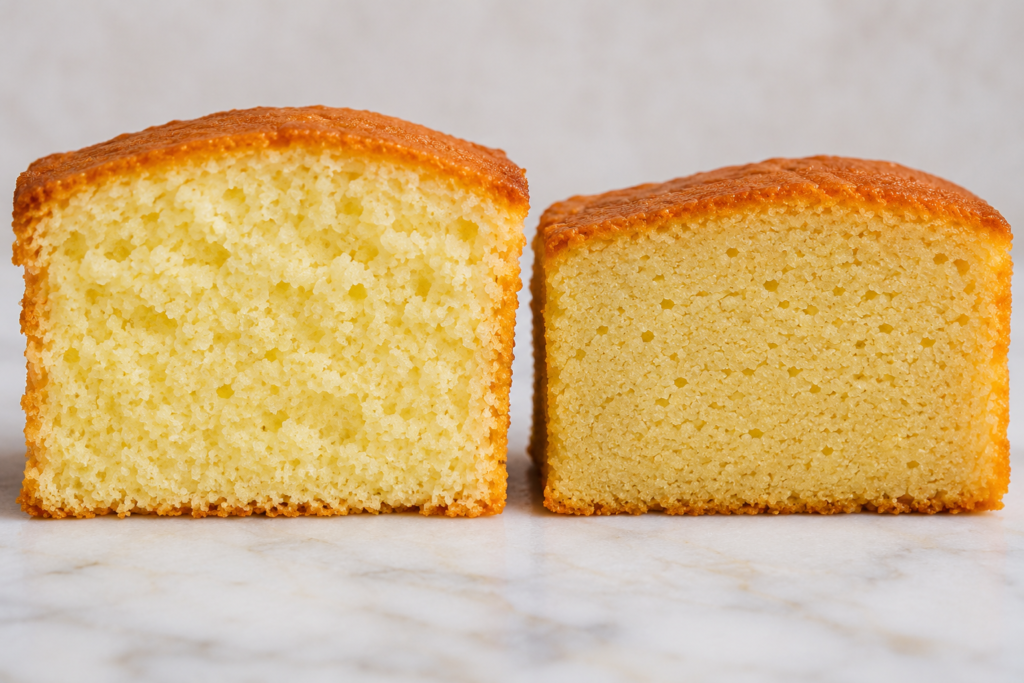
A dense cake can be disappointing, especially when you have followed the recipe carefully. Instead of a light, tender crumb, you may end up with a cake that feels heavy, compact, gummy or dry. If you are wondering how to fix a dense cake, begin by looking at the cake itself. Its crumb, texture and appearance can tell you quite a lot about what went wrong.
Cake texture depends on several things working together: accurate measurements, the right balance of ingredients, proper aeration, suitable mixing and enough heat for the cake structure to set. A problem with even one of these can affect the final result.
I would not recommend adding more baking powder or liquid simply because a cake feels heavy. First, find out whether the cake is dry, wet, gummy, compact throughout or dense only at the bottom. These symptoms can have different causes and need different corrections.
In this guide, I will explain seven common reasons cakes turn out dense, how to recognise each problem and what I would change the next time you bake.
Why Is My Cake Dense? Start by Diagnosing the Crumb
Before changing the recipe, take a closer look at the cake. Cut a slice from the centre after it has cooled and examine the crumb. Then think back to how the batter looked and how the cake behaved in the oven.
Step 1: Examine the cake crumb
The texture can help you narrow down the possibilities.
| What you notice | What it may indicate |
|---|---|
| Dry, tight and compact crumb | Too much flour, overbaking or insufficient moisture |
| Wet or gummy layer at the bottom | Incomplete baking, excess moisture or, in some recipes, poor incorporation |
| Large tunnels or uneven holes | Mixing or leavening problems |
| Fine but unusually heavy crumb | Insufficient aeration or an ingredient imbalance |
| Crumbly cake that breaks easily | Insufficient moisture, weak structure or excess dry ingredients |
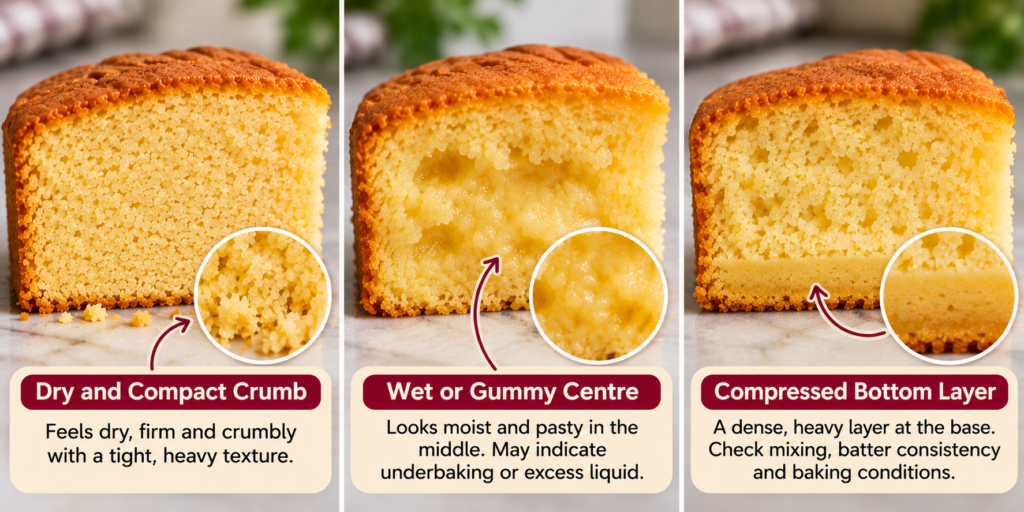
These are clues, not definite diagnoses. More than one problem can produce a similar result, so look at the other symptoms before deciding what to change.
Step 2: Check whether the cake is fully baked
A cake can look risen and browned on top while the centre is still underbaked.
Insert a skewer into the middle. It should come out clean or with a few moist crumbs, depending on the recipe. Wet batter on the skewer means the cake needs more baking.
Do not confuse a moist crumb with an underbaked centre. A properly baked cake can be soft and moist without leaving raw batter behind.
If the centre is wet, check the oven temperature, pan size, batter depth and baking time before changing the raising agents. Adding more baking powder will not correct underbaking.
Step 3: Recall the batter consistency
Think about how the batter looked before it went into the oven. This is often an important clue.
| Batter condition | What to investigate |
|---|---|
| Much thicker than the recipe describes | Excess flour, insufficient liquid or a measuring error |
| Very thin and runny | Excess liquid or an unsuitable ingredient substitution |
| Curdled or separated | Ingredient temperature or poor emulsification |
| Dry flour pockets or uneven streaks | Incomplete mixing |
| Smooth but unusually stiff | Flour absorption, ingredient proportions or the type of flour used |
A batter does not need to look identical across all cake recipes. Butter cakes, oil-based cakes and eggless cakes have different expected consistencies. Compare yours with the description in the recipe rather than assuming every cake batter should be pourable.
Step 4: Review the mixing and baking conditions
Now consider whether you followed the specified mixing method, used ingredients at the recommended temperature, preheated the oven and selected the correct pan.
These details matter because cake structure develops in stages. Air must be incorporated or retained, the ingredients must be distributed evenly, and the cake must receive enough heat to set around the expanding air pockets.
Once you have a likely explanation, change one factor at a time. If you alter the flour, liquid and raising agent together, you will not know which adjustment made the difference.
7 Common Reasons Your Cake Turns Out Dense
1. You Added Too Much Flour
Too much flour is one of the common reasons a cake turns out heavy and compact.
Flour provides structure, but excess flour can make the batter too thick and reduce the proportion of moisture available to hydrate it. The resulting cake may have a tight, dry crumb rather than a soft and tender one.
This often happens when flour is measured by scooping directly from the packet. The measuring cup can hold more flour than the recipe intended.
What to check and change
- Weigh flour using a kitchen scale whenever possible.
- If you use measuring cups, spoon the flour lightly into the cup and level it without packing it down.
- Compare the quantity with the recipe before adding anything extra.
- Do not add flour simply because the batter looks thinner than you expected. Different cake recipes have different consistencies.
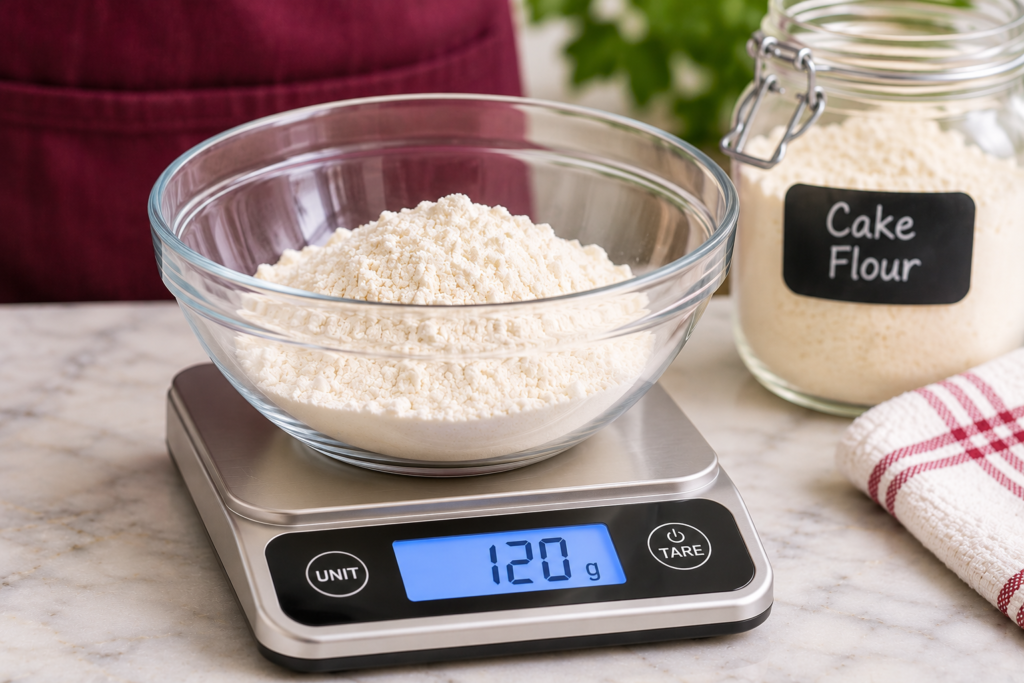
This is particularly important when using gluten-free flour blends. Their particle size and absorption can vary considerably, so even a small difference in flour quantity can affect batter consistency and the final cake texture.
2. You Overmixed or Under-mixed the Batter
Mixing affects how evenly the ingredients are distributed and how much air the batter retains. Both overmixing and under-mixing can cause problems, but they do not produce exactly the same symptoms.
In cakes made with wheat flour, excessive mixing after the flour is added can develop too much gluten. The cake may have a tougher, tighter crumb or noticeable tunnels.
Under-mixing is a different problem. If the ingredients are not properly incorporated, the batter may contain flour pockets, uneven fat distribution or poorly dispersed raising agents.
In certain butter-based and reverse-creamed cake recipes, insufficient mixing can also contribute to a compact or gummy layer near the bottom. However, a dense bottom is not automatically proof of under-mixing. You need to consider the recipe’s method and the appearance of the crumb.
What to look for
- Flour streaks or pockets suggest that the dry ingredients may not have been fully incorporated.
- Large tunnels or an unusually tough crumb in a wheat-flour cake may point towards excessive mixing.
- A gummy bottom in some butter-based recipes may justify checking whether the batter was mixed sufficiently and evenly.
How I would approach the correction
Follow the mixing sequence in the recipe. Scrape the sides and bottom of the bowl so that no unmixed ingredients remain. Mix until everything is evenly incorporated, but do not continue unnecessarily after adding the flour.
The correct endpoint depends on the method. A creamed cake, a folded sponge and a one-bowl cake should not all be mixed in the same way or for the same length of time.
For gluten-free cakes, wheat gluten development is not the issue, but even distribution of flour, starches, binders and liquid remains important.
3. Your Raising Agents Were Incorrect or Ineffective
Baking powder and baking soda help produce the gas that creates air pockets in a cake. If the quantity is incorrect or the raising agents have lost activity, the cake may not rise properly.
Using more is not a reliable solution. Too much raising agent can make a cake rise rapidly but leave it with a weak structure, an uneven crumb or a sunken centre.
Baking powder and baking soda also work differently:
- Baking powder contains an acid and a base. It is designed to produce carbon dioxide when activated by moisture and, depending on the type, heat.
- Baking soda needs an acidic ingredient in the recipe to react effectively.
A simple activity check
If you suspect an old raising agent, you can perform a basic check:
- Add a little baking powder to hot water. Visible bubbling indicates that it is reacting.
- Add a little baking soda to vinegar. Fizzing indicates that it is reacting with the acid.
These tests only show basic activity. They do not measure the exact strength of the raising agent or guarantee that it will perform correctly in your cake recipe.
Before your next bake, check the expiry date and storage instructions. Keep raising agents tightly sealed and protected from moisture. Measure them accurately, and do not substitute baking soda for baking powder in equal quantities.
4. You Did Not Cream the Butter and Sugar Correctly
This applies to recipes that use the creaming method. It does not apply to every cake, particularly oil-based cakes or recipes that use melted butter or a different mixing method.
Creaming butter and sugar helps incorporate air into the batter. These small air pockets contribute to the cake’s volume and texture.
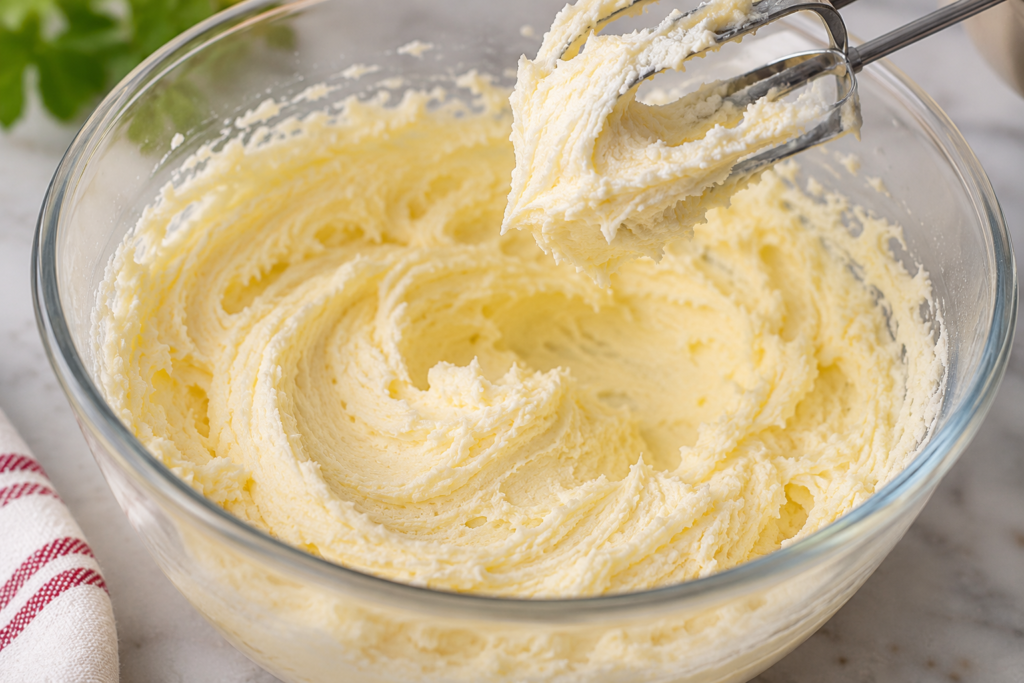
If the mixture remains heavy and dense, it may not have incorporated enough air. This can leave the cake with a compact crumb and less volume.
Excessive creaming can also be a problem in some recipes. Too much aeration may create a less stable batter, but the effect depends on the recipe, ingredients and mixing method. It does not mean that every over-creamed cake will collapse.
How to get the creaming right
Use butter at the temperature specified in your recipe. It should generally be soft enough to cream but not melted. Scrape the sides and bottom of the bowl periodically so the butter and sugar are mixed evenly.
Use the recipe’s visual cues rather than relying on a fixed mixing time. The mixture should look noticeably lighter and fluffier than the original butter.
The aim is to incorporate the right amount of air for that particular cake, not simply to beat for longer.
5. Your Oven Temperature Was Incorrect
An incorrect oven temperature can affect both the rise and the final texture of a cake.
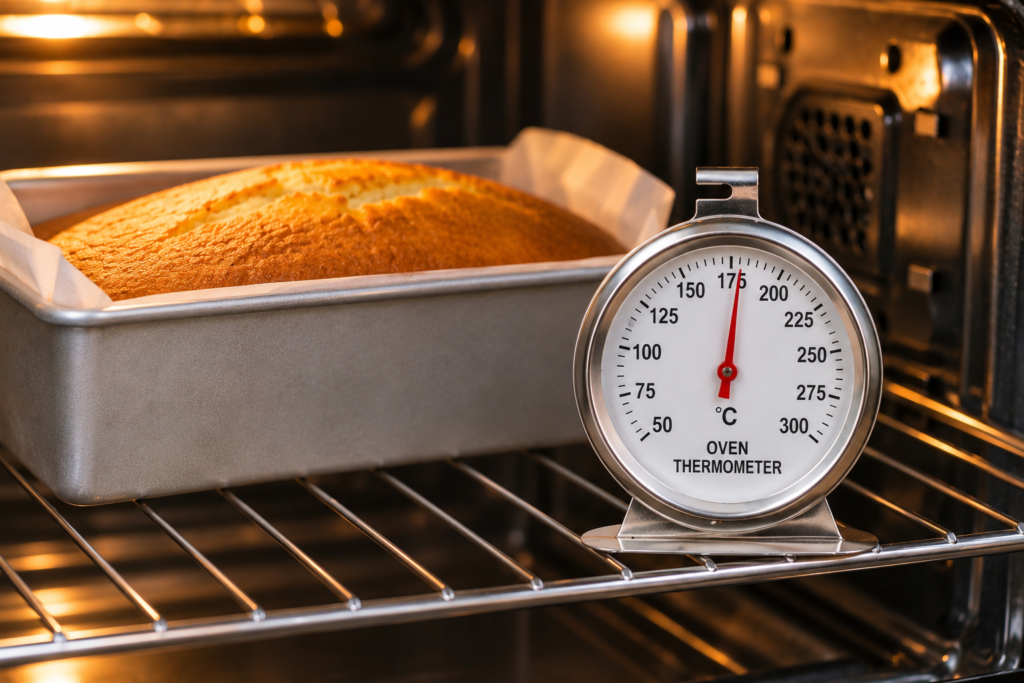
If the oven is too hot, the outside may set and brown before the centre has baked properly. You may find a dark crust with a wet or gummy middle.
If the oven is too cool, the cake may take too long to set. It can remain heavy, develop a pale crust or fail to rise as expected.
An oven’s displayed temperature is not always its actual temperature. This is particularly important when baking in an OTG, where heat distribution and the position of the heating elements can influence the result.
What I would check
- Preheat the oven for the time recommended in the recipe.
- Use an oven thermometer to check the actual temperature.
- Place the cake on the rack specified in the recipe.
- Avoid opening the oven door repeatedly during baking.
- Use the temperature and heating mode recommended for your oven and recipe.
A skewer test tells you whether the centre is baked; it does not tell you whether your oven temperature was accurate. If cakes repeatedly brown too quickly or take much longer than expected, check the oven temperature rather than changing the recipe immediately.
If you are unsure about preheating, rack position or temperature settings, read my guide on how to use an oven for baking.
6. Your Ingredients Were at the Wrong Temperature
Ingredient temperature can affect how well the ingredients combine, particularly in butter-based cakes.
When cold butter is mixed with other ingredients, it may not cream properly. Cold eggs or other liquids added to a creamed butter mixture can sometimes cause the batter to look curdled or separated.
A poorly emulsified batter may not hold air or distribute fat and moisture evenly. This can affect the cake’s volume and crumb.
However, do not assume that every ingredient must be at room temperature. Some recipes specifically call for cold butter or chilled ingredients.
For a conventional creamed cake, use softened butter rather than melted or very cold butter. Add eggs gradually when the recipe instructs you to do so, and follow the specified ingredient temperatures.
If the batter begins to look separated, check the method before continuing. The correct response depends on the recipe; warming or beating every separated batter is not necessarily the answer.
7. You Over Baked the Cake
Overbaking can make a cake dry, firm and unpleasantly heavy.
As the cake remains in the oven for too long, it loses more moisture. The crumb becomes less tender and may feel compact when you cut or chew it.
A cake can also become dry if it is baked at the wrong temperature for longer than necessary.
How to judge when it is ready
Start checking the cake a little before the recipe’s minimum baking time. Insert a skewer into the centre and look for a clean result or a few moist crumbs, as appropriate for the recipe. The centre should also look set.
Remember that baking time varies with oven performance, pan material and pan size. A cake that needs 35 minutes in one oven may take longer in another.
Follow the cooling instructions too. Leaving a cake in a hot pan longer than directed can affect its texture, particularly when the recipe specifies a particular resting time before removing it.
Can Too Much Sugar or Fat Make a Cake Dense?
Yes. Sugar and fat influence more than the flavour of a cake. They also affect moisture, tenderness and structure.
Sugar helps retain moisture, contributes to browning and tenderizes the crumb. However, too much sugar can delay the setting of the cake structure. The cake may rise but remain weak or gummy in the centre.
Fat contributes tenderness and richness. But an excess of fat can weaken the structure and make the cake feel greasy or heavy.
The balance between flour, sugar, fat, liquid and raising agents is important. Reducing sugar or fat without adjusting the rest of the recipe can also change the texture.
If you are adapting a recipe, avoid making large reductions or additions based on one disappointing bake. First check your measurements and method. Then make small, controlled changes and test the result.
Why Is My Cake Dense at the Bottom?
A cake that is reasonably light on top but dense near the bottom needs a closer examination. The lower layer may provide useful clues, but its appearance alone cannot identify the cause.
Here is how I would interpret the different signs:
- A compact layer with visible flour streaks: In certain cake recipes, this may indicate incomplete incorporation or under-mixing.
- A wet or gummy bottom without visible flour streaks: Check whether the centre is fully baked and whether the batter contained too much moisture.
- A firm, tight bottom layer: Review the mixing method, batter consistency and distribution of ingredients.
- A dark or unusually thick bottom crust: Check the pan material, rack position and oven heat.
Under-mixing is one possible explanation in some butter-based and reverse-creamed cakes, but it is not a universal diagnosis. A wet bottom may have a different cause from a firm, compact one.
Compare the bottom layer with the rest of the cake before deciding what to change.
Why Is My Cake Dense Even Though It Has Risen?
A cake can rise in the oven and still turn out dense. Rising and structure are related, but they are not the same thing.
Raising agents produce gas, which expands and creates air pockets in the batter. The cake then needs to set around those pockets to retain its volume.
If the structure is weak, the cake may rise initially but fail to hold that volume. It can sink or become compact as it cools.
There are two situations to distinguish:
- The cake rises and then sinks: Investigate excess raising agent, an unstable structure, an incorrect oven temperature or opening the oven too early.
- The cake reaches its expected height but feels heavy: Look at aeration, ingredient proportions, batter consistency and mixing.
A good rise does not automatically mean the cake has developed a light crumb.
Can Too Much Liquid Make a Cake Dense?
Yes. Excess liquid can make the batter too thin and interfere with the cake’s ability to set properly.
A cake with too much liquid may have a wet or gummy centre, a compressed lower layer or a crumb that feels heavy even after cooling.
This can happen when liquid ingredients are measured inaccurately or when a substitution changes the moisture content of the batter. For example, replacing one ingredient with another that contains more water can change the batter’s consistency. The original recipe may no longer have the right balance of dry and wet ingredients.
Measure liquids accurately and consider the moisture content of substitutions. If the batter looks thinner than expected, first check the recipe and the ingredients you used. Do not automatically add more flour. A thin batter is not necessarily wrong; its consistency depends on the type of cake.
Can the Cake Pan Affect Its Texture?
Yes. The size, depth and material of the cake pan affect how heat reaches the batter.
If the pan is smaller or deeper than the recipe specifies, the batter may form a thicker layer. The outside can bake before the centre has had enough time to set.
A pan that is too large may spread the batter into a thinner layer, changing the baking time and the final shape.
Pan material also matters:
- Dark pans absorb heat more readily and may brown the sides and bottom faster.
- Light-coloured metal pans generally produce more moderate browning.
- Glass and ceramic pans heat differently from metal and may require adjustments according to the recipe.
Use the pan size recommended in the recipe whenever possible. If you change the pan, expect the baking time and possibly the temperature to need adjustment.
Why Is My Eggless Cake Dense?
Eggless cakes do not rely on eggs for structure, moisture and aeration. Their texture depends on the combination of ingredients and the method used.
Yogurt, fruit purée, flaxseed mixtures and other egg substitutes behave differently. They cannot always be exchanged in equal quantities without affecting the batter.
If your eggless cake is dense, check the moisture balance, raising agents, mixing method and the particular egg substitute used.
For a more detailed explanation of eggless cake structure and common baking problems, read my Eggless Baking Guide.
You may also find my guide on how to make an eggless cake soft and moist useful.
Why Is My Gluten-Free Cake Dense?
Gluten-free cakes need a carefully balanced combination of flours, starches, liquid and binders. Different gluten-free flours absorb moisture differently, and some produce a heavier crumb when used without the right supporting ingredients.
For example, a flour blend with an unsuitable starch balance or hydration level may produce a dense, dry or gummy cake.
If you are baking gluten-free, do not assume that adding more liquid or raising agent will solve the problem. First consider the flour blend, its absorption and the recipe’s binder system.
My Gluten-Free Baking Guide explains these principles in more detail. You can also read about using almond flour in gluten-free baking.
What If You Followed the Recipe but Your Cake Is Still Dense?
Sometimes a cake turns out dense even when you have followed the recipe carefully. This does not necessarily mean the recipe is wrong. Small differences in ingredients, equipment and measuring methods can affect the result.
Before changing the recipe, go through these checks:
- Flour measurement: Did you weigh the flour or measure it by volume? Was the flour packed into the cup?
- Ingredient substitutions: Did you replace any ingredient with one that has a different moisture or fat content?
- Raising agents: Were they fresh, correctly measured and suitable for the recipe?
- Mixing method: Did you follow the specified sequence and stop at the right stage?
- Batter consistency: Did it look as described in the recipe?
- Pan size: Did you use the recommended pan?
- Oven temperature: Was the oven fully preheated, and is its actual temperature accurate?
- Baking time: Was the centre fully baked before you removed the cake?
I would suggest changing only one factor in your next bake. If you change the flour, liquid and raising agent together, you will not know which adjustment made the difference.
How to Make a Cake Light and Fluffy: Final Checks Before Baking
Before putting your next cake into the oven, run through these checks:
- Weigh the flour and other important ingredients accurately.
- Check that your raising agents are fresh and measured correctly.
- Follow the mixing method specified in the recipe.
- Use ingredients at the temperatures recommended.
- Check that the ingredients are evenly incorporated.
- Use the correct pan size and material.
- Preheat the oven and check its temperature when necessary.
- Bake until the centre is properly set.
- Follow the cooling instructions.
A light cake is not produced by adding more baking powder or beating the batter for longer. It comes from the right balance of ingredients, suitable aeration, correct mixing and proper baking.
Frequently Asked Questions
Can I fix a dense cake after baking?
You cannot completely restore the original crumb once a cake has baked dense. However, if it is fully baked and simply a little dry, you can serve it with fruit, a suitable sauce or a light syrup. If the centre is raw or gummy, do not serve it as a properly baked cake.
Why is my cake gummy in the middle?
A gummy middle can indicate underbaking, excess liquid or an imbalance in the recipe. Check whether the centre is fully baked and review the batter consistency, pan depth and oven temperature. In some recipes, poor incorporation can also contribute to an uneven crumb.
If your cake is specifically wet, sticky or pasty in the centre, read my detailed guide on why an eggless cake becomes gummy in the middle. It explains how to distinguish underbaking from excess moisture and structural problems.
Why does my cake feel heavy but still look soft?
A cake can feel heavy even when it is moist. If the crumb is evenly formed but very close and compact, investigate aeration and the mixing method first. If it is wet or gummy, check the baking time and liquid balance. Moisture and lightness are not the same thing.
Why does my cake rise and then sink?
This usually means the cake expanded but did not develop enough structure to retain its volume. Possible causes include excess raising agent, an unstable batter, incorrect oven temperature or opening the oven door too early. Check the recipe and baking conditions before changing the raising-agent quantity.
Final Thoughts
A dense cake is not always the result of one obvious mistake. The texture may be affected by flour measurement, mixing, aeration, ingredient balance, oven temperature or baking time.
I always recommend examining the crumb before making changes. A dry, compact cake needs a different correction from one with a wet centre or a dense bottom layer.
Once you learn to recognise these differences, troubleshooting becomes much easier. Instead of changing several ingredients at once, you can identify the likely cause, make one adjustment and understand what to watch for in your next bake.
Sharmila Sengupta | Baking Expert & Educator | 25+ Years of Baking Experience