
Eggless Gluten-Free Orange Pound Cake: Common Texture Problems and How to Fix Them
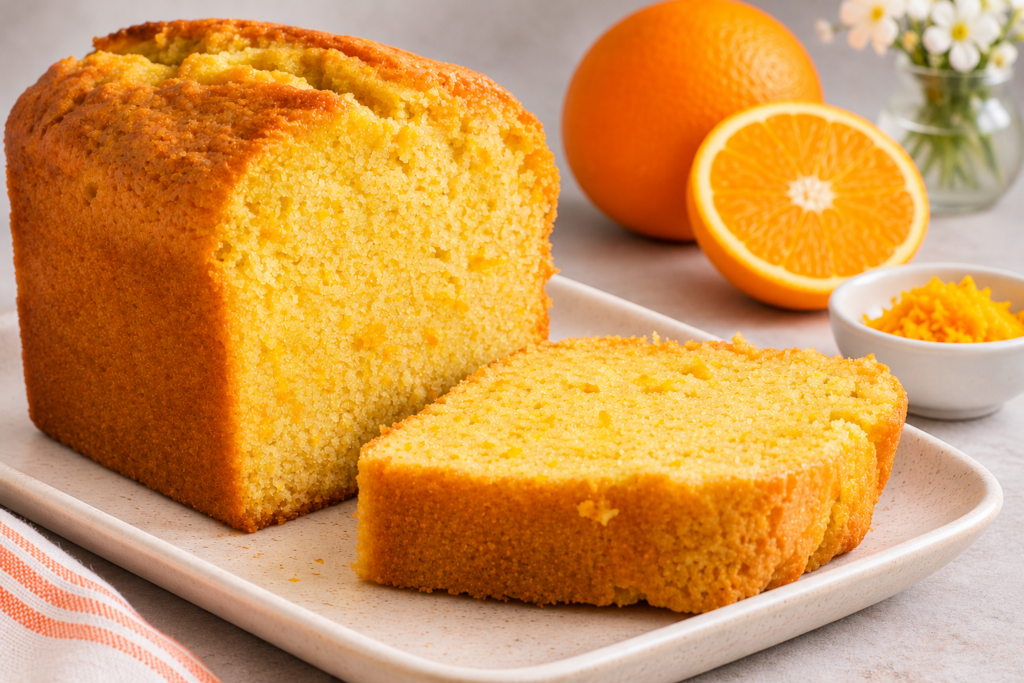
This eggless orange cake is completely gluten-free. Greek yogurt, fresh orange juice and orange zest give it a lovely flavour while contributing to its moisture and texture.
A good gluten-free orange pound cake should have a soft, tender crumb, a pleasant orange aroma and enough structure to hold together when sliced. It should feel moist without being sticky or heavy.
Getting this balance right in an eggless gluten-free cake depends on how the flour blend, yogurt, oil and orange juice work together. Without eggs, the balance between the flour blend, Greek yogurt, oil and orange juice becomes particularly important. The flour blend and xanthan gum help provide structure, while yogurt and oil contribute moisture and tenderness.
When a cake turns out dense, gummy, dry or crumbly, it is tempting to change the flour quantity or add more liquid. I would suggest looking at the crumb first. It often gives you useful clues about what may have gone wrong.
If you are still learning how different gluten-free flours and ingredients behave, I would recommend reading my Complete Gluten-Free Baking Guide. It covers flour selection, baking techniques and common problems that can affect the texture of gluten-free bakes.
In this article, let us look at the texture problems you may encounter with this orange pound cake, understand what causes them and, more importantly, what I would check before making any changes to the recipe.
Why Choose an Eggless Orange Cake?
An eggless cake is a good choice for those who prefer to avoid eggs for personal, dietary or religious reasons. In this recipe, I use Greek yogurt and oil to provide moisture and help give the cake its structure without relying on eggs. With the right balance of ingredients, you can achieve a flavourful cake with a tender crumb, even without eggs.
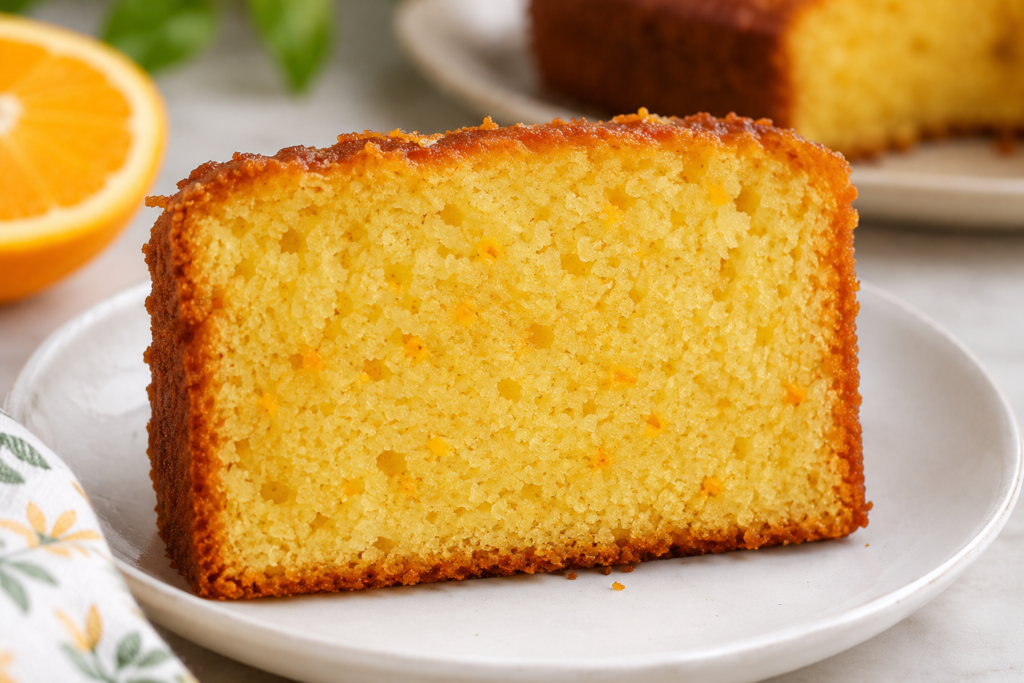
At a glance: Identify the texture problem
| What you notice | What it suggests | First thing to investigate |
|---|---|---|
| The entire cake has a tight, heavy crumb | Dense cake | Flour measurement and blend |
| The edges are set but the centre is wet | Underbaking | Baking time and oven temperature |
| The cooled centre remains sticky or pasty | Gummy crumb | Flour blend, ingredient balance and baking |
| The cake feels dry throughout | Moisture loss during baking | Baking time and oven temperature |
| The cake breaks apart when sliced | Weak crumb structure | Binding and handling |
1. Why Is Your Gluten-Free Orange Cake Dense?
A dense cake has a compact crumb throughout. It may be fully baked, but it lacks the lightness and tenderness expected from a pound cake.
Start with the flour measurement. This recipe uses only 120 g of gluten-free flour, so even a small excess can make a noticeable difference. Weighing the flour is more reliable than measuring it by volume.
The flour blend is equally important. Gluten-free flours are not interchangeable. Their proportions of starches, grains and protein-rich ingredients differ, and some already contain a binding ingredient.
When you are working with gluten-free flours, it helps to understand what each ingredient contributes to the finished bake. Flour blends can differ considerably in their composition, and the choice of binder can influence how well a cake holds together. I would suggest paying particular attention to the flour blend and the binders before making changes to the liquid quantity.
For this recipe, I use Bob’s Red Mill Gluten Free All Purpose Baking Flour. Its blend contains garbanzo bean flour, potato starch, tapioca flour, whole grain white sorghum flour and fava bean flour. It does not contain xanthan gum or guar gum.
That is why the recipe includes ½ teaspoon of xanthan gum. It helps provide the binding needed for the cake to hold together. Do not confuse this flour with Bob’s Red Mill Gluten Free 1-to-1 Baking Flour, which already contains xanthan gum. The two blends should not automatically be substituted in the same quantities without testing.
If you are interested in experimenting with other gluten-free flours, you may also find my guide on How to Use Almond Flour in Gluten-Free Baking useful. Almond flour behaves quite differently from grain-based flour blends. It adds natural fat and tenderness, but it cannot simply replace the flour used in this orange cake gram for gram.
Before changing the liquid quantity, check:
- Have you weighed exactly 120 g of flour?
- Are you using the All Purpose Baking Flour specified in the recipe?
- Have you included the ½ teaspoon of xanthan gum?
Once the flour is added, fold the batter gently until combined. Prolonged mixing is unnecessary.
2. Why Is the Centre of Your Cake Gummy?
A gummy gluten-free orange cake can be confusing because the outside may look perfectly baked while the centre remains sticky or pasty.
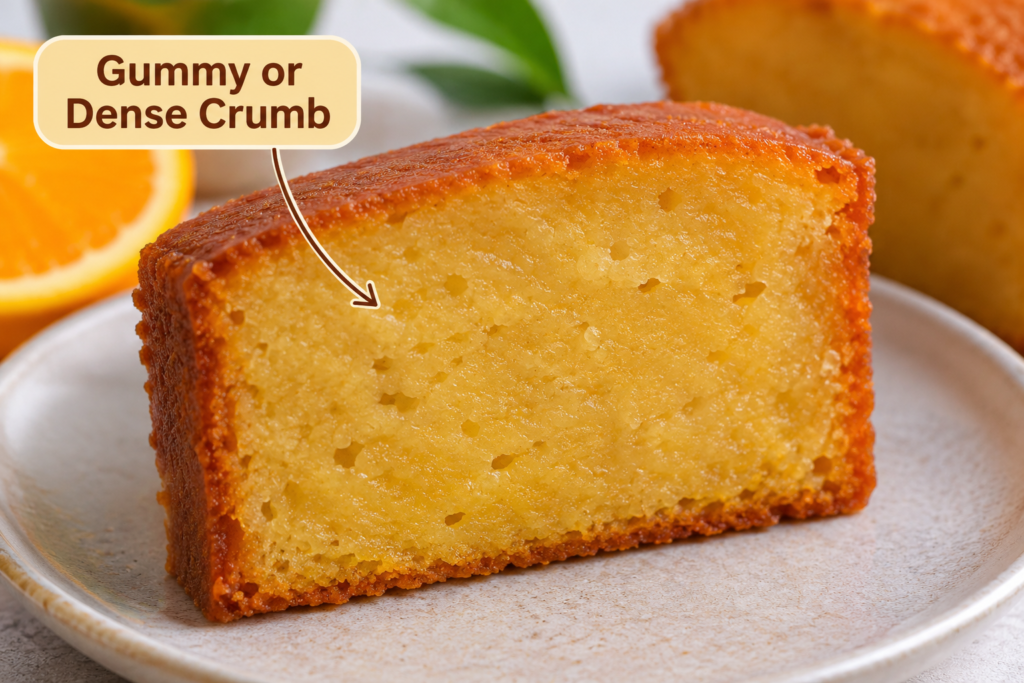
Before changing anything, look at whether the centre is actually underbaked or whether the crumb remains sticky even after the cake has cooled. They can look similar, but the signs are different.
An underbaked centre:
- The edges are set, but the middle is visibly wet.
- A toothpick inserted into the centre picks up wet batter.
- The middle may look unset or collapse when cut.
In this case, the cake needs more baking time. If the top has already browned, cover it loosely with foil and continue baking until the centre has set.
A gummy crumb:
- There is no obvious wet batter in the centre.
- The crumb feels sticky, pasty or slightly compressed after the cake has cooled completely.
- The texture remains unpleasantly tacky rather than becoming tender and sliceable.
When this happens, simply extending the baking time may not solve the problem. Check that you have used the specified flour blend and measured the ingredients accurately. A change in flour composition or the balance between the liquid and dry ingredients can affect how the crumb sets.
Greek yogurt and orange juice both contribute moisture, but that does not mean either ingredient is automatically responsible for a gummy cake. The flour blend, binding, baking conditions and overall formulation work together.
A toothpick is useful, but it is not the only test. Moist crumbs are generally a good sign; wet batter means the centre needs more time. I would also look at how the centre feels once the cake has cooled. It should be moist and tender, not sticky or pasty.
3. Why Is Your Eggless Gluten-Free Orange Cake Dry or Crumbly?
A dry cake feels dry throughout. The crumb may be firm, rough or slightly coarse, and it lacks the tenderness you expect from a moist orange pound cake.
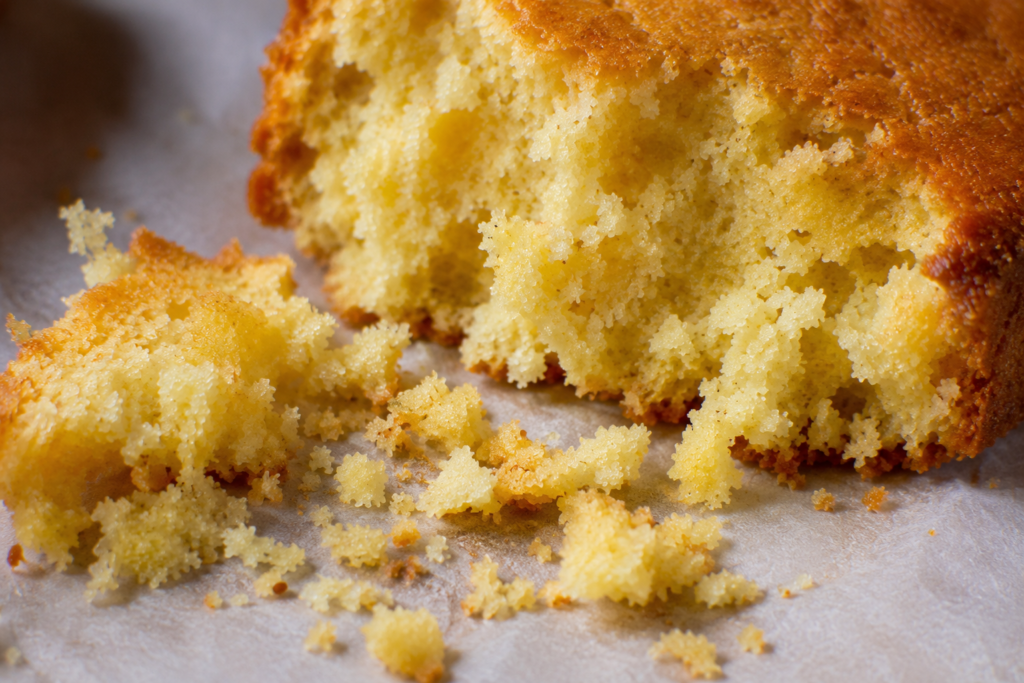
Overbaking is one of the first things to investigate. Leaving the cake in the oven for longer than necessary can drive away moisture and leave the crumb dry.
The oven temperature matters too. An OTG that runs hotter than its setting may bake the cake faster than expected, even when you follow the suggested time.
For your next bake, begin checking towards the earlier part of the 30–40-minute baking window. Look at the centre as well as the edges. The outside may be ready before the middle, so avoid relying on colour alone.
Adding extra oil is not necessarily the answer. If the cake has lost moisture through overbaking, more oil will not restore the moisture that has already escaped.
4. Why Does Your Eggless Gluten-Free Cake Crumble When Sliced?
A crumbly cake is not necessarily dry. It may feel moist when eaten, yet break apart as soon as you cut a slice.
This usually tells me that the crumb has not developed enough structure to hold together when sliced. If the cake breaks apart despite having a reasonably moist crumb, check that the xanthan gum has been measured accurately and mixed evenly with the dry ingredients.
Handling matters too. Allow the cake to cool completely before removing it from the pan. When slicing, use a sharp serrated knife and a gentle sawing motion rather than pressing down firmly.
If the cake is moist but falls apart, investigate its structure before adding more liquid.
If you enjoy baking cookies as well, have a look at my Almond Coconut Cookies (Eggless & Gluten-Free). I have explained why these cookies sometimes turn dry, spread too much or crumble when sliced. The guide also shows how almond flour, desiccated coconut and flaxseed work together to give the cookies their structure.
5. How Do Orange Juice and Zest Affect the Cake?
Orange juice and orange zest both give this cake its citrus character, but they perform different jobs.
Orange juice contributes liquid and acidity. The acidity also reacts with the baking soda and helps the batter rise.
Orange zest provides the aroma. It contains the fragrant oils that give an orange cake its fresh citrus flavour, without adding much liquid.
I would not increase the orange juice simply to make the flavour stronger. Extra juice changes the liquid balance and may affect the centre’s texture.
For a more pronounced orange aroma, use freshly grated zest. Grate only the coloured outer skin of the orange. The white pith underneath can add bitterness.
If you enjoy the combination of citrus flavours in baking, I would also suggest trying my Gluten-Free, Egg-Free Blueberry Orange Scones. They have a lovely buttery texture, with blueberries and orange bringing together two flavours that work particularly well.
6. What Should You Watch for When Baking This Cake in an OTG?
An OTG can bake a lovely gluten-free loaf, but the position of the pan and the behaviour of the heating elements matter.
For this recipe, preheat the OTG to 350°F (175–180°C) for 10–15 minutes. Use an 8 × 4-inch loaf pan.
One sign worth watching is a well-browned top with a centre that is still wet. This suggests that the surface is receiving heat faster than the centre is baking. Cover the top loosely with foil and allow the loaf to continue baking.
Avoid raising the temperature to speed things up. A hotter oven may brown the outside even faster without giving the centre enough time to set.
The cake usually takes around 30–40 minutes, but keep an eye on your OTG. Ovens can vary, so check the centre towards the end of the baking time.
7. Gluten-Free Orange Pound Cake Recipe
This is the formulation used for the troubleshooting advice above. It makes one small loaf.
Ingredients
| Ingredient | Quantity |
|---|---|
| Bob’s Red Mill Gluten Free All Purpose Baking Flour | 120 g (1 cup) |
| Granulated sugar | 100 g (½ cup) |
| Greek yogurt | 120 g (½ cup) |
| Vegetable oil | 55 g (¼ cup / 60 ml) |
| Fresh orange juice | 60 ml (¼ cup) |
| Orange zest | 6–8 g (1 tbsp) |
| Baking powder | 5 g (1 tsp) |
| Baking soda | 2–3 g (½ tsp) |
| Xanthan gum | ½ tsp |
| Salt | A pinch |
A note about the flour blend: I have tested this recipe using Bob’s Red Mill Gluten Free All Purpose Baking Flour with ½ teaspoon of xanthan gum. This particular flour blend does not contain xanthan gum, so the quantity specified in the recipe is important in helping the cake hold together. If you use a different gluten-free flour blend, check whether it already contains a binder before adding anything extra.
Method
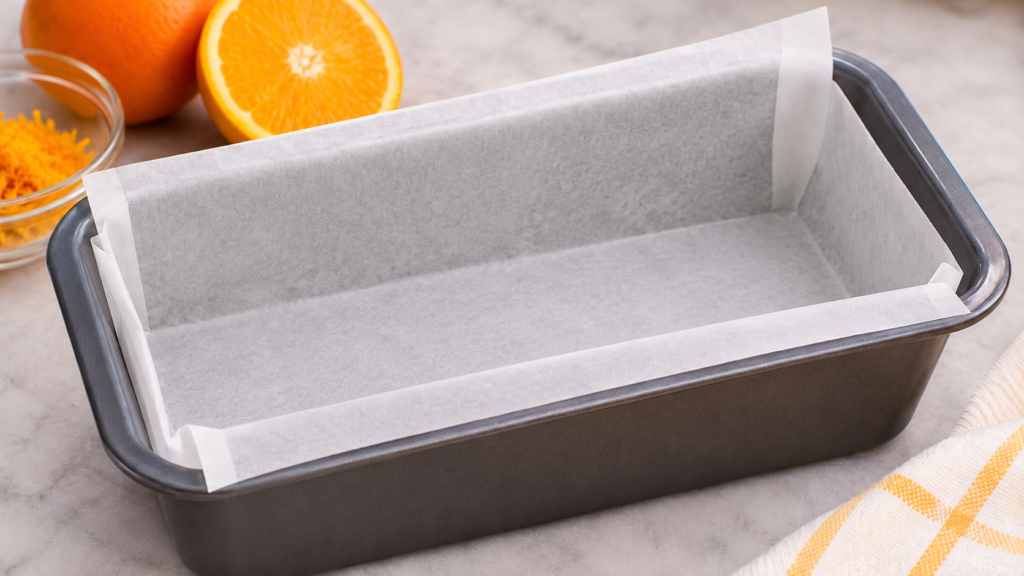
- Prepare the oven and pan. Preheat the oven to 350°F (175–180°C) for 10–15 minutes. Line an 8 × 4-inch loaf pan with a strip of parchment paper, leaving some overhang on the sides. Lightly grease the pan.
- Combine the wet ingredients. In a mixing bowl, whisk together the Greek yogurt, sugar, vegetable oil and fresh orange juice until smooth.
- Add the orange zest. Stir the zest into the wet mixture.
- Prepare the dry ingredients. Sift the gluten-free flour, xanthan gum, baking powder, baking soda and salt together.
- Make the batter. Add the dry ingredients to the wet mixture. Fold gently until combined. Avoid prolonged mixing once the flour has been added.
- Fill the pan. Transfer the batter to the prepared loaf pan and spread it evenly.
- Bake. Bake for approximately 30–40 minutes. Check the centre towards the end of the baking time. A toothpick should show moist crumbs rather than wet batter.
- Cool completely. Allow the cake to cool before removing it from the pan and slicing. This gives the crumb time to settle and makes it easier to assess the final texture.
Frequently Asked Questions
Can I make this cake without xanthan gum?
I would not recommend omitting it when using Bob’s Red Mill Gluten Free All Purpose Baking Flour. This blend does not contain xanthan gum, and the recipe relies on the ½ teaspoon included in the formulation to help provide structure. Without it, the cake may have a weaker crumb and could crumble more easily.
If you are using a gluten-free flour blend that already contains xanthan gum, check the manufacturer’s guidance before adding any extra.
Can I replace Greek yogurt with a dairy-free alternative?
Different alternatives have different moisture levels, acidity and consistency. A direct substitution may change the crumb. Test one replacement at a time rather than changing several ingredients together.
Can I bake this batter as muffins?
The batter can be portioned into muffin cases, but the baking time will be shorter. Start checking earlier and look for a set centre rather than using the loaf’s baking time.
How should I store the cake?
Once completely cool, store the cake in an airtight container. If your kitchen is warm, refrigeration may help it keep longer. Allow slices to come closer to room temperature before serving for a softer texture.
A Final Baking Note
When a gluten-free cake does not turn out as expected, resist the temptation to change several ingredients at once.
Look at the crumb first. A compact cake, a wet centre and a sticky cooled crumb are different problems, and each needs a different correction.
Once you learn to recognise these differences, troubleshooting becomes much more straightforward. You can make a measured adjustment in your next bake instead of changing the recipe without knowing what caused the problem.
The same attention to moisture and texture is important when baking gluten-free brownies. If yours tend to turn dry or crumbly, you may find my guide on How to Fix Gluten-Free Brownies That Turn Dry or Crumbly helpful. It explains how the ingredients and baking method influence the final texture and what to look at when the brownies do not turn out as expected.
Sharmila Sengupta | Baking Expert & Educator | 25+ Years of Baking Experience