
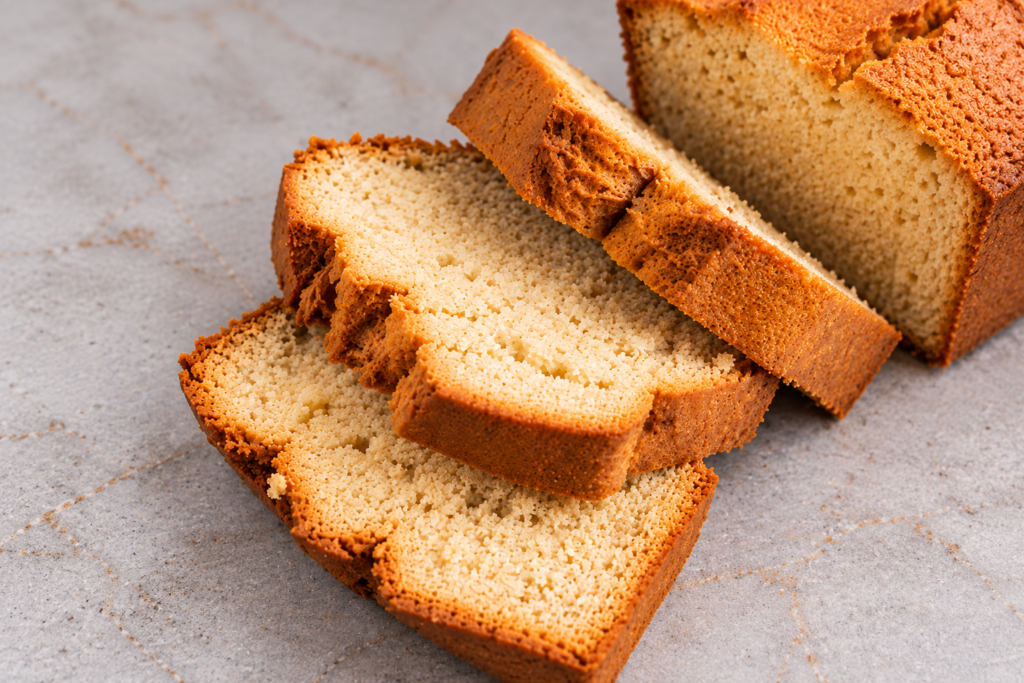
Why Is My Eggless Cake Dry? Causes & Easy Fixes
Is your eggless cake dry, crumbly or harder than you expected?
Before you add more milk, yogurt or oil to the next batch, stop and look at the crumb.
A dry eggless cake can happen for several reasons—too much flour, over-measuring flour, too little fat, insufficient liquid, overbaking, a high oven temperature or the wrong egg substitute. In some recipes, overmixing can also affect the texture.
And if your cake is gluten-free as well as eggless, there is another layer to consider. The flour blend, starches, binders, liquid and fat all have to work together to give you a tender crumb.
After more than 25 years of baking, one of the most useful troubleshooting habits I have developed is this:
Don’t change the recipe until you understand what the cake is telling you.
A dry cake is giving you clues.
This guide will help you read those clues and work out whether you are actually dealing with a dry cake—or whether the problem is dense, gummy, underbaked or poorly structured.
This article is part of my Eggless Baking Guide: Common Problems, Causes & Easy Fixes.
Quick Problem Finder
If you have just taken a disappointing cake out of the oven, start here.
My eggless cake is:
Dry and crumbly throughout
→ Check the flour quantity, flour measurement, fat and liquid.
Dry and hard around the edges
→ Check the oven temperature, pan position and baking time.
Dry, firm and very tight
→ Check over-measuring flour, overmixing and leavening.
Dry but also heavy and compact
→ It may actually be a dense cake, not simply a dry cake.
Dry outside but sticky or wet in the middle
→ This may be an underbaking or gummy-centre problem.
Soft when warm but hard after cooling
→ Check flour quantity, fat, baking time and flour type.
Dry and crumbly after changing the egg substitute
→ The substitute may not be doing the same job as the egg.
Dry, crumbly and gluten-free
→ Look at the flour blend, starch, binder, hydration and fat—not just the liquid.
If you are still unsure, the texture of the crumb usually gives you the answer.
Dry vs Dense vs Gummy: Know the Difference
This is one of the first things I look at when troubleshooting an eggless cake.
Dry, dense and gummy cakes can sometimes look similar when you cut them, but they are not the same problem.
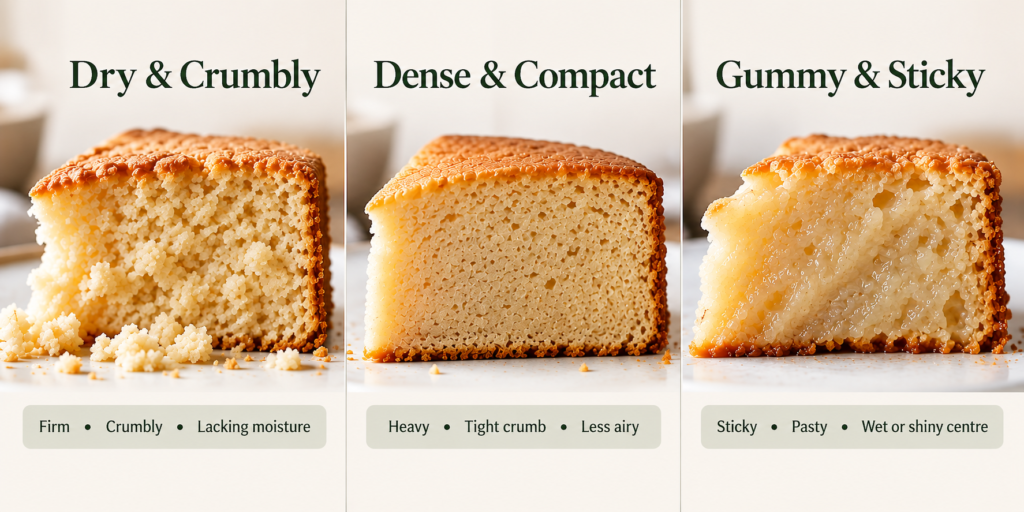
Dry, dense and gummy eggless cakes can look similar, but their textures reveal different problems.
What does a dry cake feel like?
A genuinely dry cake usually feels:
- firm rather than tender
- crumbly
- lacking in moisture
- harder around the edges
- firmer after cooling
The crumb may break apart easily instead of holding together softly.
In simple terms:
Either the cake did not have enough moisture, or it lost too much moisture during baking.
What does a dense cake feel like?
A dense cake can actually have plenty of moisture.
The problem is the structure.
The crumb feels:
- heavy
- compact
- tight
- chewy
- less airy than it should be
So a cake can be dense without being dry.
If your cake feels heavy and compact, rather than simply lacking moisture, read Why Is My Cake Dense?.
What does a gummy cake feel like?
A gummy cake is different again.
The centre may feel:
- sticky
- pasty
- wet
- shiny
- underbaked
- difficult to slice cleanly
A moist cake should feel tender.
A gummy cake feels pasty or uncooked.
If that is what you are seeing, don’t simply add more liquid to your next batch. Read Why Is My Eggless Cake Gummy in the Middle?.
This distinction matters.
A dry cake does not automatically need more liquid.
A gummy cake does not automatically need more flour.
And a dense cake does not automatically need more baking powder.
Diagnose first. Fix second.
1. Too Much Flour Can Make an Eggless Cake Dry
This is one of the first things I check.
Flour gives the cake structure, but too much flour can absorb more moisture than the recipe was designed for.
The result can be a cake that feels:
- dry
- firm
- crumbly
- heavy
- tight
This happens particularly often when flour is measured by volume.
Over-Measuring Flour Is Easy to Do
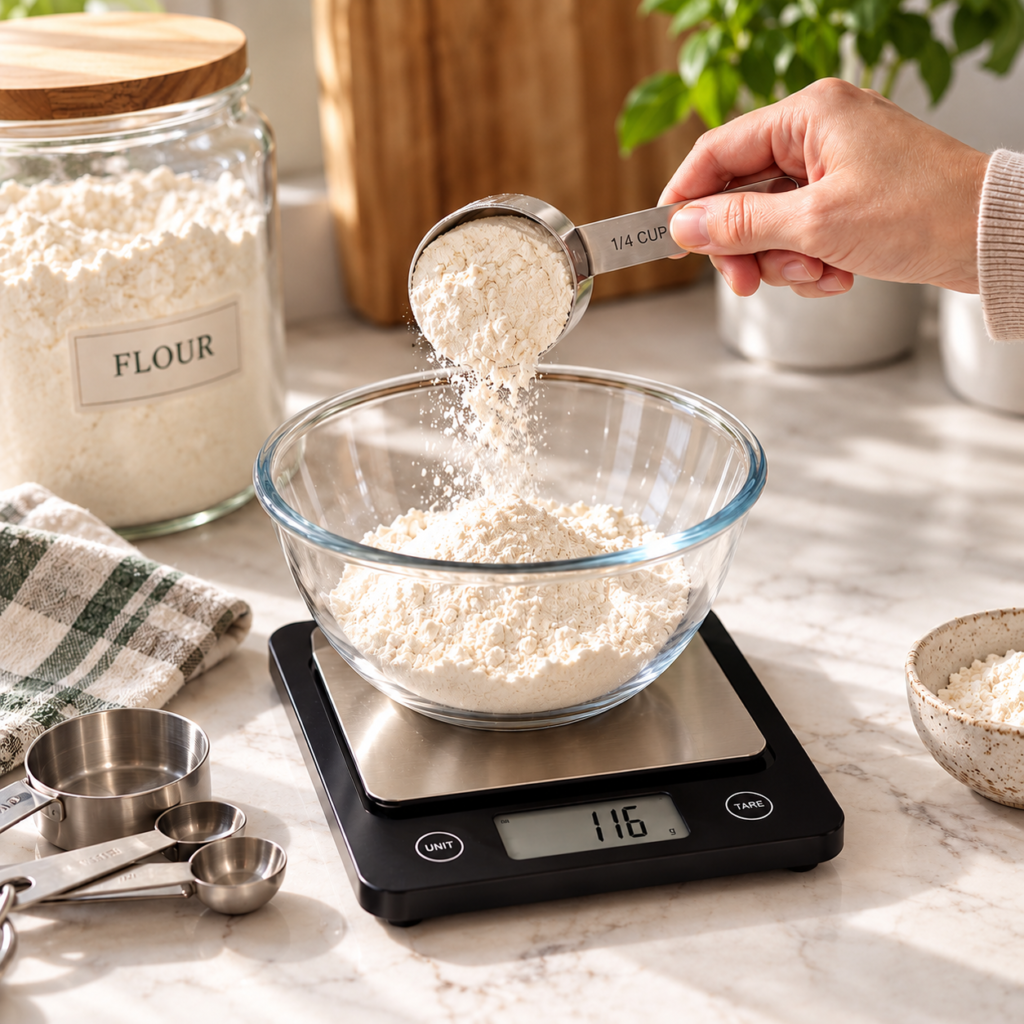
When you dip a measuring cup directly into a container of flour, the flour can become compacted.
You may think you have measured one cup, but you may actually have added considerably more flour than intended.
That changes the balance between the dry and wet ingredients.
This is why I prefer weighing flour with a kitchen scale.
It makes a real difference to consistency, especially when you are trying to troubleshoot a recipe.
Ask yourself:
- Did I weigh the flour?
- Did I scoop it directly from the container?
- Did I pack it into the measuring cup?
- Did I add extra flour because the batter looked too loose?
- Did I substitute another flour?
That last question becomes particularly important with gluten-free baking because different flours absorb moisture differently.
2. Too Little Fat Can Produce a Firm, Dry Crumb
Fat does more than add richness.
Depending on the recipe, oil or butter contributes to:
- tenderness
- softness
- mouthfeel
- moisture retention
- a less crumbly crumb
If you reduce the oil or butter substantially, the cake may feel much firmer once it cools.
But I would not simply add more oil to every dry cake.
The fat needs to be balanced with the flour, liquid, sugar and other ingredients.
So ask yourself:
Did I reduce or change the fat in the recipe?
If yes, that is an important clue.
3. Insufficient Liquid Can Leave an Eggless Cake Dry
Liquid hydrates the flour and contributes to the final texture.
Depending on the recipe, the liquid may come from:
- milk
- plant milk
- yogurt
- buttermilk
- water
- fruit purée
- other wet ingredients
If there is too little liquid for the amount and type of flour being used, the cake can become dry or crumbly.
But there is something important to remember.
Don’t Automatically Add More Milk
This is a very common troubleshooting mistake.
You bake a dry cake.
You assume it needs more milk.
You add more milk.
The next cake becomes wet or gummy in the middle.
Why?
Because the original problem may not have been insufficient liquid at all.
It may have been:
- too much flour
- over-measuring flour
- too much baking time
- an oven that was too hot
- insufficient fat
The aim is not simply to add more moisture.
The aim is to get the right balance between flour, liquid and fat for that particular recipe.
4. Too Much Baking Time Can Dry Out an Eggless Cake
This is one of the simplest causes—and one that is surprisingly easy to overlook.
The longer a cake stays in the oven, the more moisture it can lose.
A cake can be perfectly baked at one point and noticeably drier ten minutes later.
That is why I don’t like relying only on the clock.
Baking time can vary with:
- oven temperature
- oven accuracy
- pan size
- pan material
- batter quantity
- cake depth
- oven position
A recipe may say 35 minutes.
Your oven may need 30.
Another oven may need 40.
The baking time is a guide, not the only indication that the cake is ready.
What should you do?
As the cake approaches the end of its recommended baking time, start checking it rather than automatically giving it another 10 minutes.
You want the cake properly baked and set—but not dried out.
5. Your Oven Temperature May Be Too High
An oven that runs hotter than the displayed temperature can dry a cake even when the recipe itself is perfectly balanced.
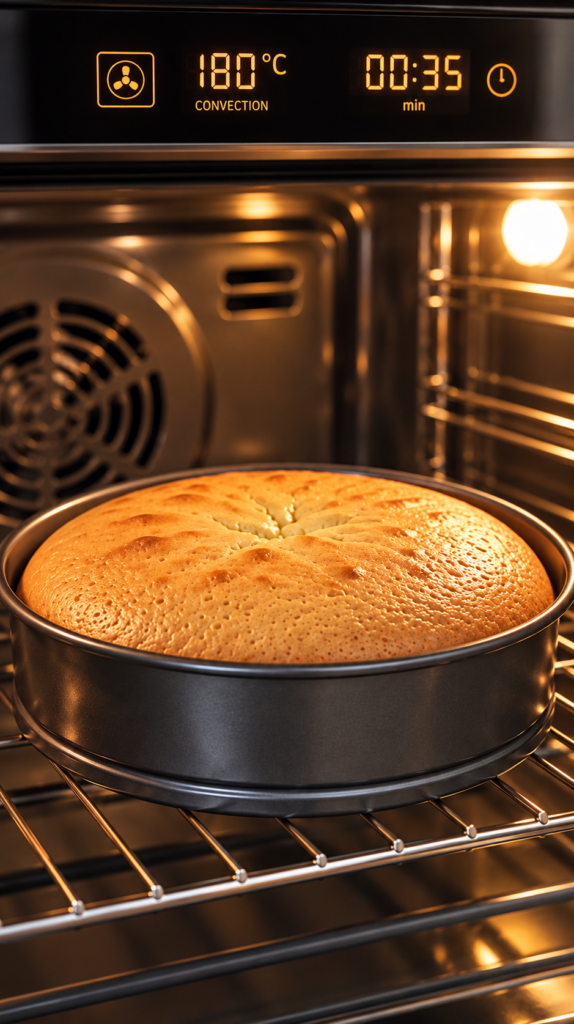
You may notice:
- a dark or firm crust
- dry edges
- rapid browning
- a centre that takes longer to bake
- a firmer overall crumb
A high temperature can make the outside of the cake set too quickly while the centre is still baking.
If your cakes repeatedly brown too fast or become dry around the edges, don’t immediately change the recipe.
Check the oven first.
For practical guidance on preheating, temperature and oven behaviour, read How to Use Oven for Baking.
An oven thermometer can also be useful if you suspect that the temperature shown on the oven is not the actual temperature inside.
6. Overmixing Can Affect the Texture
Overmixing is not the first thing I would blame for every dry eggless cake.
But it can contribute to a tighter texture, particularly in wheat-based cakes.
Once flour comes into contact with liquid, mixing affects the developing structure.
For most cake batters, you don’t need to keep beating after everything is properly combined.
My rule is simple:
Mix until combined—not until exhausted.
If your cake is dry, however, I would first check:
- flour measurement
- fat
- liquid
- baking time
- oven temperature
Then look at mixing if the crumb is also unusually tight or dense.
7. The Egg Substitute May Be Changing the Cake
This is especially important in eggless baking.
An egg does not perform just one job.
Depending on the recipe, it can contribute:
- moisture
- structure
- binding
- emulsification
- richness
- stability
- aeration
So when you remove an egg, the replacement needs to perform the function the recipe actually needs.
This is why there is no single best egg substitute for every cake.
Yogurt, flaxseed, mashed banana, fruit purée, aquafaba, starches and commercial egg replacers all behave differently.
They don’t provide exactly the same:
- moisture
- solids
- fat
- binding
- acidity
- structure
So if your cake became dry after changing the egg substitute, don’t immediately blame the flour.
Ask yourself:
What was the egg doing in this recipe?
That is a much more useful question than simply asking which ingredient can replace one egg.
For a broader understanding, read my Best Egg Substitutes for Eggless Cakes.
8. Gluten-Free Eggless Cakes Need Extra Attention to Balance
If your cake is both gluten-free and eggless, you are working with a different structural system.
You have removed:
Gluten + eggs
Both can contribute significantly to the structure of a conventional cake.
Your gluten-free eggless recipe therefore needs the right balance of:
- gluten-free flours
- starches
- binders
- liquid
- fat
- sugar
- leavening
- structure
This is why a gluten-free eggless cake can become dry or crumbly even when you feel you have followed the recipe correctly.
The Flour Blend Matters
Rice flour, millet flour, almond flour, coconut flour, tapioca flour and potato starch do not behave in the same way.
Some absorb more moisture.
Some contribute richness.
Some provide starch.
Some provide very little structure on their own.
Some work better when combined with other flours or binders.
So if your gluten-free eggless cake is dry, don’t simply add more milk.
Look at the whole flour system.
The flour blend, starches, binder, hydration and fat all need to work together.
What If Your Cake Is Dry Around the Edges but Fine in the Centre?
This is a useful clue.
If the centre is soft and properly baked but the edges are noticeably dry, I would first look at the baking environment.
Check:
- oven temperature
- baking time
- pan material
- pan size
- oven position
- proximity to the heating element
Don’t immediately reduce the flour or increase the milk.
The recipe may be perfectly balanced.
The problem may simply be that the cake is spending too long in an oven that is hotter than expected.
What If the Cake Is Soft When Warm but Hard After Cooling?
A cake naturally changes as it cools.
But if it goes from pleasantly soft to noticeably hard, I would check:
- flour quantity
- flour measurement
- fat quantity
- baking time
- oven temperature
- flour type
- mixing
Overbaking is one of the first things I would investigate.
This can be particularly noticeable with gluten-free eggless cakes because different flour combinations can produce very different textures after cooling.
What If the Cake Is Dry AND Dense?
This is where it is important not to treat everything as a moisture problem.
If your cake is:
dry + heavy + compact + tight
look at the structure as well.
Check:
- flour measurement
- amount of liquid
- leavening
- mixing
- oven temperature
- pan size
A cake can be both dry and dense, but the two problems are not the same.
What If the Cake Is Dry Outside but Gummy in the Middle?
This combination tells you something important.
The outside may have lost too much moisture while the centre has not fully set.
Possible causes include:
- oven temperature too high
- incorrect pan size
- excessive batter depth
- insufficient baking time
- too much moisture in the recipe
This is not simply a dry cake.
If the centre is sticky, pasty or wet, treat it as a gummy or underbaked-cake problem rather than automatically adding more flour.
Otherwise, you may create a dense cake the next time.
What If the Cake Is Dry and Has Sunk?
If the cake rises and then collapses, structure is part of the problem.
Look at:
- leavening
- liquid
- flour-to-liquid balance
- egg substitute
- baking time
- oven temperature
Read the full guide →Why Does My Eggless Cake Sink?.
What If the Cake Is Dry and Doesn’t Rise?
If the cake is dry as well as flat, check the leavening system and baking conditions.
Look at:
- baking powder
- baking soda
- acidity
- flour quantity
- mixing
- oven temperature
- whether the batter sat too long before baking
A cake that doesn’t rise properly can also end up with a compact crumb that feels dry.
For the full troubleshooting guide, read Why Is My Eggless Cake Not Rising?.
Don’t Change Five Ingredients at Once
This is one of the biggest mistakes I see when people troubleshoot baking problems.
The cake is dry.
So the next time they:
- reduce the flour
- increase the milk
- increase the yogurt
- add more oil
- reduce the baking time
- lower the oven temperature
And then the second cake is better—or worse.
But they don’t know why.
You have changed too many things to know what actually made the difference.
Instead, change one meaningful variable at a time.
If you suspect too much flour
Weigh the flour accurately.
If you suspect overbaking
Keep the recipe unchanged and check the cake earlier.
If you suspect the oven
Check the actual oven temperature.
If you changed the egg substitute
Go back to the original tested substitute.
If you are baking gluten-free
Look at the flour blend and binder system before simply adding more liquid.
It may take one extra bake, but you will understand the recipe much better.
Why Does My Cake Become Dry After Frosting and Refrigeration?
If your cake was soft before frosting but becomes dry after refrigeration, the problem may be related to storage rather than the original recipe alone.
Check these factors:
1. Was the cake properly covered?
Exposed cake surfaces can lose moisture. Once frosted, store the cake in a suitable covered container or cake box, following the frosting’s storage requirements. Covering the cake helps reduce moisture loss, although it cannot prevent every change in texture.
2. What type of frosting are you using?
Different frostings have different storage requirements. Cream-based frostings may require refrigeration, while some other frostings may be suitable for room-temperature storage under appropriate conditions. Follow the recipe’s food-safety guidance rather than leaving a cake out simply to soften it.
3. How long has the cake been refrigerated?
As storage time increases, a cake’s texture can change. Refrigeration also makes fats firmer, which can cause the cake to feel harder and less tender even when it has not lost much moisture.
4. Was the cake already slightly dry?
Refrigeration may make an already dry cake feel even firmer. If the cake was dry before frosting, review the flour quantity, fat, liquid balance and baking time. Storage cannot fully correct a cake that was dry to begin with.
How can you prevent this?
Allow the cake to cool completely before frosting. Store it covered, follow the frosting’s refrigeration requirements and avoid leaving cut surfaces exposed.
Before serving, check whether the cake and frosting can safely stand briefly at room temperature. This may improve the texture of some cakes, but never leave perishable frosting unrefrigerated beyond safe limits.
If the cake becomes dry even when stored correctly, investigate both the original recipe and the storage method.
My Dry Eggless Cake Troubleshooting Checklist
Before making the recipe again, ask yourself:
Flour
- Did I weigh the flour?
- Could I have over-measured it?
- Did I use a different flour?
- Did I add extra flour because the batter looked loose?
Fat
- Did I reduce the oil or butter?
- Did I substitute one type of fat for another?
- Was the recipe designed for that amount?
Liquid
- Did I use the correct quantity?
- Did I change the milk or yogurt?
- Did I reduce the liquid?
- Did I add extra flour because the batter looked too wet?
Egg substitute
- Did I use the same egg substitute as the recipe?
- Did I change the quantity?
- Does the substitute provide the same function as the egg?
Mixing
- Did I mix only until combined?
- Did I continue mixing after the flour was incorporated?
Oven
- Was the oven fully preheated?
- Is the actual temperature accurate?
- Did I bake for longer than necessary?
- Was the cake positioned correctly?
Texture
- Is the cake genuinely dry?
- Is it actually dense?
- Is the centre gummy?
- Is it dry only around the edges?
- Did it become hard only after cooling?
These questions often tell you much more than immediately changing the whole recipe.
A Simple Way to Diagnose Your Cake
When I troubleshoot an eggless cake, I like to work backwards from the finished texture.
If the crumb is dry and crumbly
Start with:
Flour → liquid → fat → baking time
If the crumb is dry and tight
Start with:
Flour → mixing → leavening → oven
If the crumb is heavy and compact
Start with:
Flour → leavening → mixing → liquid
If the centre is sticky or pasty
Start with:
Baking time → oven temperature → pan size → liquid
If the cake is gluten-free and crumbly
Start with:
Flour blend → binder → hydration → fat → baking
If the problem started after replacing eggs
Start with:
The function of the egg substitute
This is much more useful than treating every cake problem as simply a matter of adding more moisture.
Why I Look at the Crumb Before Changing the Recipe
When someone tells me their eggless cake is dry, my first question is not:
“How much milk did you use?”
I want to know what the cake actually looks and feels like.
Was the crumb crumbly?
Was it tight?
Was it heavy?
Were the edges dry but the centre soft?
Was the centre gummy?
Did it become hard after cooling?
Did the problem appear after changing the egg substitute?
Was it gluten-free?
Did you weigh the flour?
Was the oven temperature checked?
These details matter.
After years of baking and teaching, I have found that the finished cake usually gives you enough clues to narrow down the problem.
You just have to learn how to read them.
Frequently Asked Questions
Why is my eggless cake dry?
Common causes include too much flour, over-measuring flour, too little fat, insufficient liquid, overbaking and an oven temperature that is too high. An unsuitable egg substitute or an unbalanced gluten-free flour blend can also affect the final texture.
Can too much flour make an eggless cake dry?
Yes. Too much flour absorbs more moisture and can produce a firm, dry or crumbly crumb. Weighing flour is one of the simplest ways to improve consistency.
Can over-measuring flour make a cake dry?
Yes. Measuring flour by volume can introduce more flour than intended, particularly when flour is scooped directly from the container. Using a kitchen scale is more reliable.
Can overbaking make an eggless cake dry?
Yes. Baking for too long allows the cake to lose more moisture than necessary. Start checking the cake towards the end of the recommended baking time.
Why is my eggless cake dry around the edges?
Dry edges can be caused by excessive baking time, a high oven temperature, an unsuitable pan size or uneven heat. Check the baking conditions before changing the recipe.
Why does my eggless cake become hard after cooling?
This can happen when the cake has too much flour, too little fat, has been overbaked or uses a flour combination that produces a firmer crumb after cooling.
Should I add more milk if my eggless cake is dry?
Not automatically. The problem may be too much flour, insufficient fat, overbaking or oven temperature rather than insufficient liquid. Adding extra milk without diagnosing the cause can result in a gummy centre.
Is a dry eggless cake the same as a dense cake?
No. A dry cake lacks moisture and tenderness. A dense cake has a heavy, compact crumb. A cake can be both dry and dense, but the two problems are not identical.
How can I tell whether my cake is dry or gummy?
A dry cake usually feels firm, crumbly or lacking in moisture. A gummy cake feels sticky, pasty or wet, particularly in the centre.
Why does my gluten-free eggless cake become dry?
Gluten-free eggless cakes require careful balance between the flour blend, starches, binders, liquid and fat. Different gluten-free flours absorb moisture differently, so replacing one flour with another can change the final texture.
Is there one best egg substitute for cakes?
No. The best egg substitute depends on what the egg is doing in the particular recipe. Eggs can contribute moisture, structure, binding, emulsification and aeration, so the replacement needs to suit the recipe.
Final Thought
When your eggless cake turns out dry, resist the temptation to ask:
“What should I add?”
Instead ask:
“What changed—and what is the crumb telling me?”
That small shift can change the way you troubleshoot baking.
Flour provides structure.
Liquid hydrates.
Fat contributes tenderness.
Leavening creates lift.
Egg substitutes take over some of the functions of eggs.
And the oven brings everything together into the final crumb.
When those elements are balanced, you get a cake that is soft, tender and properly structured.
When they are not, the cake usually gives you clues.
Look at the crumb.
Check the ingredients.
Check the measurements.
Check the oven.
Then change one thing at a time.
That is how you move from simply following an eggless recipe to actually understanding eggless baking.
Sharmila Sengupta | Baking Expert & Educator | 25+ Years of Baking Experience