
How to Bake a Light, Airy Eggless Sponge Cake
An eggless sponge cake can rise well in the oven and still turn out heavy when you cut it. The crumb may be tight throughout, the centre may feel gummy, or the cake may have a compact layer at the bottom. Although these problems can look similar, they do not necessarily have the same cause.
When I assess a sponge, I look at its texture first. Is the crumb uniformly dense? Is the centre underbaked? Or has the cake risen and then sunk? These observations help narrow down what might have gone wrong.
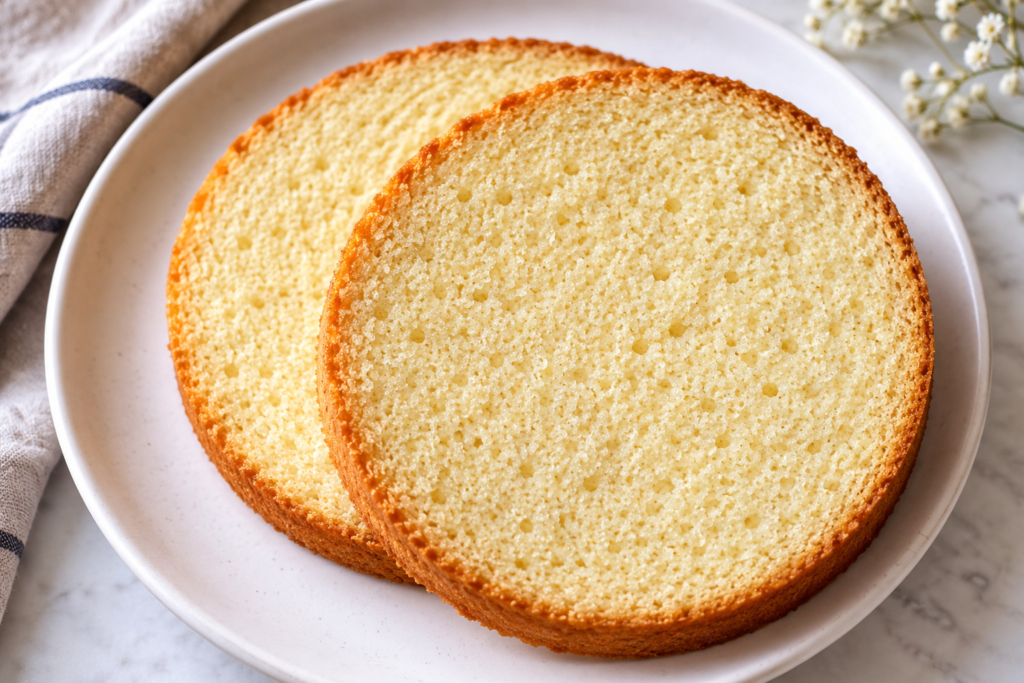
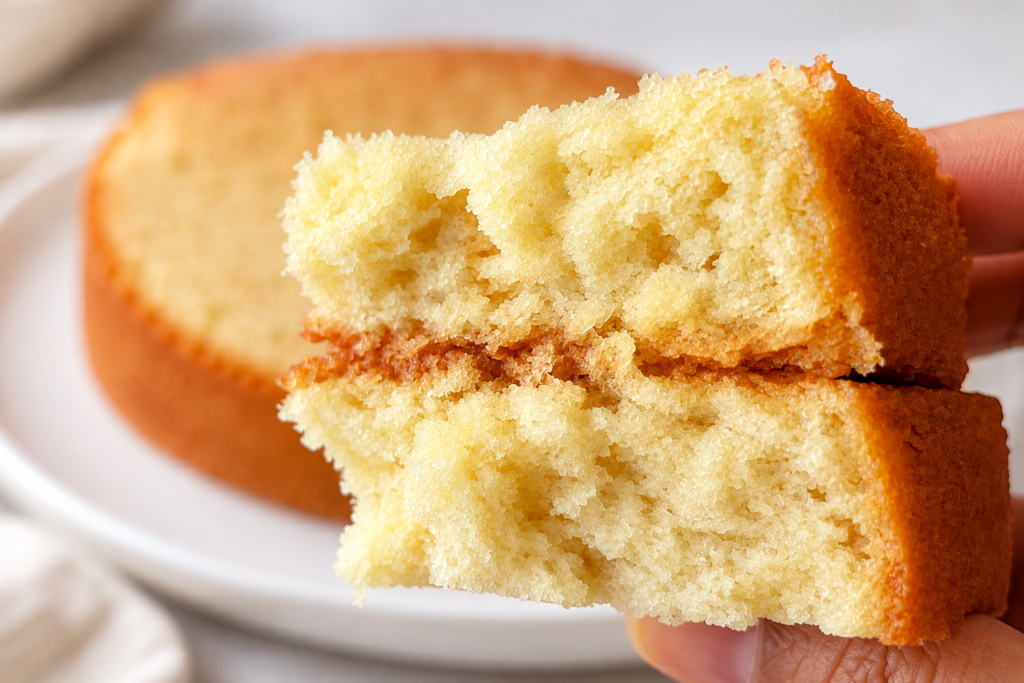
I tested this vanilla sponge cake recipe, and the cake turned out light and airy. It rose well, held its shape after cooling and had a soft, even crumb. It took approximately 30 minutes to bake in my oven at 180°C.
In this guide, I’ll explain how the ingredients and mixing method affect the sponge, what to look for during baking, and how to investigate common problems without making unnecessary changes to the recipe.
Eggless Vanilla Sponge Cake Recipe
This recipe is intended for an 8-inch round cake tin.
Ingredients
| Ingredient | Weight |
|---|---|
| Maida (all-purpose flour) | 184 g |
| Cornflour (cornstarch) | 16 g |
| Oil | 55 g |
| Butter, at room temperature | 43 g |
| Powdered sugar | 40 g |
| Condensed milk | 230 g |
| Milk | 240 g |
| Vanilla essence | 4 g |
| Vinegar | 7.5 g |
| Baking powder | 6 g |
| Baking soda | 2.5 g |
Flour measurement: Start with 200 g maida, remove 16 g, and replace it with 16 g cornflour. The final flour blend weighs 200 g.
Method
- Prepare the tin and oven. Preheat the oven to 180°C. Grease and dust an 8-inch cake tin, then line the base with butter paper.
- Sift the dry ingredients. Sift the maida, cornflour, baking powder and baking soda together. Set aside.
- Beat the oil, butter and sugar. Combine the oil, room-temperature butter and powdered sugar. Beat for 3 minutes.
- Add the condensed milk. Add the condensed milk and whisk for 4 minutes until well combined.
- Add the flavouring and milk. Add the vanilla essence and vinegar. Whisk for 2 minutes while gradually adding the milk.
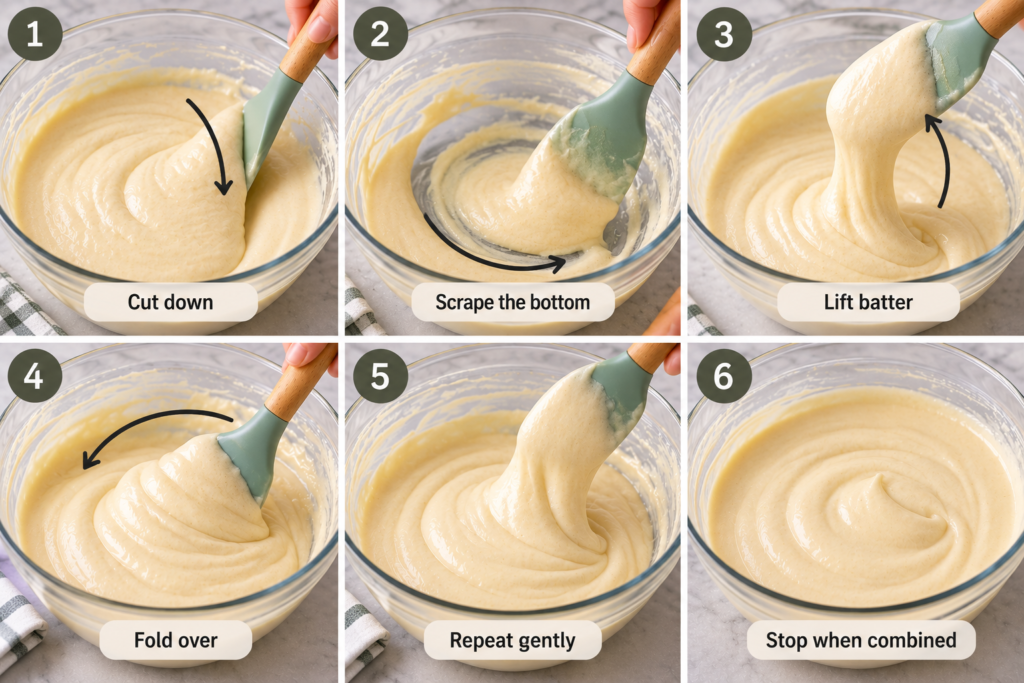
- Fold in the flour. Add the sifted dry ingredients and gently fold using a cut-and-fold motion until no obvious pockets of dry flour remain.
- Fill the tin. Transfer the batter to the prepared tin and level the surface gently.
- Bake. Bake at 180°C for approximately 30 minutes, checking the centre for doneness.
- Cool. Allow the cake to cool before removing it from the tin.
What Makes This Eggless Sponge Cake Light and Airy?
A light sponge needs to rise during baking and hold its shape as it cools. Both stages matter. A cake may rise well in the oven but still develop a heavy crumb if the batter is not properly balanced or the cake does not bake through.
In this recipe, the 200 g flour blend of maida and cornflour provides structure. The baking powder and baking soda help the cake rise, while the condensed milk, milk, oil and butter contribute to the batter’s consistency and final texture.
These ingredients work together, so changing one quantity can affect the result. For example, adding extra flour may make the crumb heavier, while changing the raising agents can affect how the cake rises and holds its shape.
The aim is not simply to make the cake rise as much as possible. It is to achieve a light, even crumb that holds its structure after baking.
1. Maida and cornflour influence the crumb
The recipe uses 184 g maida and 16 g cornflour, giving a total flour blend of 200 g. Maida provides the structure needed to hold the cake together, while replacing a small portion with cornflour changes the properties of the blend.
The important point is to maintain this proportion. Adding extra maida because the batter looks thin changes the flour-to-liquid balance and may produce a heavier cake.
Once the flour is added, fold only until it is incorporated. Excessive mixing can develop more gluten, which may make the crumb tougher.
2. Why this recipe uses both oil and butter
The recipe combines 55 g oil with 43 g butter. Oil remains liquid at room temperature, while butter contributes its own flavour and characteristics. Both form part of the recipe’s intended fat balance.
Do not replace the oil with butter, or the butter with oil, without testing the change. They do not behave identically in a cake batter, and a substitution may affect the texture.
3. The balance between condensed milk and ordinary milk
This recipe uses 230 g condensed milk and 240 g milk. Condensed milk contributes sweetness, moisture and body, while ordinary milk supplies additional liquid.
Because condensed milk is concentrated and sweetened, it is not interchangeable with ordinary milk in equal quantities. Likewise, adding extra milk simply because the batter looks thick can change the balance of the formulation.
Follow the stated quantities before considering any adjustments.
If you are exploring other ingredients for eggless recipes, see Yogurt vs Flax vs Banana in Eggless Baking. These ingredients behave differently and are not automatically interchangeable.
4. How baking powder, baking soda and vinegar work together
This recipe uses 6 g baking powder, 2.5 g baking soda and 7.5 g vinegar. These ingredients contribute to the cake’s rise, but they do not all work in the same way.
Baking powder contains its own acid-base components. Baking soda reacts with acidic ingredients, including vinegar. The quantities are intended to work together within this formulation.
Adding more baking powder is not a reliable way to correct a heavy cake. If the flour balance is wrong, the batter has been overmixed, or the centre has not baked through, extra raising agent will not necessarily solve the problem. Too much can also cause excessive expansion followed by a loss of structure.
Use the stated quantities and check that your raising agents are fresh.
How to Mix the Batter for a Light Sponge
Follow the mixing sequence
Begin by beating the oil, butter and powdered sugar for 3 minutes. Add the condensed milk and whisk for 4 minutes. Then add the vanilla, vinegar and milk as directed in the recipe.
Follow the sequence and mixing times carefully. Once the flour is added, stop using the beater and switch to gentle folding with a spatula.
Use the cut-and-fold method
Insert the spatula through the centre of the batter, sweep it along the bottom of the bowl, then lift the batter and fold it over itself. Rotate the bowl and repeat the movement gently, bringing the mixture together without prolonged stirring.
Know when to stop folding
Stop as soon as the dry flour pockets have disappeared and the batter is evenly combined. Continuing to mix after this point can develop more gluten and may make the sponge’s crumb tougher.
If the batter looks different from what you expected, do not immediately add extra flour or milk. First check whether the ingredients were measured correctly and whether you followed the recipe’s mixing sequence.
How to Bake the Sponge Correctly
Preheat the oven
Preheat the oven to 180°C before placing the cake inside. If the oven has not reached the intended temperature, the cake may not rise and set at the expected rate.
For guidance on preheating, oven settings and positioning your cake tin, see How to Use an Oven for Baking.
Use the intended tin size
This recipe is designed for an 8-inch cake tin. A different tin changes the depth of the batter and can affect how quickly the centre bakes. If you use another size, reassess the baking time rather than assuming it will remain the same.
Check the centre, not just the colour
My cake took approximately 30 minutes at 180°C, but your oven may take longer or less time.
Look for a set surface and insert a skewer into the centre. It should come out without wet batter attached. A browned top alone does not prove that the centre is fully baked.
Let the cake cool before removing it
A freshly baked sponge is delicate. Allowing it to cool before removing it from the tin makes it easier to handle without damaging its structure.
Why Is Your Eggless Sponge Cake Heavy? A Practical Diagnostic Guide
Look at the cake’s actual texture before deciding what to change. The symptoms below can help you narrow down the possibilities, but none proves a single cause.
| What you notice | Possible explanations | What to investigate |
|---|---|---|
| The crumb is dense throughout | Excess flour, overmixing, insufficient rise or an imbalance in the recipe | Review the flour quantity, mixing method and overall baking result |
| The centre is gummy or wet | The cake may not have baked through, or the ingredient balance may be affecting the texture | Check the centre for doneness and review the recipe quantities |
| The cake rises and then sinks | The cake may not have developed enough structure to support its rise | Consider the baking conditions, raising-agent quantities and when the cake began to sink |
| The bottom is compact while the top is lighter | Uneven mixing or baking may be contributing | Review how the batter was folded and whether the cake baked evenly |
| The cake barely rises | Raising-agent activity, mixing, ingredient proportions or oven conditions may be involved | Check the recipe and baking process before making changes |
These are diagnostic clues, not definitive diagnoses. Several factors can produce similar results, so investigate the most relevant possibilities before changing the recipe.
If the cake is dense throughout
Examine the crumb and review the flour quantity and mixing method first. If the cake also rose less than expected, consider the raising agents and baking conditions. Do not assume that every dense cake needs more baking powder.
For a detailed explanation, read Why Is My Cake Dense?
If the cake sinks after rising
Consider whether the centre had set before the cake was removed from the oven and whether the cake expanded more than its structure could support. The timing of the collapse and the baking conditions can help narrow down the cause.
See Why Does My Eggless Cake Sink?
If the centre is gummy
A soft crumb is not the same as a gummy centre. If the centre feels wet or pasty, check whether the cake was fully baked before concluding that the recipe itself is at fault.
For more detailed guidance, read Why Is My Eggless Cake Gummy in the Middle?
If the cake does not rise sufficiently
Review the raising agents, mixing sequence and baking conditions. Check these factors before changing the ingredient proportions.
Read Why Does My Eggless Cake Not Rise? for further troubleshooting.
Frequently Asked Question
Does beating the batter for longer make an eggless sponge lighter?
Not necessarily. Follow the recipe’s beating times for the wet ingredients, then fold the flour in gently until it is incorporated. Prolonged mixing after adding flour can make the crumb tougher rather than lighter.
Final Thoughts
A light, airy eggless sponge depends on balanced ingredients, gentle handling after adding flour and proper baking. When a cake turns out heavy, examine its texture and the baking process before changing the recipe.
For more practical guidance, visit my Eggless Baking Guide.
Sharmila Sengupta | Baking Expert & Educator | 25+ Years of Baking Experience