
Why Does My Eggless Cake Crumble? Causes and Easy Fixes
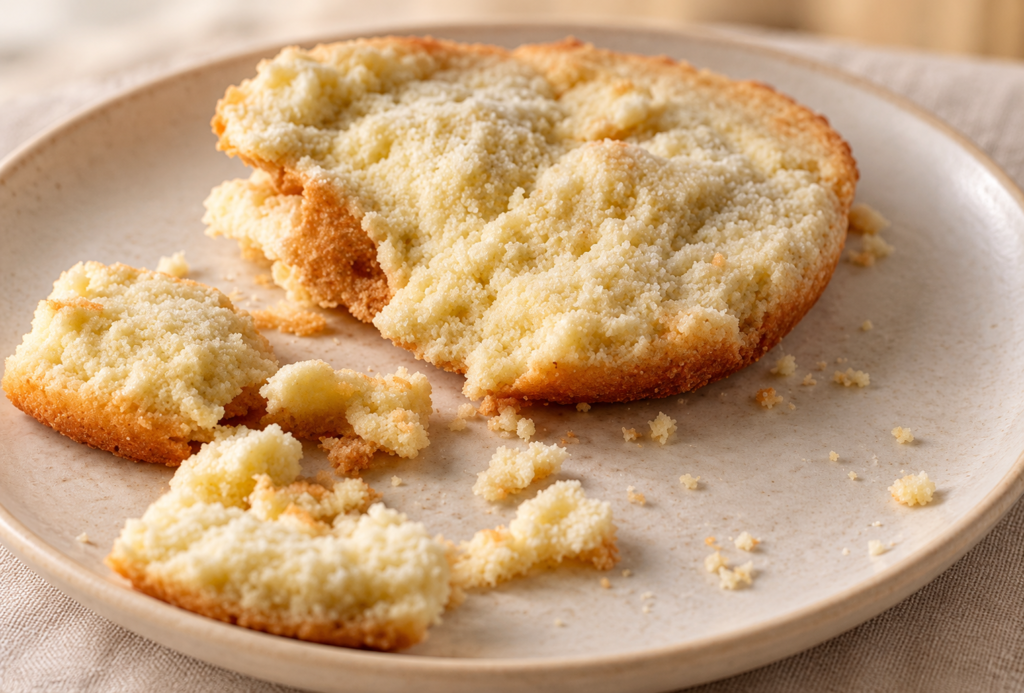
Why does my eggless cake crumble when I slice it? The cake may look beautiful when it comes out of the oven, only to break into pieces as you lift a slice. Perhaps it feels moist, yet the crumb falls apart on the plate.
Before changing your recipe, look at how the cake breaks apart. Dry, sandy crumbs usually point to a different problem from a moist cake that falls apart or a gummy cake that has not set properly. Identifying the texture will help you find the likely cause and make the right adjustment.
Let’s look at the common reasons an eggless cake crumbles, how to recognise each problem, and what you can do to help your next cake hold together.
Quick Guide: Why Is Your Eggless Cake Crumbling?
| What you notice | Likely cause | What to check first |
|---|---|---|
| Dry, sandy crumbs | Too much flour or insufficient moisture | Flour measurement and ingredient proportions |
| Moist cake that breaks when lifted | Weak binding or fragile structure | Egg substitute and recipe balance |
| Dense cake with a tight crumb | Mixing, aeration or ingredient balance | Mixing method and raising agents |
| Firm edges and a dry interior | Excessive or uneven baking | Oven temperature and baking time |
| Cake breaks when removed from the tin | Insufficient cooling or delicate structure | Cooling time and handling |
| Sticky or gummy centre | Incomplete baking or excess moisture | Centre doneness and ingredient balance |
Start with the symptom that most closely matches your cake. This will help you investigate the likely cause instead of changing several ingredients at once.
1. Is Your Eggless Cake Dry and Sandy?
If your cake breaks into small, dry crumbs as soon as you cut it, check the flour-to-liquid balance first.
Too much flour can make the crumb dry and loose. Baking for too long can make the problem worse by removing additional moisture.
What may have gone wrong?
- Too much flour: Scooping flour directly from the container can pack extra flour into a measuring cup.
- Insufficient liquid or fat: Altering the recipe may leave the batter without the moisture it needs.
- Overbaking: The cake may lose too much moisture, particularly around the edges.
- Unbalanced substitutions: Replacing an ingredient without adjusting the proportions can change the texture.
How to fix it
Weigh the flour in grams whenever your recipe provides a weight. If you use measuring cups, spoon the flour into the cup and level it without pressing it down.
Measure the liquid and fat accurately, too. Do not add extra liquid simply because the batter looks thick; follow the consistency described in your recipe.
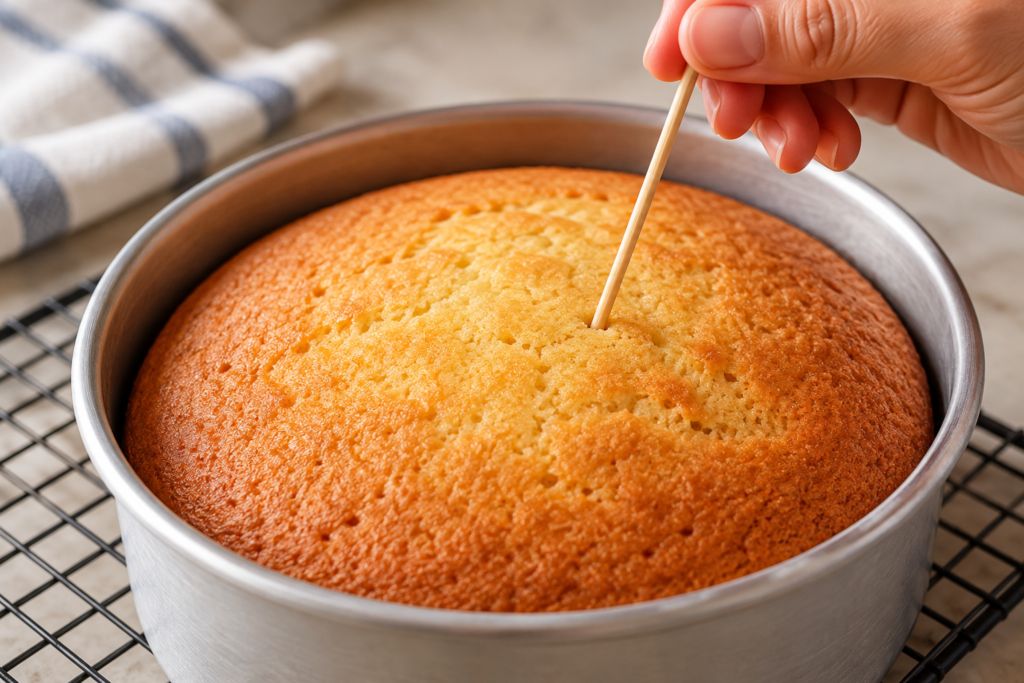
Check the cake towards the end of the recommended baking time. Insert a skewer into the centre: it should come out without wet batter, although a few moist crumbs may be normal. If you find wet batter, continue baking and check again after a short interval. If the cake is already baked through, extending the baking time may make it drier.
For more help with this particular problem, read why an eggless cake becomes dry and how to fix it.
2. Is Your Cake Moist but Still Falling Apart?
A moist cake can still crumble if its structure is too fragile. The crumb may feel soft to the touch, yet a slice breaks when you lift it.
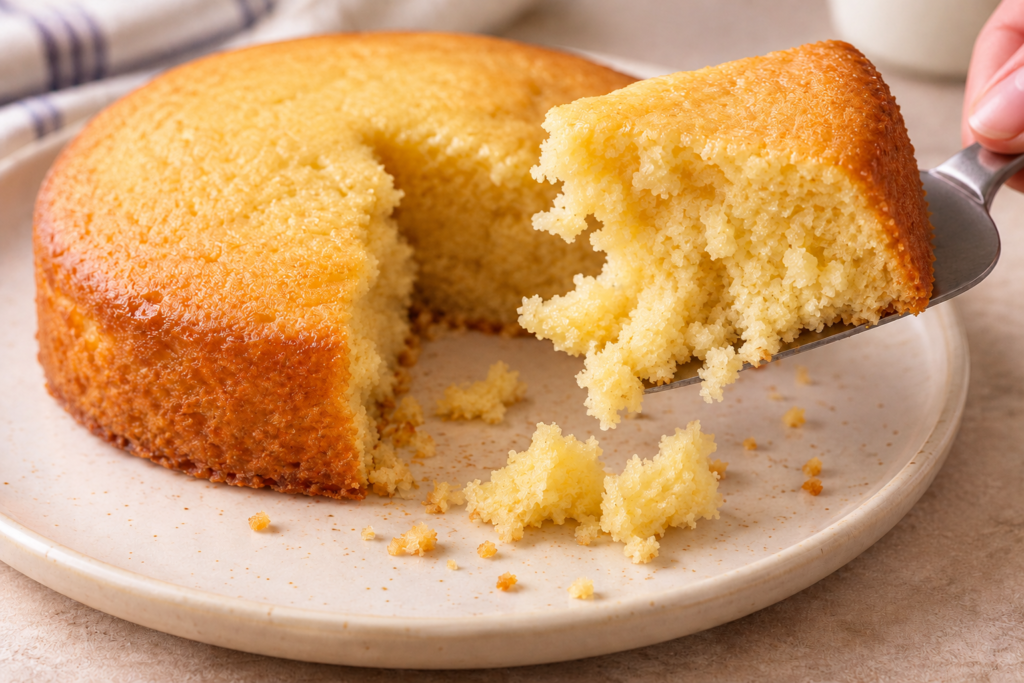
Eggs perform several functions in conventional cakes, including contributing to structure and helping ingredients hold together. In an eggless cake, the other ingredients and the chosen egg substitute must work together to create a tender but stable crumb.
What may have gone wrong?
- The egg substitute may not provide the function the recipe needs.
- The proportions of flour, liquid and fat may be unsuitable.
- The crumb may be too delicate to support a slice.
How to fix it
Review the egg substitute and the recipe proportions. Do not automatically add more flour or liquid; first identify whether the recipe’s structure is the problem.
Egg substitutes are not interchangeable in every recipe. Some contribute moisture, while others help bind the mixture or influence the final texture. For a more detailed comparison, read the best egg substitutes for cakes.
If the cake remains fragile after cooling completely, focus on the ingredient balance rather than assuming that it needs more moisture.
3. Can Over Mixing or Poor Aeration Affect the Crumb?
Yes. Mixing affects the cake’s structure. A poorly aerated or incorrectly mixed batter may produce a dense, compact cake rather than a light, even crumb.
With wheat flour, excessive mixing after the flour is added can also develop too much gluten, depending on the recipe and mixing method.
What to check
- Were the raising agents measured accurately?
- Was the flour mixed in according to the recipe?
- Was the batter left standing too long when it needed to be baked promptly?
How to fix it
Combine the dry ingredients evenly before adding them to the wet ingredients. Once the flour is added, mix only until the batter is uniform, unless the recipe specifies a different method.
Measure the raising agents carefully rather than adding extra to make the cake lighter. More raising agent does not necessarily produce a better crumb.
If your cake is heavy and compact, read why a cake becomes dense and how to correct it.
4. Can Your Oven Make an Eggless Cake Crumble?
Incorrect oven temperature or baking time can leave a cake dry, unevenly baked or insufficiently set in the centre.
If the oven is too hot, the outside may firm up before the centre has baked properly. If the cake remains in the oven too long, the crumb can become dry and fragile.
What to check
- Is the oven temperature accurate?
- Is the tin the appropriate size for the batter?
- Is the cake on the correct rack?
- Are you using the heating mode specified for your OTG or oven?
How to fix it
Use the temperature, heating mode and rack position specified in your recipe. These settings can vary with the cake batter, tin size and oven type.
Begin checking for doneness near the end of the stated baking time. If the outside is becoming too dark while the centre remains underbaked, check your oven temperature, rack position and tin size before simply extending the baking time.
For help with preheating, rack placement and oven settings, read how to use an oven for baking.
5. Does Your Cake Break When You Remove It from the Tin?
A freshly baked cake can be delicate because its structure needs time to stabilize. Turning it out too early or cutting it while warm may cause it to break apart.
How to prevent it
- Follow the cooling time specified in your recipe.
- Let the cake rest in the tin for the recommended period.
- Loosen the edges gently if needed.
- Turn the cake out carefully onto a suitable rack.
- Allow it to cool completely before slicing.
Some cakes need a short rest in the tin before being turned out, while others require different handling. Follow the method specified for your recipe rather than applying one cooling time to every cake.
If the cake breaks despite following the recommended cooling procedure, investigate the crumb structure rather than assuming that more cooling time will solve the problem.
6. Is Your Eggless Cake Crumbling Because the Centre Is Gummy?
A gummy centre feels sticky or pasty rather than tender. It can indicate incomplete baking, excess moisture or an imbalance in the recipe.
How to fix it
Review the recipe’s baking time, temperature and ingredient measurements. If the outside is firm but the centre remains gummy, investigate the oven settings and pan size. Excess moisture or incorrect ingredient proportions may also be responsible.
For a more detailed diagnosis, read why an eggless cake becomes gummy in the middle.
7. Does Your Eggless Cake Rise and Then Sink?
A cake that rises and then collapses may develop a weak crumb that breaks apart when sliced. Possible causes include excess raising agent, an unstable batter or removing the cake before the centre has set.
Check the raising-agent quantity, follow the mixing method and make sure the centre is properly baked before removing the cake from the oven.
For specific troubleshooting, read why an eggless cake sinks. If the cake fails to rise in the first place, see why an eggless cake does not rise.
How to Make an Eggless Cake That Holds Together
Once you have identified the likely cause, concentrate on the adjustments that matter most.
- Measure accurately: Weigh flour when the recipe provides a gram measurement.
- Choose the right egg substitute: Consider its role in the recipe rather than treating all substitutes as interchangeable.
- Mix correctly: Follow the specified sequence and avoid overmixing after adding flour.
- Use the correct oven settings: Check the temperature, heating mode, rack position and tin size.
- Check doneness: Assess the centre instead of relying only on the stated baking time.
- Cool before slicing: Follow the recipe’s cooling instructions and handle the cake gently.
- Change one variable at a time: This makes it easier to identify which adjustment improves the result.
For more guidance on developing a light, even crumb, read how to bake a light and airy eggless sponge cake.
Frequently Asked Questions
Why does my eggless cake crumble when I cut it?
Look at the crumb first. Dry, sandy crumbs suggest a moisture or flour-balance problem, while a moist but fragile slice points towards the cake’s structure.
Why does my eggless cake crumble the next day?
The cake may have lost moisture during storage. If it was already crumbling on the day it was baked, investigate the original baking problem as well.
Can an OTG cause an eggless cake to crumble?
Yes. Incorrect temperature, heating mode or uneven baking can affect the cake’s texture. Check the settings specified in your recipe before changing the ingredients.
Final Thoughts
When an eggless cake crumbles, start by observing the crumb rather than changing the recipe immediately.
Identify the symptom, check the most likely cause and make one measured adjustment in your next bake. This approach will help you understand your recipe and make more reliable improvements to the texture of your eggless cakes.
Sharmila Sengupta | Baking Expert & Educator | 25+ Years of Baking Experience