
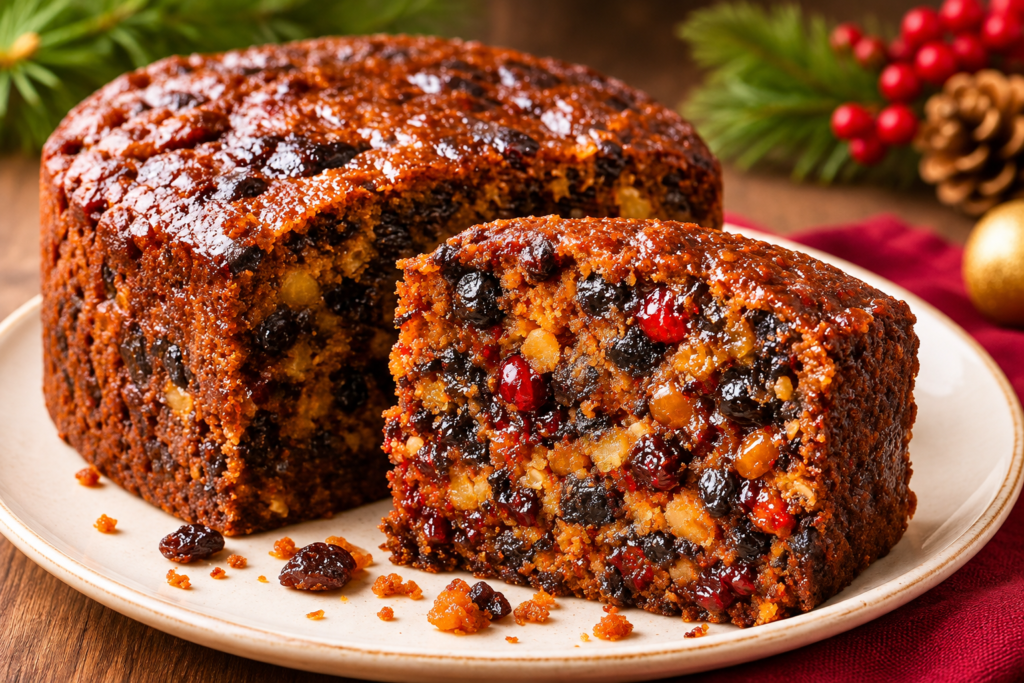
How to Keep Gluten-Free Christmas Cake Moist
A good gluten-free Christmas cake should have a moist, tender crumb, evenly distributed fruit and enough structure to hold together when sliced. It should feel rich without being heavy, and moist without becoming sticky or gummy.
Getting this balance right can be challenging. Sometimes the edges turn dry while the centre remains moist. The dried fruit may become hard or chewy, or the cake may feel perfectly soft on the day it is baked but noticeably firmer the following day. In other cases, the cake may be moist but break apart when sliced.
These problems do not always have the same cause. Understanding why the texture changes is an important part of learning how to keep gluten-free Christmas cake moist, particularly when baking a rich gluten-free Christmas fruit cake.
Before changing your recipe, look carefully at the finished cake. Its crumb, fruit distribution and surface can tell you quite a lot about what happened during mixing, baking and cooling.
Common Gluten-Free Christmas Cake Problems
| What you notice | Possible cause |
|---|---|
| The entire cake feels dry | Overbaking or an imbalance in the flour and liquid formulation |
| The edges are dry but the centre is moist | Uneven heat distribution or excessive baking |
| Dried fruit feels hard or chewy | Uneven fruit preparation or insufficient moisture absorption |
| The cake is dense and heavy | Excess fruit or insufficient batter to support it |
| The cake is moist but breaks apart | Weak crumb structure or slicing before it has cooled |
| The cake becomes firm the next day | Changes during cooling, flour characteristics or storage |
| Wet patches appear around the fruit | Uneven fruit preparation or excess retained soaking liquid |
| The top browns before the centre is baked | Oven temperature or rack-position issues |
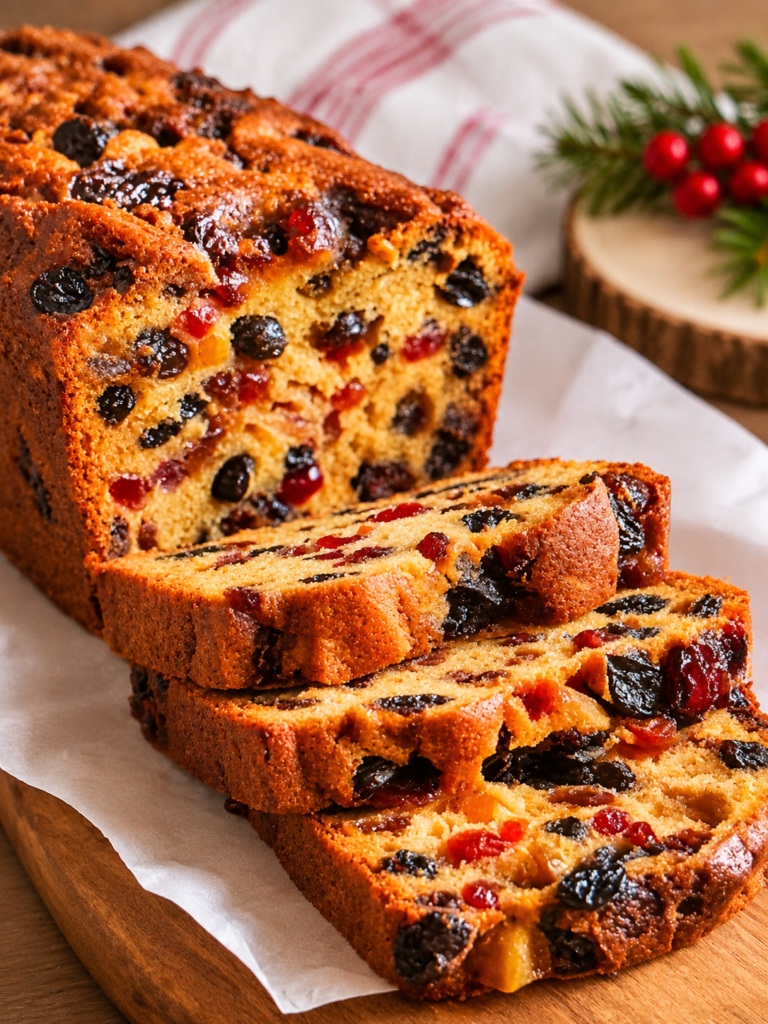
Let’s look at these gluten-free Christmas cake problems individually, because the correction depends on what you observe.
1. Why Is My Gluten-Free Christmas Cake Dry Throughout?
If your gluten-free Christmas cake feels dry throughout, with a firm crumb and little tenderness, start by examining the baking process and the flour formulation.
One common reason is excessive baking. A fruit cake needs enough time for the centre to bake properly, but leaving it in the oven longer than necessary can gradually remove too much moisture.
Pay attention to where the dryness occurs. If the crumb is uniformly dry from the centre to the edges, the flour formulation or overall baking time may be responsible. If the cake becomes progressively drier towards the edges, excessive heat exposure or uneven baking is more likely.
An oven that runs hotter than its displayed temperature can make this happen even when you follow the recipe instructions. I always recommend checking the actual oven temperature with an independent oven thermometer, especially when baking in an OTG.
The flour blend also deserves attention.
Gluten-free flours do not all absorb liquid in the same way. Their behaviour depends on the type of flour, its particle size and the overall composition of the blend. These differences can influence gluten-free cake moisture and the tenderness of the finished crumb.
I would also look at the actual flour used rather than relying only on its name. A coarsely milled rice flour, for example, can produce a different texture from a finely milled one. Commercial blends also vary in composition, and some already contain binders such as xanthan gum.
Replacing part of a tested blend with individual flours or adding extra flour can change the balance of the recipe. Check whether your blend already contains a binder before adding more.
What to check: Follow the flour formulation specified in your tested recipe. If the cake is consistently dry, check the oven temperature and baking process before increasing the liquid. Change one factor at a time so you can identify what actually improves the crumb.
2. Why Is My Gluten-Free Christmas Cake Dry Around the Edges?
This is a different problem from a cake that is dry throughout.
If the outer ring is firm and dry but the centre has a softer, more tender crumb, the oven is worth checking before changing the flour or liquid quantities.
In an OTG, the position of the heating elements and the distance between the cake tin and the elements can influence how the cake bakes. The sides and edges may receive more direct heat, particularly if the tin is positioned too close to a heating element.
The size and depth of the tin also matter. A deeper cake takes longer for heat to reach its centre, while the outer portion continues baking.
Check the following:
- Are the edges becoming firm much earlier than the centre?
- Is the top browning before the middle is properly baked?
- Is the cake tin placed too close to the upper or lower heating element?
- Does your oven maintain the temperature indicated on the dial?
If the top is browning too quickly, a loose foil shield may help protect it during the remaining baking time. Make sure the foil does not touch the heating elements.
Check the rack position, actual oven temperature and tin dimensions before changing the recipe. Adding more liquid will not correct uneven heat distribution.
3. Why Are the Dried Fruits Hard or Chewy in Christmas Cake?
The dried fruit is an important part of a Christmas cake. It contributes sweetness, flavour and moisture, but it also needs to be prepared properly.
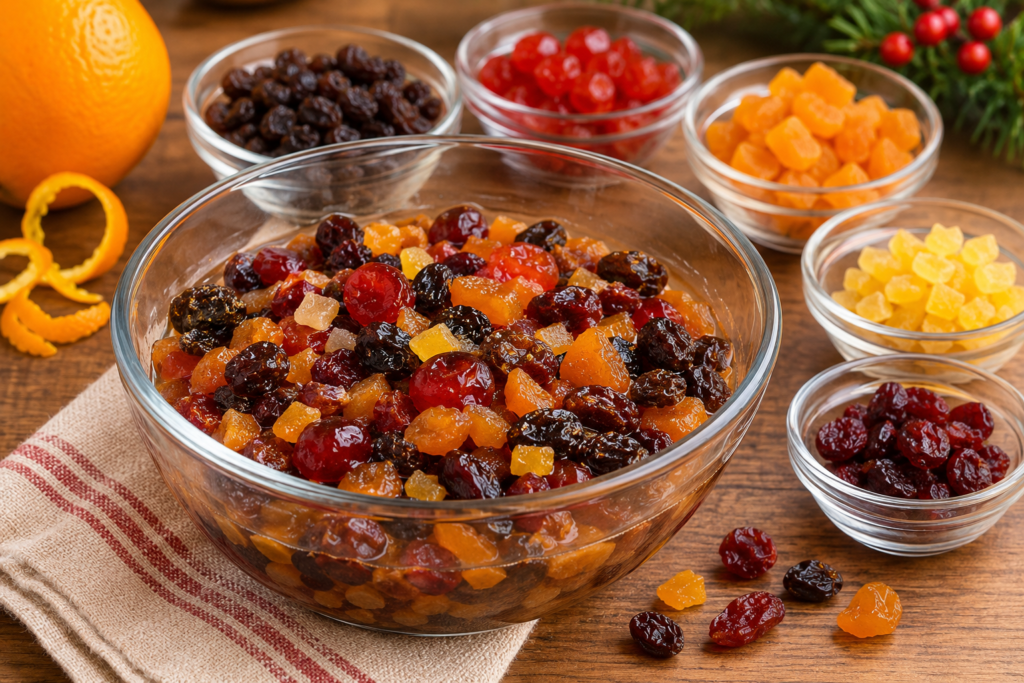
Different dried fruits absorb moisture at different rates. Raisins, currants, dates, figs and candied peel do not behave identically. Larger or tougher pieces may remain firm even when smaller fruits have softened.
Fruit that has not been prepared evenly can therefore create an inconsistent texture. You may find some pieces soft and juicy while others remain hard or chewy after baking.
The size of the fruit matters too. Very large pieces can remain noticeably firm in the finished cake and may interrupt the crumb when you slice it.
Pay attention to the following:
- Chop larger dried fruits into reasonably even pieces.
- Follow the soaking instructions of your tested recipe.
- Allow the fruit to absorb moisture as directed rather than assuming that a longer soaking period is always better.
- Drain or measure the soaking liquid according to the recipe instructions.
- Avoid adding all the leftover soaking liquid unless the recipe specifically calls for it.
Too much retained soaking liquid can alter the consistency of the batter. It may also contribute to wet patches around the fruit.
Aim for evenly prepared fruit rather than simply soaking it for longer. The fruit should be suitably softened and distributed throughout the batter.
4. Why Is My Gluten-Free Christmas Fruit Cake Dense and Heavy?
A Christmas fruit cake is naturally richer and heavier than a plain sponge cake. However, it should still have a cohesive crumb and should not feel excessively compact.
The appearance of the cut slice can help you identify what has gone wrong.
If the crumb is uniformly compact throughout: The problem may lie in the overall batter formulation or the balance between the flour, liquid and fruit. A heavy crumb from top to bottom suggests that the cake structure has not developed as intended.
If most of the fruit has settled towards the bottom: Check the consistency of the batter before baking. If it is too loose to support the fruit evenly, heavier pieces may sink during baking. Very large or unevenly prepared fruit pieces can make this more noticeable.
If the slices break around large clusters of fruit: The issue may be fruit distribution rather than moisture. Large clusters interrupt the continuous crumb, leaving the cake less able to hold together when sliced.
Another detail worth checking is the amount of fruit in relation to the batter. Too much fruit can leave insufficient cake structure to support it.
Follow the fruit-to-batter balance in your tested recipe. Chop the fruit evenly and fold it through the batter so that it is distributed throughout rather than concentrated in a few areas. Avoid increasing the fruit quantity without adjusting the overall formulation.
5. Why Does My Gluten-Free Christmas Cake Crumble When Sliced?
A cake that breaks apart is not always dry. This is an important distinction because adding more liquid may actually make the problem worse.
First, look at the nature of the crumb.
If it breaks into dry, loose particles, the cake may have lost too much moisture during baking. If the crumb feels moist but the slices fall apart around fruit pieces, the problem may be structural. The fruit may be interrupting the crumb and leaving insufficient continuous cake structure to hold the slices together.
There is another situation worth considering. If the cake crumbles only when it is still warm, it may simply need more time to cool. Gluten-free cakes can be delicate before their structure has fully settled. Slicing too early can make an otherwise well-baked cake appear fragile.
Look at where the cake breaks. Does it crumble throughout the slice, separate around large fruit pieces, or hold together once completely cool? These details help distinguish moisture loss from a structural problem or premature slicing.
Allow the cake to cool according to the recipe before slicing. If it remains fragile after cooling completely, examine the overall formulation and fruit distribution rather than automatically adding more liquid.
For a better understanding of how different flours and binders behave, you can refer to my Gluten-Free Baking Guide.
For another example of egg-free gluten-free baking using sorghum, tapioca and rice flours, you can try my Eggless Gluten-Free Christmas Plum Cake with Sorghum Flour.
6. Why Is My Gluten-Free Christmas Cake Wet Around the Fruit?
Sometimes the cake appears properly baked, but you notice sticky or damp patches when you cut a slice. These areas are often concentrated around the dried fruit.
It is important to distinguish between wetness around the fruit and a generally underbaked crumb.
If the wetness is limited to particular fruit clusters, uneven fruit preparation or excess retained soaking liquid may be responsible. The fruit may have carried more liquid into the batter than the recipe was designed to accommodate.
However, if the crumb is wet or pasty beyond the fruit pieces, the centre may not have baked sufficiently.
A skewer passing through a piece of fruit can also give a misleading result. It may pick up moisture from the fruit rather than showing the true condition of the surrounding cake.
Examine the crumb around the fruit rather than relying only on the skewer test. If the surrounding cake is set and tender, the issue may be fruit preparation. If it remains pasty, check whether the centre has baked properly.
7. How to Keep Gluten-Free Christmas Cake Moist Overnight
This is a problem many gluten-free bakers notice. The cake may feel soft when freshly baked but become noticeably firmer after resting overnight.
First, distinguish between two changes in texture.
If the entire cake feels uniformly firmer: The change may be related to the flour and starches used, as well as the way the crumb settles after baking. Rice flour blends, for example, can vary in particle size and formulation, which influences the texture of the finished cake.
If the surface and edges feel dry while the centre remains reasonably soft: Exposure to air is a more likely explanation. The cake may not have been wrapped or stored securely after cooling.
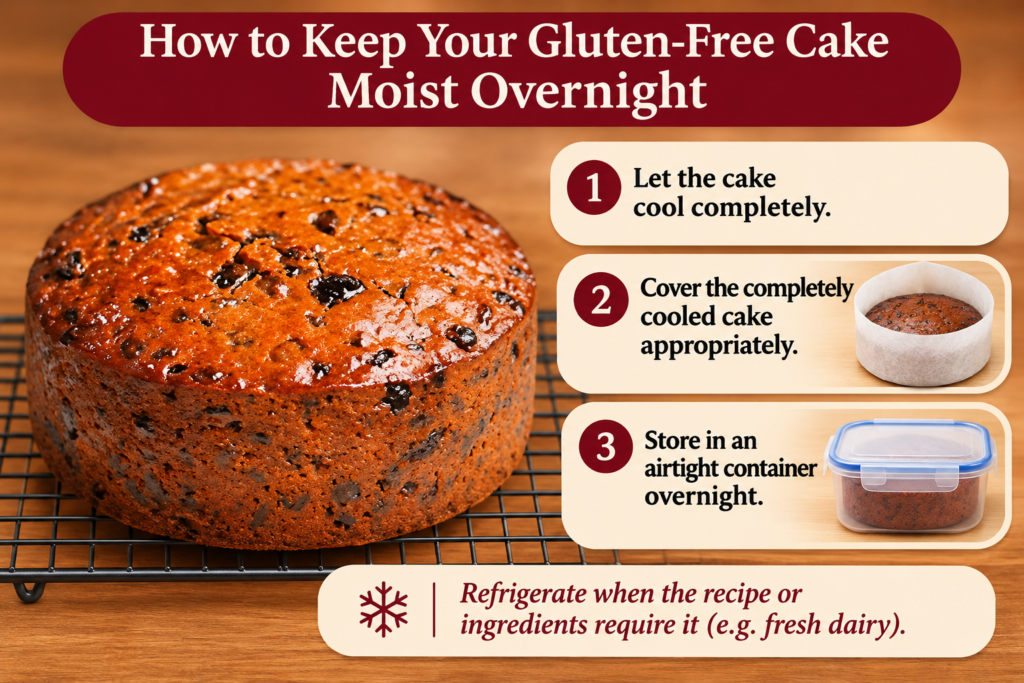
Here is what to do:
- Allow the cake to cool completely before wrapping or storing it.
- Do not wrap it while it is still warm, as trapped condensation can affect the surface and texture.
- Once cool, store it in an airtight container or wrap it securely according to the recipe’s storage instructions.
- If the recipe contains ingredients that require refrigeration, follow those food-safety instructions.
- Remember that refrigeration can make some gluten-free cakes feel firmer. Allowing a suitable portion to come towards serving temperature may improve its eating texture, provided this is safe for the ingredients used.
- If you need to store the cake for longer, follow a suitable freezing method and wrap it well to protect it from drying out.
The important thing is to check whether the firmness is throughout the crumb or mainly on the surface. This helps you decide whether to examine the flour formulation or improve the way the cake is wrapped and stored.
Frequently Asked Questions
1. How do I keep gluten-free Christmas cake moist?
Use a tested flour formulation, prepare the dried fruit properly and avoid overbaking. Allow the cake to cool completely before wrapping and storing it according to the recipe instructions.
2. Why does dried fruit become hard in gluten-free Christmas cake?
Larger or tougher fruit pieces may not absorb moisture evenly. Chop them into reasonably uniform pieces and follow the recipe’s soaking instructions.
3. Should I add all the leftover fruit-soaking liquid to the cake batter?
No. Use only the quantity specified in your recipe. Excess liquid can affect the batter consistency and create wet patches around the fruit.
4. Why does my gluten-free Christmas cake become firm the next day?
The flour and starch components influence how the crumb changes after baking. If the entire cake becomes firm, examine the flour blend. If only the surface dries, check how securely the cake was stored.
5. Can I refrigerate gluten-free Christmas cake to keep it moist?
Follow the recipe’s storage instructions, particularly if it contains perishable ingredients. Refrigeration may make the crumb firmer, so allow a suitable portion to come towards serving temperature before eating, provided it remains food-safe.
Final Thoughts
A moist gluten-free Christmas cake depends on more than the amount of liquid in the batter. Fruit preparation, flour formulation, baking conditions, cooling and storage all influence the finished texture.
When something goes wrong, examine the crumb before changing the recipe. A uniformly dry cake, dry edges, a moist but fragile slice and a firm surface each point towards different causes.
Make one adjustment at a time. This is the most reliable way to understand your cake and achieve a result you can repeat with confidence.
Sharmila Sengupta | Baking Expert & Educator | 25+ Years of Baking Experience
More Gluten-Free Baking Recipes and Practical Guides
If you enjoy gluten-free baking, I have shared more recipes and practical guides to help you understand your ingredients and achieve better results. Different flours behave differently, and knowing how to work with them can make a real difference to the texture and structure of your bakes.
Explore these related resources:
- Which Gluten-Free Flour Should You Use? – Understand how different flours influence moisture, texture and structure.
- Almond Flour in Gluten-Free Baking – Learn how almond flour contributes richness, moisture and tenderness.
- Explore My Gluten-Free Recipes – Discover more gluten-free cakes, cookies and baking ideas.
- Almond Coconut Cookies (Eggless and Gluten-Free) – Try another bake using gluten-free flours and plant-based binding ingredients.