
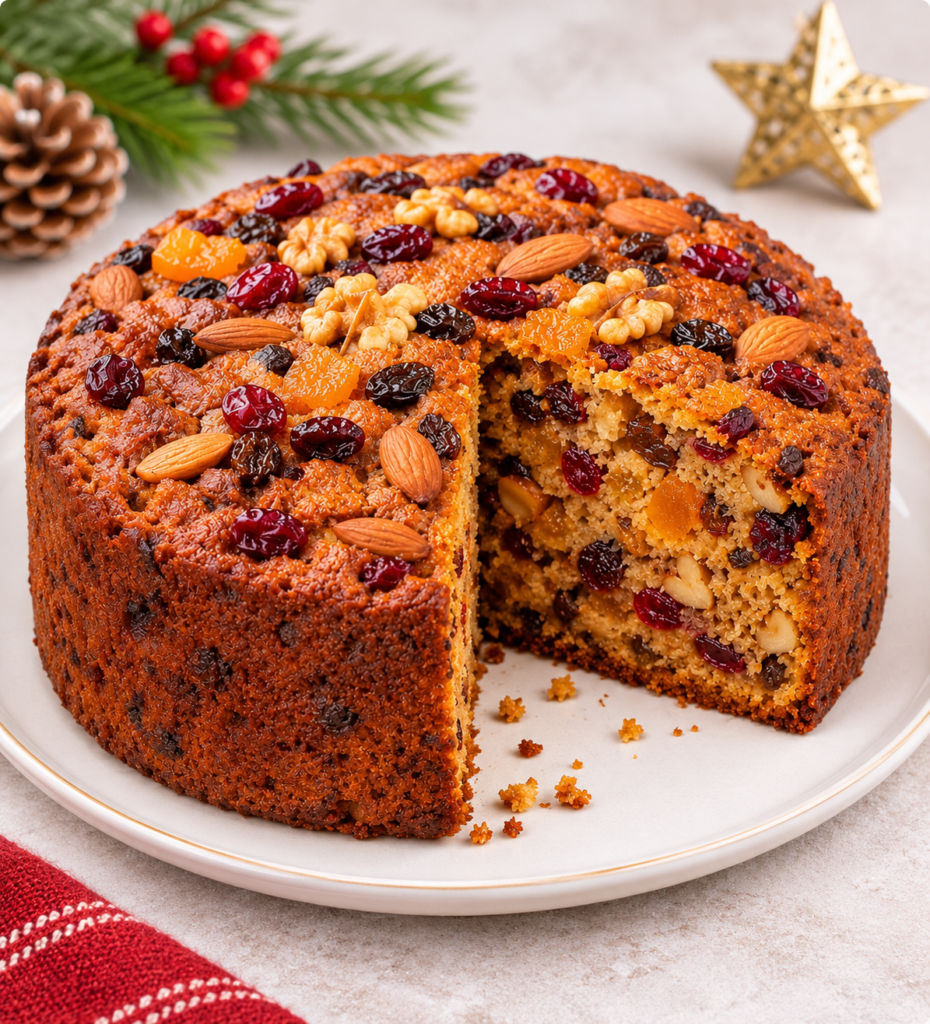
Eggless Gluten-Free Christmas Plum Cake with Sorghum Flour (Jowar)
An eggless gluten-free Christmas plum cake should have a soft, moist crumb, evenly distributed dried fruits and the warm aroma of caramel and Christmas spices. Achieving this balance without eggs or wheat flour requires attention to the flour combination, fruit mixture and baking process.
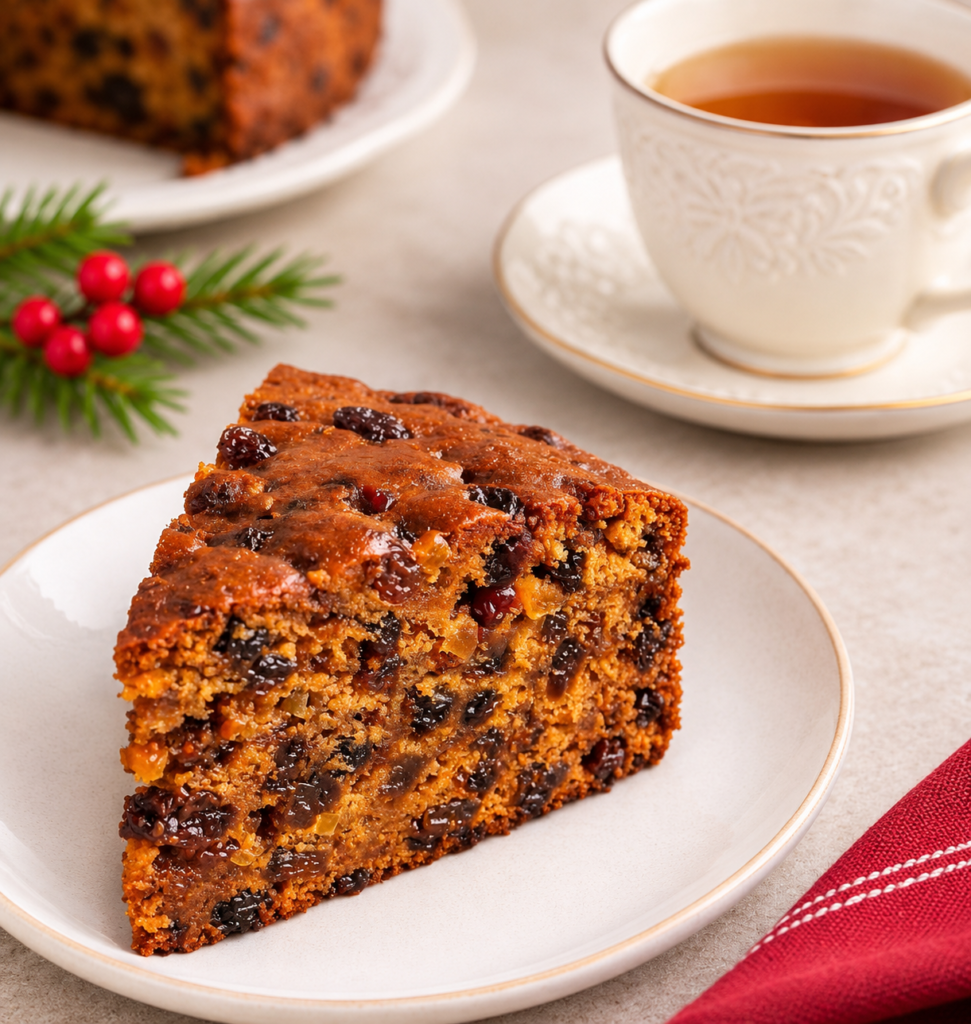
Made with sorghum flour (jowar), dried fruits, caramel and warm spices, this alcohol-free Christmas fruit cake uses yogurt, oil and ghee to contribute moisture and richness. Orange juice and dried fruits add to its festive flavour.
Although the recipe is straightforward, small details can influence the finished cake. A cake that looks baked on top, for example, may still be underbaked in the centre. Fruits collecting at the bottom may be the result of uneven distribution rather than simply a thin batter.
When I teach gluten-free baking, I always encourage bakers to observe the batter and the cake at different stages rather than immediately changing the ingredients. In this guide, I will explain what you may notice, why it can happen and what I would investigate before making any adjustments.
Quick Problem Finder
| What you notice | Possible reasons |
|---|---|
| Cake feels dense or heavy | Underbaking, batter consistency or uneven fruit distribution |
| Cake is gummy or sticky inside | Wet batter, insufficient baking or slicing before the crumb has set |
| Fruits collect at the bottom | Large fruit clusters, fruit size or batter consistency |
| Cake crumbles when sliced | Insufficient cooling, underbaking or uneven distribution of ingredients |
| Cake does not rise sufficiently | Raising agents that have lost effectiveness or uneven distribution |
| Top browns before the centre is baked | Uneven oven heating or excessive heat from the upper element |
| Cake turns dry | Excessive baking time or a higher-than-expected oven temperature |
These symptoms can look similar, but they do not always have the same cause. The sections below explain how to tell the difference.
Understanding the Flour Combination
This sorghum flour plum cake uses three gluten-free flours rather than relying on sorghum alone.
- Sorghum flour (jowar): Provides the main flour base and contributes its characteristic earthy flavour.
- White rice flour: Adds body to the crumb.
- Tapioca flour: Supports binding and flexibility.
The recipe also includes xanthan gum to help hold the gluten-free crumb together. The quantity is 3 g, approximately 1 teaspoon. I would recommend measuring it accurately rather than adding more to correct a cake that feels gummy or dense.
If you are still learning how different gluten-free flours behave, my Gluten-Free Baking Guide is a useful starting point. You can also read my guide on Which Gluten-Free Flour Should You Use? for a closer look at their individual properties.
This Christmas plum cake is eggless, gluten-free and alcohol-free. It contains dairy through the use of yogurt and ghee.
How to Make an Eggless Gluten-Free Christmas Plum Cake
Preparation time: Approximately 30 minutes of active preparation, excluding cooling time for the fruit mixture and caramel
Baking time: 50–60 minutes
Oven temperature: 163°C (325°F)
Tin size: 7-inch round cake tin
Measuring cup: 240 ml
Ingredients
Dry ingredients
| Ingredient | Weight (grams) | Cup/Spoon Measurement |
|---|---|---|
| Sorghum flour (jowar) | 138 g | 1 cup |
| White rice flour | 36 g | ¼ cup |
| Tapioca flour | 28 g | ¼ cup |
| Baking powder | 6 g | 1½ tsp |
| Baking soda | 2.5 g | ½ tsp |
| Salt | 1.5 g | ¼ tsp |
| Xanthan gum | 3 g | 1 tsp |
| Ground cinnamon | 2.5 g | 1 tsp |
| Ginger powder | 1.5 g | ¾ tsp |
| Ground cardamom | 1 g | ½ tsp |
| Ground nutmeg | 1 g | ½ tsp |
| Clove powder | 0.5 g | ¼ tsp |
Fruit mixture
| Ingredient | Weight (grams) | Cup/Spoon Measurement |
|---|---|---|
| Golden raisins | 50 g | ⅓ cup |
| Black raisins | 50 g | ⅓ cup |
| Green raisins | 50 g | ⅓ cup |
| Tutti-frutti | 80 g | ½ cup |
| Dates, pitted and chopped | 80–100 g | 8–10 medium dates |
| Orange juice | 160 g | ⅔ cup |
| Water | 60 g | ¼ cup |
Wet ingredients
| Ingredient | Weight (grams) | Cup/Spoon Measurement |
|---|---|---|
| Thick yogurt | 245 g | 1 cup |
| Vegetable oil | 110 g | ½ cup |
| Granulated sugar | 83 g | Scant ½ cup |
| Vanilla extract | 7 g | 1½ tsp |
| Ghee | 14 g | 1 tbsp |
| Lemon zest | 6 g | 1 tbsp |
Caramel
| Ingredient | Weight (grams) | Cup/Spoon Measurement |
|---|---|---|
| Granulated sugar, reserved from the total quantity | 66 g | Approximately ⅓ cup |
| Hot water | 60 g | ¼ cup |
The total sugar used in the recipe is approximately 149 g, or ¾ cup.
Topping
| Ingredient | Weight (grams) | Cup/Spoon Measurement |
|---|---|---|
| Almond slices | 14 g | 2 tbsp |
| Chopped pistachios | 14 g | 2 tbsp |
The cup and spoon measurements are approximate. I always recommend using a kitchen scale for better consistency, particularly when measuring gluten-free flours and binding ingredients.
Method
1. Prepare the fruit mixture
Combine the golden raisins, black raisins, green raisins, tutti-frutti, chopped dates, orange juice and water in a saucepan.
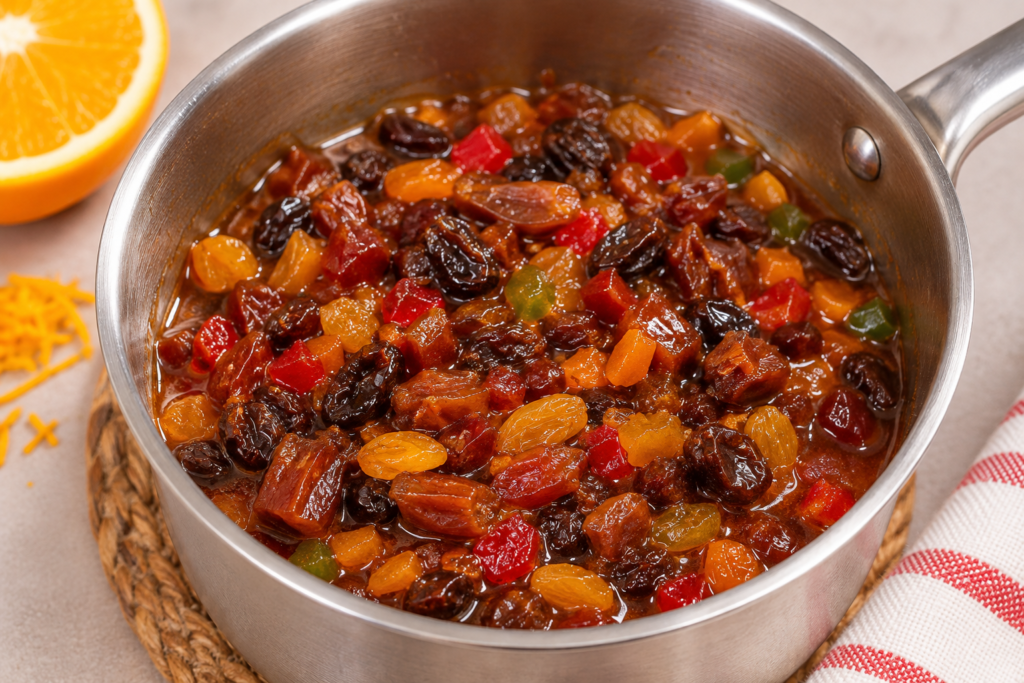
Simmer the fruit mixture for 3–4 minutes, stirring gently, until the fruits begin to soften.
Remove the saucepan from the heat and allow the mixture to cool completely.
The fruit mixture should remain moist, but it should not be hot when added to the batter. Add the fruits along with the remaining liquid as specified in the recipe; do not drain it away. Adding the mixture while hot can affect the consistency of the batter.
2. Prepare the flour mixture
In a large bowl, combine the sorghum flour, white rice flour, tapioca flour, baking powder, baking soda, salt, xanthan gum and ground spices.
Mix thoroughly so that the raising agents and xanthan gum are evenly distributed. This matters because concentrated pockets of baking soda or xanthan gum can affect the texture of the finished cake.
3. Prepare the caramel
Place the reserved 66 g sugar in a heavy-bottomed saucepan.
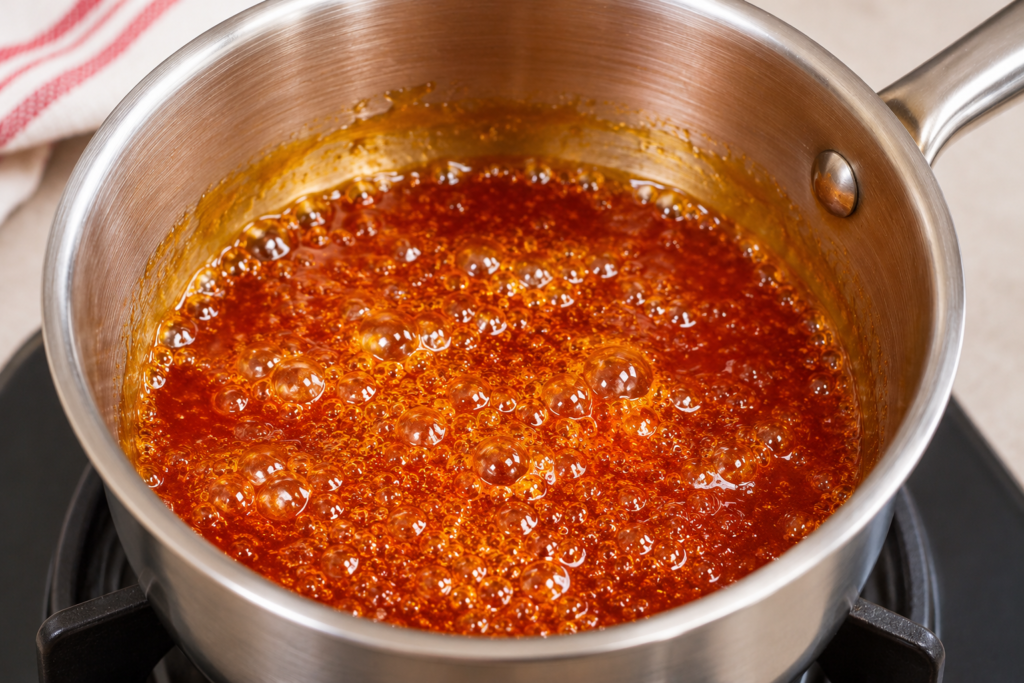
Heat over medium-low heat until the sugar melts and develops an amber colour. Avoid stirring continuously; gently swirl the pan if needed.
Carefully add the 60 g hot water. The caramel will bubble vigorously, so take care while adding the water.
Stir until the caramel dissolves, then allow it to cool before using.
4. Prepare the wet mixture
Whisk the thick yogurt until smooth. Add the vegetable oil and 83 g sugar, and mix until combined.
Add the vanilla extract, lemon zest and cooled caramel. Mix well.
Finally, add the ghee and combine until the mixture is uniform.
5. Combine the wet and dry ingredients
Add the prepared flour mixture to the wet ingredients.
Mix until no dry flour pockets or visible lumps remain. Avoid excessive mixing.
Fold in the cooled fruit mixture, including its remaining liquid. Distribute the fruit evenly rather than leaving large clusters in one part of the batter.
The finished batter should be thick but spreadable. If it looks unusually loose, check the ingredient measurements and the condition of the fruit mixture before considering any adjustment. I would not add extra flour simply because the batter looks different from a conventional wheat-based cake batter.
6. Fill the cake tin
Preheat the oven to 163°C (325°F).
Grease and line a 7-inch round cake tin with parchment paper.
Transfer the batter to the prepared tin and spread it evenly. Sprinkle the almond slices and chopped pistachios over the top.
7. Bake the cake
Bake at 163°C for approximately 50–60 minutes.
The baking time can vary depending on the oven and tin. Begin checking towards the end of the suggested baking period.
When you test the centre, look carefully at what sticks to the skewer. Wet batter indicates that the cake needs more baking. A few moist crumbs are different and do not necessarily mean that the cake is underbaked.
If the top is browning too quickly while the centre still needs time, loosely cover the cake with aluminium foil and continue baking.
8. Cool before slicing
Once baked, remove the cake from the oven and allow it to rest in the tin until it is sufficiently stable to transfer.
Transfer it to a wire rack and let it cool completely before slicing. Gluten-free cakes need time to settle, and slicing too early can make an otherwise properly baked cake appear gummy or fragile.
Common Problems and How to Fix Them
1. Why Is My Christmas Plum Cake Dense or Heavy?
A dense cake does not always mean that the flour combination is wrong. I would first distinguish between a cake that has a genuinely heavy crumb and one that has not baked sufficiently in the centre.
In this recipe, sorghum flour forms the main flour base, while rice flour and tapioca flour contribute to the crumb’s structure. The fruit mixture also adds weight and moisture. If the fruit is concentrated in one area, that portion of the cake may feel heavier than the rest.
Look at the texture as well as the appearance. If the crumb is uniformly firm and heavy, review the batter consistency and baking process. If the centre looks wet or compressed while the outer portion is better baked, insufficient baking may be contributing.
I would check the centre with a skewer and consider whether the fruit was distributed evenly before changing the flour quantities.
2. Why Is My Gluten-Free Plum Cake Gummy or Sticky Inside?
A gummy cake and a dense cake are not necessarily the same problem. A gummy centre often feels damp, sticky or slightly pasty, whereas a dense cake has a heavier, more compact crumb.
This recipe contains moisture from yogurt, orange juice and the cooked fruit mixture. That moisture is important for the finished cake, but the centre still needs enough baking time to set.
When you test the centre, look carefully at what sticks to the skewer. Wet batter indicates that the cake needs more baking. A few moist crumbs are different and do not necessarily mean that the cake is underbaked.
Also, do not judge the final crumb while the cake is warm. Gluten-free cakes need time to settle, and slicing too early can make an otherwise properly baked cake appear gummy or fragile.
I would not increase the xanthan gum automatically. The recipe already contains 3 g, and adding more may make the texture heavier or gummy.
3. Why Are the Fruits Sinking to the Bottom?
Fruit distribution is worth watching in this recipe because the batter contains several types of dried fruit, including raisins, tutti-frutti and dates.
There is a difference between large clusters of fruit settling together and individual pieces appearing lower in the cake. Large clusters may indicate that the fruit was not distributed evenly when folded into the batter. Individual pieces sinking may also be influenced by their size, weight and the consistency of the batter.
I would pay attention to the fruit before it goes into the tin. Chop larger date pieces into reasonably small, similar-sized pieces, and fold the cooled fruit mixture through the batter so that it is distributed evenly.
The batter should be thick but spreadable. If it is unusually loose, check the measurements and the amount of liquid used. These steps can improve distribution, but they cannot guarantee that every fruit piece will remain suspended during baking.
I would avoid adding extra flour simply to prevent fruit from sinking, as this can change the texture of the cake.
4. Why Does My Plum Cake Crumble When Sliced?
An eggless gluten-free cake can be more delicate than a conventional cake, particularly while it is still warm.
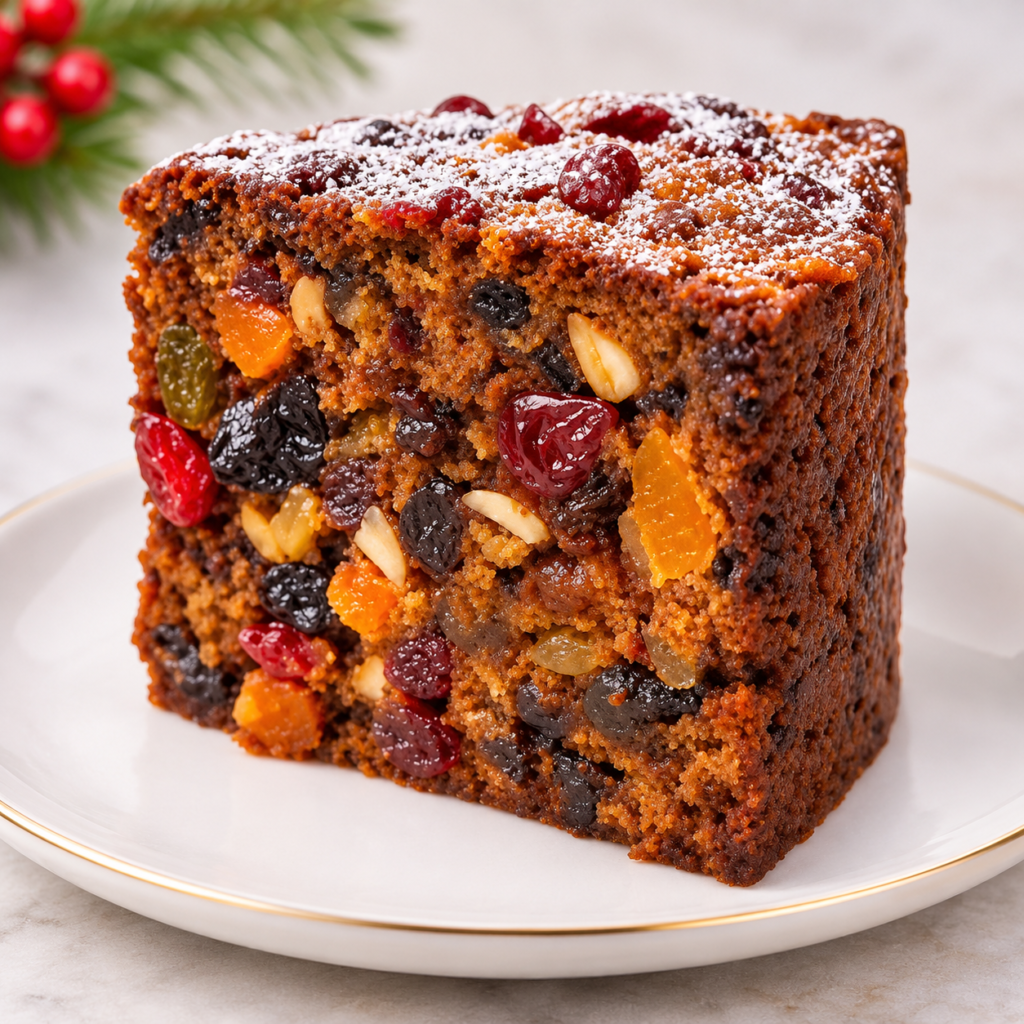
In this recipe, sorghum, rice and tapioca flours work together with xanthan gum to provide structure. If the cake is cut before it has cooled completely, the crumb may not have settled enough to hold a clean slice.
First, consider when the cake was cut. If it was still warm, allow it to cool completely before judging the texture.
If it continues to crumble after cooling, look back at the ingredient measurements and preparation. Was the xanthan gum measured accurately and mixed evenly into the dry ingredients? Was the cake baked sufficiently in the centre?
I would investigate these points before increasing the binding ingredient. More xanthan gum is not automatically the answer to a crumbly cake.
5. Why Has My Christmas Cake Not Risen Properly?
This cake uses both baking powder and baking soda. Their effectiveness and even distribution influence how the batter rises during baking.
If the cake has very little rise, I would first consider the freshness of the raising agents. Baking powder that has been open for a long time or stored in a damp environment may not perform as expected.
The baking soda also needs to be distributed evenly through the flour mixture. This is why I recommend mixing the dry ingredients thoroughly before combining them with the wet mixture.
Check that the oven was properly preheated and that the batter was transferred to the tin without unnecessary delay. I would investigate these points before changing the quantities of baking powder or baking soda.
6. Why Is the Top Browning Before the Centre Is Baked?
This is particularly worth watching when baking in an OTG because the upper and lower heating elements can affect the cake differently.
If the top becomes dark while the centre still contains wet batter, the cake may be receiving too much heat from above. The temperature displayed on the OTG dial may also differ from the actual temperature inside the oven.
Look at the colour of the top and the condition of the centre together. If the top is already sufficiently browned but the skewer still shows wet batter, loosely cover the cake with aluminium foil and continue baking.
An oven thermometer can help you understand whether the actual temperature is close to the setting you have selected.
7. Why Has My Gluten-Free Christmas Cake Turned Dry?
A dry cake usually has a different texture from a dense or gummy one. The crumb may feel firm, lack moisture and break more easily when handled.
In this recipe, yogurt, vegetable oil, ghee and the cooked fruit mixture all contribute to the finished cake’s moisture. If the cake is dry throughout, I would look at the baking process first, particularly whether it remained in the oven longer than necessary.
An OTG that runs hotter than its dial indicates can also cause the cake to lose moisture more quickly.
Before changing the quantities of yogurt or oil, compare the actual oven temperature with the setting and review the baking time. The skewer test should help you identify when the centre is baked without continuing to bake the cake unnecessarily.
If you want to understand why gluten-free Christmas cakes become dry throughout or around the edges, and how baking conditions, flour selection and storage affect moisture, read my guide on How to Keep Gluten-Free Christmas Cake Moist.
Baking This Cake in an OTG
For this recipe, use conventional top-and-bottom heating and place the cake on the middle rack.
The important thing is to observe how your OTG behaves. If the top colours much faster than the sides or centre, the upper element may be providing stronger heat. If the cake remains pale and takes considerably longer than expected, the actual oven temperature may be lower than the dial indicates.
I always recommend using an oven thermometer when possible. It helps you distinguish an oven-temperature problem from an issue with the recipe itself.
How to Store the Gluten-Free Christmas Plum Cake
Allow the cake to cool completely before storing it.
- Refrigeration: Place the cake in an airtight container and refrigerate at or below 4°C.
- Freezing: Wrap individual portions and place them in an airtight, freezer-safe container. Store at approximately -18°C.
- Thawing: Thaw frozen portions while still wrapped in the refrigerator.
Avoid storing the cake while it is warm, as trapped condensation can affect its texture.
Frequently Asked Questions
Is this Christmas plum cake alcohol-free?
Yes. This recipe uses orange juice and water to soften the dried fruits. It does not require rum, brandy or any other alcohol.
Can I make this Christmas plum cake without eggs and gluten?
Yes. The recipe is eggless and uses sorghum flour, rice flour and tapioca flour instead of wheat flour. Yogurt and xanthan gum help support the structure and texture.
A Final Note
This Christmas plum cake brings together the earthy flavour of sorghum flour, the sweetness of dried fruits, the depth of caramel and the warmth of traditional Christmas spices.
What I particularly like about this formulation is that the different flours have specific functions. Sorghum provides the main flour base, rice flour contributes body, and tapioca flour supports binding and flexibility. Xanthan gum helps hold the crumb together, while yogurt, oil and ghee contribute moisture and richness.
I would suggest following the ingredient quantities carefully, allowing the fruit mixture and caramel to cool before preparing the batter, and giving the finished cake enough time to cool before slicing.
These small details make a difference when baking without gluten, and they are worth paying attention to if you want a cake that slices well and brings all those lovely Christmas flavours together.
Sharmila Sengupta | Baking Expert & Educator | 25+ Years of Baking Experience
More Christmas Baking Recipes and Practical Tips
Christmas baking is all about preparing delicious treats and enjoying the process. Whether you are making a festive cake, baking cookies or trying something new, a little understanding of the ingredients and baking techniques can make a real difference to the final result.
I have shared several Christmas baking recipes, along with practical tips and troubleshooting guides to help you get better results. You may find these useful as you plan your festive baking.
Explore more Christmas baking recipes and tips: