
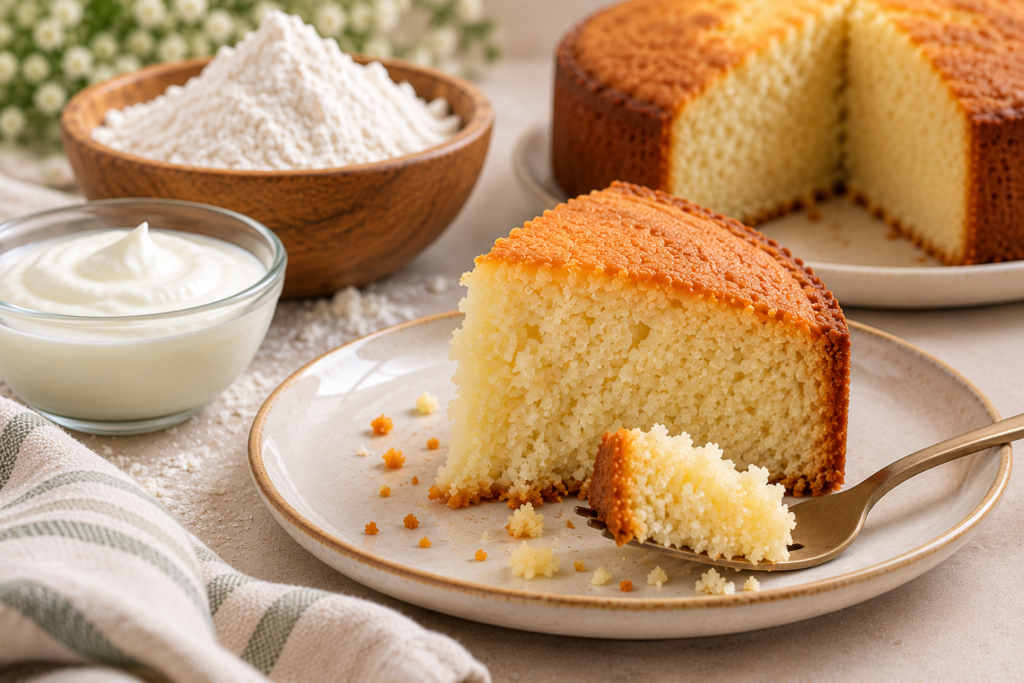
Why Does My Eggless Cake Taste of Flour or Curd? What Your Cake Is Telling You
Why does an eggless cake sometimes taste of flour or curd even when you follow the recipe carefully? If your eggless cake tastes of flour, look at its texture and crumb before changing the ingredients or baking time. They can tell you where to begin.
A cake that is dense and barely rises needs a different investigation from one that is soft and fully baked but still tastes floury. Similarly, a mild tang from curd is not the same as an overpowering sour flavour.
Let’s look at what each symptom tells you and what to check before your next bake.
Before changing your recipe, take a moment to examine the cake. Did it rise properly? Is the centre fully baked? Is the crumb dense, or is the texture good but the flavour unpleasant? These clues can help you narrow down the problem and decide what to check first.
Use the guide below to match what you notice with the area that needs investigation.
Quick Diagnostic Guide
Before changing your recipe, look at the cake’s texture, rise and flavour. These clues can help you identify what to investigate first.
- Cake barely rises and has a tight crumb: Check the batter consistency, leavening agents and mixing method.
- Cake rises well but becomes dry or firm: Review the baking time and possible moisture loss.
- Wet, pasty or gummy centre: Check whether the cake is fully baked, along with the tin depth and recipe balance.
- Soft, fully baked cake with a floury aftertaste: Investigate the flour type, freshness and balance of ingredients.
- Pockets of dry flour: The batter may not have been mixed evenly.
- Strong curd flavour: Review the type and quantity of curd used in the recipe.
- Unusually sour flavour: Check the curd’s freshness and how it was stored.
- Bitter or soapy aftertaste: Recheck the measurements and freshness of the leavening agents.
Why Does My Eggless Cake Taste of Flour?
When a cake tastes floury, I would first look at the crumb rather than immediately changing the recipe.
Is the cake heavy and compact? Is the centre wet and pasty? Or has the cake baked properly, with a soft crumb, but still has an unpleasant floury aftertaste?
These are different problems, and each calls for a different check.
The Cake Barely Rises and Has a Tight Crumb
Start by remembering how the batter looked before it went into the oven.
If the batter was unusually thick, check how you measured the flour. Too much flour in proportion to the liquid can produce a heavy batter that does not expand as expected.
I recommend weighing your ingredients whenever possible. If you use measuring cups, spoon the flour in lightly and level it rather than packing it down.
If the batter had the consistency specified in the recipe but the cake barely rose, check the raising agents. Were the baking powder and baking soda measured correctly? Are they still effective? Next, review the mixing method, tin size and whether the oven was properly preheated.
The flour you use also makes a difference. In a wheat-based eggless cake, the flour-to-liquid balance and mixing method influence the crumb. In gluten-free baking, the flour blend, binder and liquid must work together to help the cake rise and hold its shape.
Do not add extra baking powder simply because your cake is dense. Too much can cause the cake to rise rapidly and then collapse. Identify whether the problem began with the batter consistency or the raising process before making any adjustments.
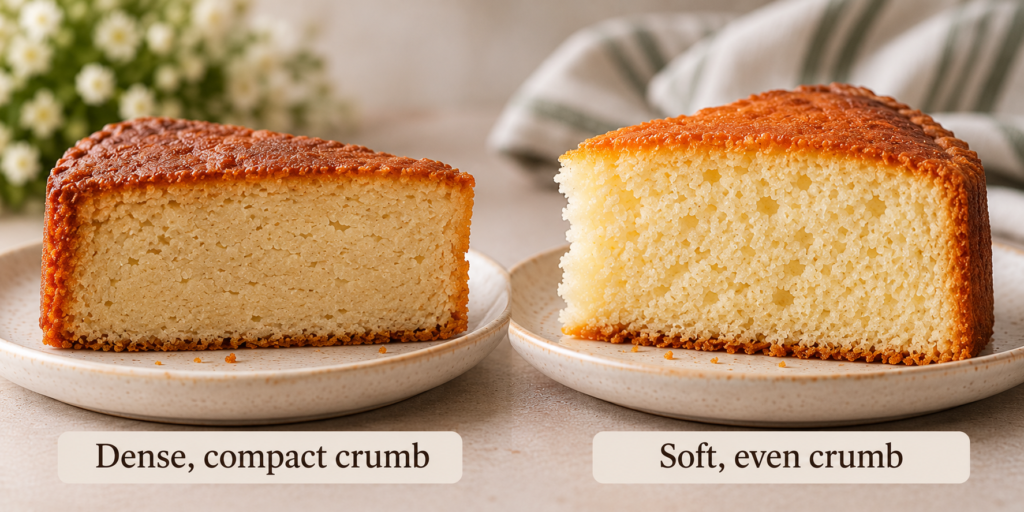
The cake rises well but becomes dry or firm
If the cake rises well but turns dry or firm, check how long it stayed in the oven and whether you used the tin size and depth specified in the recipe.
Excessive baking drives off moisture. Use the recommended baking time as a guide, but check for doneness rather than extending the time automatically.
The centre is wet, pasty or gummy
A wet or gummy centre needs a different investigation from a dry, compact crumb.
If a skewer comes out coated in wet batter, the cake may need more baking. A few moist crumbs on the skewer do not necessarily mean the cake is underbaked.
If the centre remains pasty despite adequate baking, look at the recipe and the depth of the batter in the tin. Excess moisture or an imbalance between the liquid and structural ingredients may be contributing to the problem.
For a wheat-based eggless cake, review the flour-to-liquid proportions. For a gluten-free cake, also consider the flour blend, starches, binders and hydration specified in the recipe.
If the top is browning while the centre remains wet, check the oven temperature, rack position, preheating and tin depth. Do not keep extending the baking time without considering why the centre is taking longer to set.
For a more detailed diagnosis, read Why Is My Eggless Cake Gummy in the Middle?
1. Why an Eggless Cake Tastes of Flour Even When Fully Baked
If the cake is soft and evenly baked, with no wet centre or pockets of dry flour, I would look at the ingredients rather than the oven.
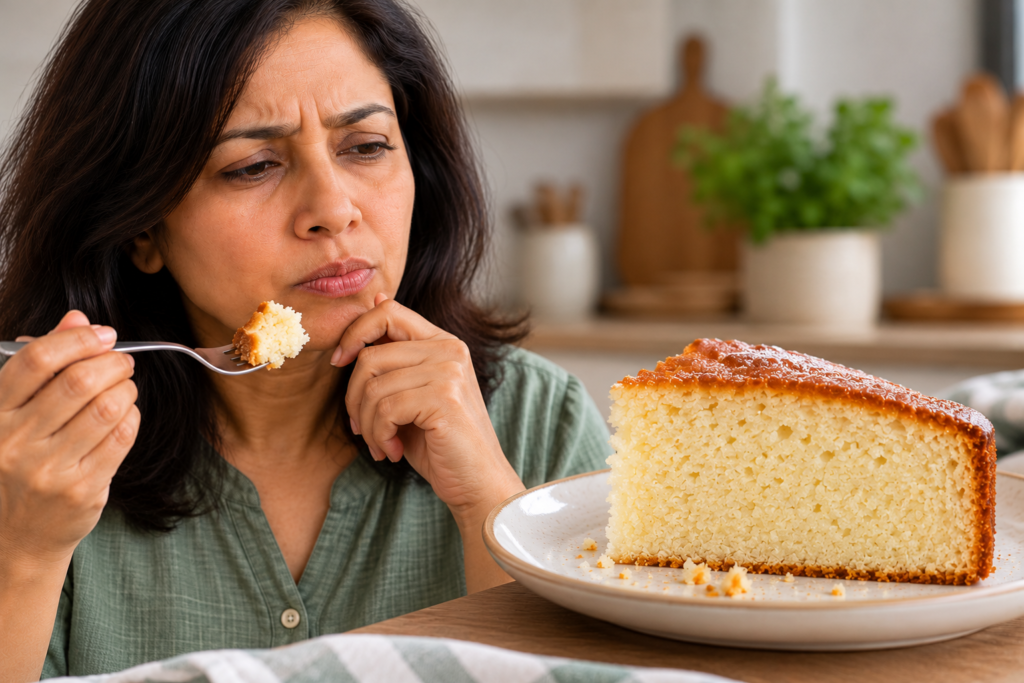
Start with the flour. Wholegrain, millet, rice and other gluten-free flours have their own flavour profiles, which can be more noticeable than those of refined wheat flour. Also check freshness and storage, particularly if you use wholegrain or nut-based flours, which can develop stale or rancid flavours.
Think about what changed in your last bake. Did you open a new packet of flour, switch to a different gluten-free blend or substitute one flour for another? These are useful clues because different flours absorb moisture differently and contribute different flavours. Even a substitution made by weight may change the cake’s texture and taste.
If you suspect a substitution, return to the original flour or tested blend in your next bake. Change one factor at a time so you can identify what makes the difference.
For more baking ideas using gluten-free ingredients, explore the gluten-free recipes on Cookery Expressions.
You can see pockets of dry flour in the crumb
If you cut the cake and find pockets of dry flour, the ingredients have not been incorporated evenly.
For a conventional wheat-based cake, mix the dry ingredients thoroughly before combining them with the wet ingredients. Scrape the sides and bottom of the bowl so no dry ingredients remain unmixed. Follow the recipe’s mixing method and avoid unnecessary mixing once everything is incorporated.
For a gluten-free cake, make sure the flour blend, starches and binders are distributed evenly. Some recipes also require resting time to allow the flour and binders to hydrate, so follow the method developed for that particular formula.
For more help identifying the causes of a dense crumb, read Why Is My Cake Dense?
2. Why Does My Eggless Cake Taste of Curd?
Curd adds moisture and acidity to many eggless cakes. Its flavour varies depending on the variety and how tangy it is.
A slight tang is not necessarily a problem. Before changing the quantity of curd, consider how strong the flavour is and whether the cake’s texture is otherwise good.
The cake has a mild tang
If the cake is properly baked, has a good crumb and tastes only mildly tangy, the flavour may simply come from the curd.
If the taste is pleasant and the texture is right, you may not need to change anything. Not every slight difference in flavour means the recipe has failed.
The curd flavour is too strong
If the curd flavour overwhelms the cake, check two things first: whether the curd was particularly tangy and whether you measured the quantity specified in the recipe.
Curd contributes more than flavour. Its moisture and acidity can affect the texture and the way the raising agents work. Adding extra curd to make a cake softer may therefore change the result in ways you did not intend.
Measure the curd accurately. If the flavour remains too strong, try a milder, fresh curd suitable for the recipe in your next bake. Keep the quantity unchanged initially so you can judge the effect without changing the moisture and acidity at the same time.
The cake tastes unusually sour. Is the curd spoiled?
Sourness alone does not establish that curd has spoiled. Fresh curd naturally develops acidity, and some varieties are more tangy than others.
Consider the curd’s storage history, smell, appearance and expiry or use-by guidance, where applicable. An unusual or unpleasant smell, visible mould or other signs of spoilage mean you should discard it. Do not taste curd to determine whether visibly spoiled food is safe.
If you suspect spoilage, do not use the curd or try to mask its flavour with sugar, vanilla or other ingredients.
3. Why Does My Eggless Cake Taste Bitter or Soapy?
A bitter or soapy aftertaste points towards a different problem from a floury or tangy flavour.
One possible cause is excessive baking soda. If its quantity is not balanced by the recipe’s acidic ingredients, it can leave an alkaline, soapy taste. Excess baking powder or an ingredient that has deteriorated may also affect the flavour.
Start by checking your measurements and confirming that you used the correct raising agent. If the recipe uses curd to react with baking soda, changing the quantity of either ingredient independently can disturb the balance.
When you bake again, follow the specified ingredients and quantities rather than guessing at additions to correct the taste.
If an ingredient smells rancid or shows signs of spoilage, do not use it.
4. Could Your OTG Oven Be Affecting the Cake?
Your oven may contribute to a texture problem, so begin with what you observe.
If the top browns before the centre is baked, check the actual oven temperature, rack position, tin depth and preheating. If the cake is baked through but dry, review the baking time and temperature together.
However, if the crumb is soft and fully baked but still tastes floury, the oven is less likely to be the cause. Revisit the flour type, freshness and ingredient balance instead.
Follow the baking mode and temperature specified for your recipe, allowing for differences between ovens and tin sizes.
For help with preheating, rack placement and baking modes, see How to Use an Oven for Baking.
5. Can You Fix an Eggless Cake That Already Tastes of Flour or Curd?
Sometimes you can improve the eating experience, but you cannot always restore the cake to its intended texture or flavour.
- Genuinely underbaked centre: If the cake is still warm and the centre contains wet batter, further baking may help. Watch it carefully so the edges do not dry out.
- Dry, compact crumb: A suitable frosting, filling or syrup may make the cake more pleasant to eat, but it will not restore the original crumb.
- Mild floury or tangy flavour: A complementary filling may balance the flavour, but it will not correct the underlying cause.
- Bitter or soapy taste: Review the raising-agent measurements and ingredient quality before repeating the recipe. Do not rely on flavourings to hide a pronounced off-taste.
- Possible spoilage: Discard the cake rather than trying to rescue it.
For your next bake, change the factor most strongly suggested by the evidence. When you change several ingredients at once, it becomes difficult to tell which adjustment actually helped.
Frequently Asked Questions
Why does my eggless cake taste like maida even when it is soft?
If the cake is soft and fully baked, the flour itself, its freshness or the balance of ingredients may be responsible. Check these before changing the baking time.
Can the type of flour affect the taste of an eggless cake?
Yes. Wholegrain, millet, rice and gluten-free flours have distinct flavours and absorb moisture differently. Use a flour blend tested for your recipe rather than assuming another flour will behave the same way.
Why does my eggless vanilla cake taste of curd?
The curd may be particularly tangy, or the quantity may be greater than the recipe requires. Check the measurement first; if necessary, test a milder, fresh curd in your next bake.
Can I use sour curd in an eggless cake?
Curd with a naturally tangy flavour may suit some recipes, depending on the formula. Do not use curd that shows signs of spoilage. Its acidity and moisture can also affect the cake’s texture.
The Right Fix Starts With the Right Diagnosis
Before changing your recipe, look at the crumb, consider how the cake baked and identify which ingredient may have affected its flavour.
One observation, one likely cause, one targeted adjustment. This is a more reliable way to improve your next bake than changing several ingredients at once.
For more practical troubleshooting, explore the Eggless Baking Guide: Common Problems, Causes & Easy Fixes.
Sharmila Sengupta | Baking Expert & Educator | 25+ Years of Baking Experience