
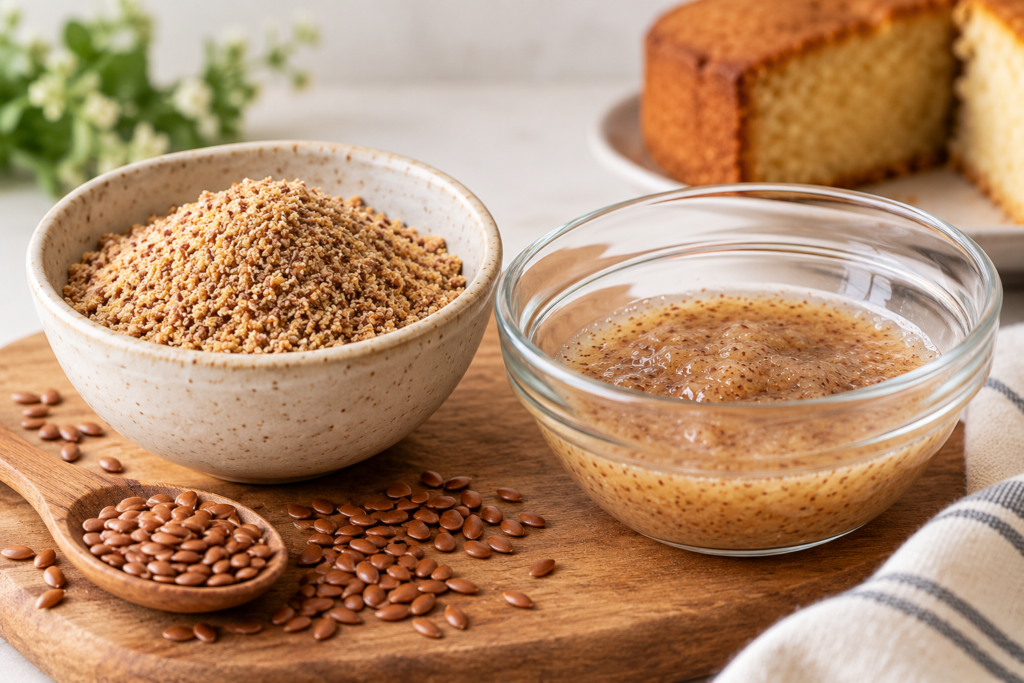
Why Is Flax Egg Making My Cake Grainy? Understanding Texture Problems
Is your flax egg making your cake grainy? If your eggless cake has a sandy mouthfeel, noticeable seed particles or an uneven crumb, the cause may lie in the fineness of the flaxseed, how the gel is prepared, or the flour you are using.
Not every texture problem has the same cause. A cake can be soft but grainy because of coarse particles, or smooth but dense because of its proportions, mixing or baking. Sometimes, both problems occur together.
A flax egg is made by mixing ground flaxseed with water. It forms a binding gel that helps hold ingredients together, but noticeable seed particles may remain in the mixture.
Before changing your recipe, identify what you can see and feel in the finished cake. This will help you choose a suitable correction instead of changing several ingredients unnecessarily.
For a broader understanding of eggless cake problems, see my Eggless Baking Guide: Common Problems, Causes & Easy Fixes.
Start Here: What Is Your Cake Telling You?
The texture of your cake can offer useful clues about what went wrong. Begin by identifying the problem you notice.
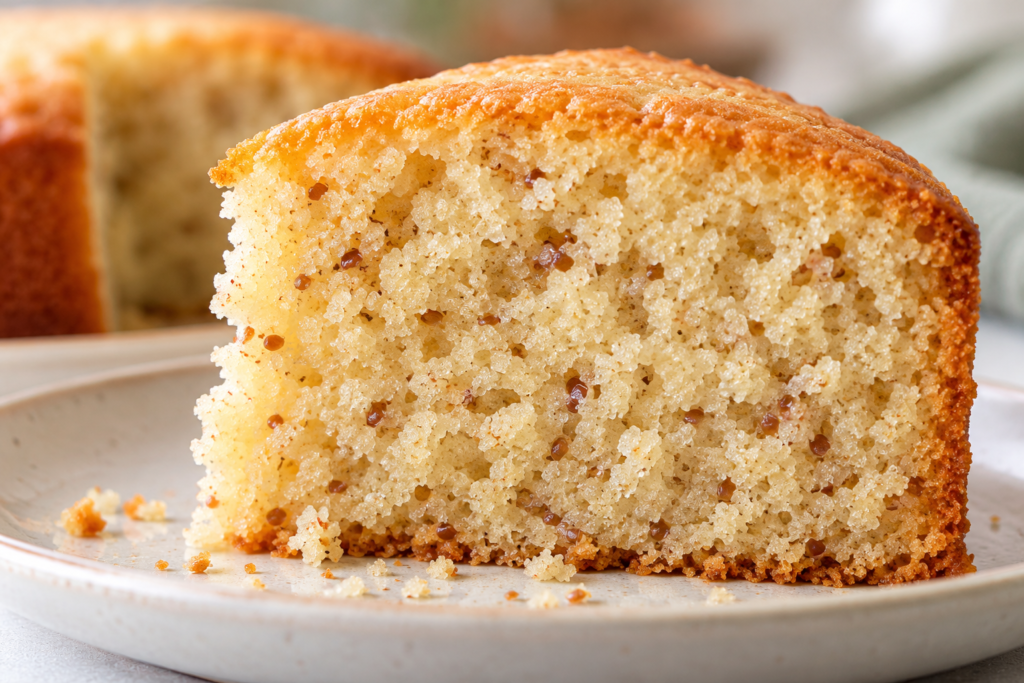
Small brown flecks in an otherwise soft cake
These may simply be flaxseed particles. If the cake has a pleasant texture and the flecks do not affect the eating experience, they may not indicate a baking fault.
A sandy or gritty mouthfeel
Coarsely ground flaxseed or flour may be responsible. Check the texture of both before deciding which ingredient needs attention.
Visible clumps or uneven patches
The flaxseed may not have hydrated evenly, or the gel may not have been incorporated properly into the batter.
A smooth but heavy crumb
The problem may have little to do with graininess. Ingredient proportions, mixing, raising agents or baking conditions may be affecting the cake’s texture.
A cake that rises and then sinks
Check whether the centre has baked sufficiently, along with the batter proportions and raising agents. A sinking cake does not automatically mean the flax egg is responsible.
A grainy cake with a wet centre
Two problems may be present. Investigate the texture of the ingredients separately from the cake’s doneness.
These clues are starting points, not definitive diagnoses. A wet centre does not automatically mean the flax egg is at fault, and a dense crumb does not necessarily mean you have added too much flaxseed.
Why Can Flax Egg Make a Cake Feel Grainy?
Flaxseed contains soluble components that form a thick, viscous gel when mixed with water. This gel helps bind ingredients in eggless baking.
However, flaxseed also contains insoluble particles that do not dissolve completely in water. These particles remain in the gel, which is why a flax egg is not perfectly smooth even when prepared correctly.
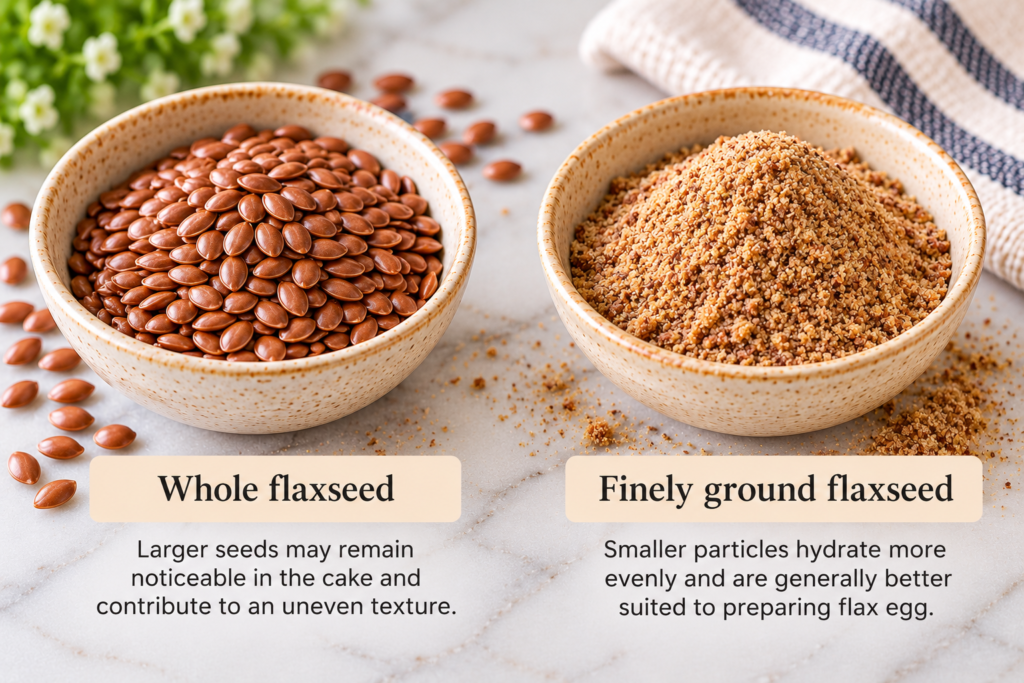
Coarsely ground flaxseed is more likely to leave noticeable particles in a cake. Finely ground flaxseed can help produce a less noticeable texture, but it does not guarantee a smooth crumb. The flour’s particle size, how well the ingredients hydrate, and the overall recipe also influence the finished texture.
The flour you use matters, too. Coarsely milled rice flour or millet flour can contribute to a sandy mouthfeel, particularly in gluten-free cakes.
How to Identify the Source of Graininess
Before changing the recipe, examine the ingredients.
- Check the flaxseed: Rub a small amount of ground flaxseed between your fingers. If it feels coarse, the particles may remain noticeable in the cake.
- Check the flour: Rub a little of the flour blend between your fingers. If it feels gritty, the flour may be contributing to the texture.
- Examine the flax gel: Look for dry clumps or unevenly hydrated particles. These may indicate that the mixture was not stirred thoroughly.
- Look at the crumb: Small, evenly distributed flecks may be normal, while irregular clumps suggest a different problem.
If you cannot identify the cause, make a small test batch and change only one variable, such as the fineness of the flaxseed. Compare the result with your original bake.
This helps you avoid changing the flour, liquid and flaxseed quantities all at once when only one ingredient may be responsible.
How to Prepare Flax Egg for Cake Batter
A common starting point for a flax egg is:
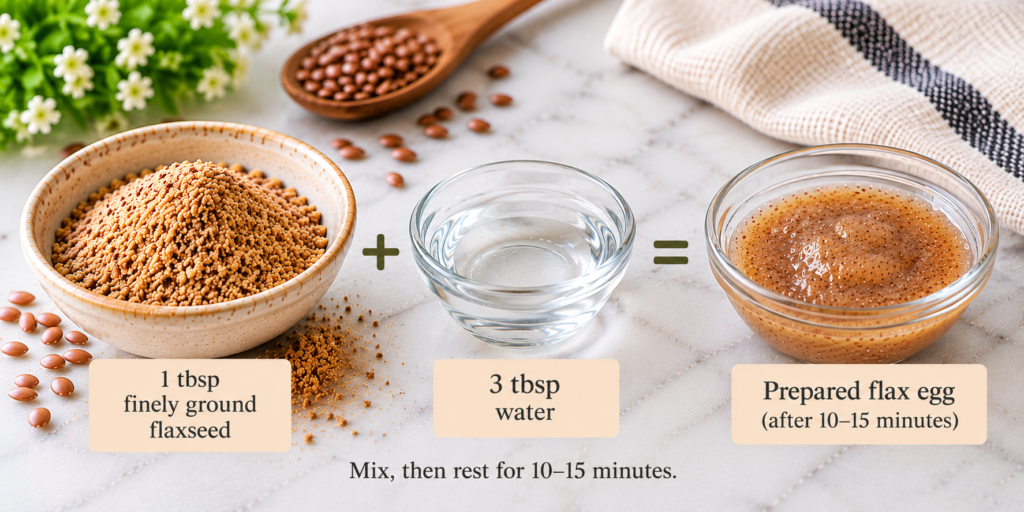
- 1 tablespoon finely ground flaxseed
- 3 tablespoons water
Mix thoroughly and leave to rest for about 10–15 minutes, or until a gel forms. Stir again before adding it to the batter.
This ratio is not a universal formula. The amount required depends on the recipe and the role the flax egg needs to perform. Follow a tested recipe’s quantities whenever possible rather than increasing the flaxseed or water simply to change the consistency.
I also use flaxseed gel in my Fudgy Gluten-Free and Vegan Brownies. In this recipe, flaxseed powder is mixed with water and left to thicken before being added to the batter. It is a practical example of how flax gel can be used in a tested gluten-free, vegan bake.
What Should a Properly Prepared Flax Egg Look Like?
A prepared flax egg should have a thick, gel-like consistency, with the ground flaxseed distributed reasonably evenly. It does not need to be completely smooth.
If you notice dry clumps, stir the mixture thoroughly and allow it a little more time to hydrate.
If the gel is evenly hydrated but still feels sandy, the flaxseed may be too coarse. More resting time will not remove the particles, so check the grind before adjusting the water.
Also, check the freshness of your flaxseed. If it has an unpleasant or rancid smell, do not use it.
Can Flax Egg Make a Cake Dense?
Yes, it can contribute to a heavier texture in some recipes, but the gel itself is not necessarily the problem.
Flax egg adds moisture, fibre and binding properties to a batter. If too much is used, it can affect the balance of the ingredients and make the crumb heavier.
Density can also result from insufficient aeration, excessive mixing, ineffective raising agents or incomplete baking. Eggs contribute aeration, emulsification and structure, and a flax egg does not automatically reproduce all these functions.
A recipe developed around eggs may therefore need adjustments before it works well with flax egg.
How to Diagnose a Dense Cake
Before changing the quantity of flaxseed, check the following:
- Flax-egg quantity: Did you use the amount specified in the recipe, or add extra?
- Batter consistency: Was the batter unusually thick, loose or sticky compared with what the recipe describes?
- Mixing method: Did you follow the mixing instructions? Unnecessary mixing or loss of incorporated air can affect the crumb.
- Raising agents: Were the baking powder or baking soda measured correctly, and were they still effective?
- Doneness: Was the centre fully baked before you removed the cake from the oven?
These checks help you work out whether the problem lies in the recipe, the way you mixed the batter or how the cake baked.
A cake can be both grainy and dense, but the two symptoms do not necessarily share a cause. Coarse particles affect mouthfeel, while density concerns the crumb and how the cake rises and sets.
Avoid adding extra flaxseed simply because the cake feels fragile or seems to need more binding. Too much flax gel can make the crumb heavier. Start with a tested formula and change one variable at a time.
When Should You Choose Another Egg Substitute?
Flax egg works well in many eggless cakes, particularly recipes that benefit from binding and moisture retention. However, it may not be the best choice for every cake.
A light, delicate sponge may require a different approach from a dense loaf cake or a muffin. The choice of egg substitute should depend on the structure and texture you want to achieve.
For a more detailed comparison, see Best Egg Substitutes for Eggless Cakes and Yogurt vs Flax vs Banana in Eggless Baking.
Can Gluten-Free Flour Make an Eggless Cake Grainy?
Yes. Gluten-free flour can contribute to graininess, especially when the flour is coarsely milled or the blend has not been developed for a fine cake crumb.
Rice flour and millet flour vary in particle size and how they absorb liquid. Even when a flour blend has the right overall proportions, a coarse texture can remain noticeable after baking.
Three factors are worth checking:
1. Particle size
Coarsely ground flour can leave a sandy sensation in the finished cake. A finer flour may produce a smoother crumb.
2. Hydration
Some gluten-free flours need time to absorb moisture. Inadequate hydration can affect the finished texture, although adding more liquid is not always the correct solution.
3. Flour blend
Gluten-free cakes rely on the balance of flours, starches, liquid and binding ingredients. Changing one component without considering the rest can affect the structure.
Do not automatically add water when a gluten-free batter feels thick. The correct consistency depends on the recipe and the flour blend.
For more guidance on choosing and working with gluten-free ingredients, see my Gluten-Free Baking Guide.
When Should You Check Your OTG?
If your cake is brown on the outside but wet in the centre, investigate the baking conditions rather than assuming the flax egg is responsible.
Check your oven temperature, rack position, pan size and baking time. An oven thermometer can help you determine whether your OTG is reaching the temperature you have set.
If the cake rises and then collapses, check the recipe proportions and raising agents as well as whether the centre was fully baked.
On the other hand, if the cake is completely baked but still feels sandy, examine the flaxseed and flour first.
More baking time is not a solution for every texture problem. Extra baking will not dissolve coarse flaxseed or flour particles and may leave the cake dry.
How to Test a Correction in Your Next Bake
Once you have identified the most likely cause, make one targeted change and compare the result with your previous bake.
For example, if the cake feels sandy and your flaxseed is coarsely ground, try a finer grind while keeping the other ingredients and baking conditions unchanged.
If the texture improves, you have a useful indication that the change helped. If it does not, investigate the next likely cause rather than changing several ingredients together.
A controlled comparison is more useful than several adjustments made at once.
Frequently Asked Questions
Will resting flax egg for longer make it less grainy?
Not necessarily. Resting helps the flaxseed form a gel, but it does not remove coarse particles. If the mixture is properly hydrated but still feels sandy, check the grind of the flaxseed.
How long should I rest flax egg before using it in a cake?
Approximately 10–15 minutes is a useful starting point. Look for a gel-like consistency rather than relying only on the clock. The exact time can vary with the fineness of the flaxseed and its absorbency.
Can I use flax egg in gluten-free cakes?
Yes, provided the recipe is designed for it or has been tested with that substitution. Gluten-free cakes depend on the balance of flour, starch, liquid, binders and raising agents, so replacing eggs in a conventional recipe may require more than a simple one-for-one substitution.
Should I bake my cake longer if it feels grainy?
Only if the cake is underbaked. If the centre is wet, check doneness and your oven conditions. If the cake is fully baked but feels sandy, additional baking will not remove the particles and may dry out the crumb.
Final Thoughts
When a cake turns out grainy after using a flax egg, the cause may be as simple as coarsely ground flaxseed or flour. Other texture problems, such as a dense crumb or a wet centre, may need a different correction.
After more than 25 years of baking, I have learnt that the best way to troubleshoot a cake is to understand what went wrong before changing the recipe. Often, one well-chosen adjustment is more useful than changing several ingredients at once.
Sharmila Sengupta | Baking Expert & Educator | 25+ Years of Baking Experience