
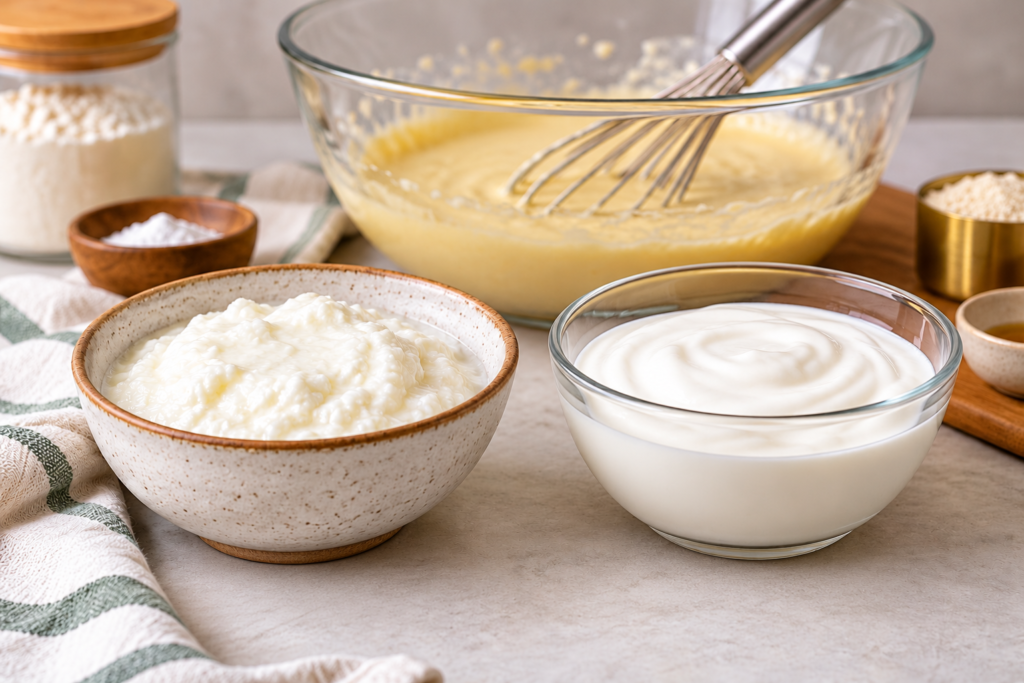
What Can I Use Instead of Yogurt in an Eggless Cake?
Have you started making an eggless cake only to discover that you have run out of yogurt? Or perhaps you have plain Indian curd at home and are wondering whether you can use it instead.
If you need a yogurt substitute in an eggless cake, the best option depends on your recipe, the ingredients available and whether you need to avoid dairy.
Yogurt adds moisture and body to cake batter. In some recipes, its acidity also reacts with baking soda and contributes to the cake’s rise. Replacing it with an ingredient that behaves differently can affect the batter’s consistency and the texture and moisture of the finished cake.
For many Indian eggless cake recipes, plain, unsweetened Indian curd is a practical first choice, provided its consistency is similar to that of the yogurt specified in the recipe. If you need a dairy-free option, plain, unsweetened plant-based yogurt may work. Other substitutes can be useful in specific recipes, but they are not automatically interchangeable in equal quantities.
1. Did Replacing the Yogurt Cause the Problem?
If your eggless cake turns out differently after you replace the yogurt, check what changed. The substitute may have affected the batter, but oven temperature, flour measurements, mixing and raising agents can also be responsible.
Start with the symptom rather than assuming the substitute is at fault.
The batter has become too thin
Compare the consistency of the substitute with the original yogurt. If it is much thinner, it may have changed the batter’s liquid balance. Do not immediately add flour, as this can make the cake dense or dry.
The cake sank in the centre
Check whether the cake was fully baked and whether the oven temperature was appropriate. If the problem started after the substitution, also consider the batter consistency and, in recipes using baking soda, the acidity of the replacement.
The cake is dense or heavy
Check your flour measurements and mixing method first. Then compare the quantity and consistency of the substitute with the original yogurt. If you test the recipe again, change only the substitute.
The centre is gummy
Excess moisture, insufficient baking or the flour blend and binder can all contribute to a gummy centre. Let the cake cool completely before assessing it, especially if you are using gluten-free flours.
The cake has not risen properly
Check the freshness and quantity of the raising agents. If the recipe uses baking soda, the acidity of the yogurt substitute may also matter. Avoid adding extra baking soda without reviewing the recipe, as too much can affect flavour and texture.
The cake is dry or firm after cooling
Check for overbaking first. If the baking conditions were appropriate, review the recipe’s liquid and fat balance and consider whether the substitute behaves differently from the original yogurt. Assess the cake after it has cooled completely.
My approach is simple: Check the most likely cause, then change one thing at a time. This makes it easier to understand what went wrong without introducing several new variables.
2. What Is the Best Yogurt Substitute in an Eggless Cake?
The best yogurt substitute in an eggless cake depends on your recipe. Some ingredients are closer to yogurt in consistency, while others provide moisture without necessarily supplying the same acidity or body.
Use the comparison below to decide which option is worth considering. There is no universal replacement quantity for every eggless cake, so whenever possible, follow a recipe tested with your chosen substitute.
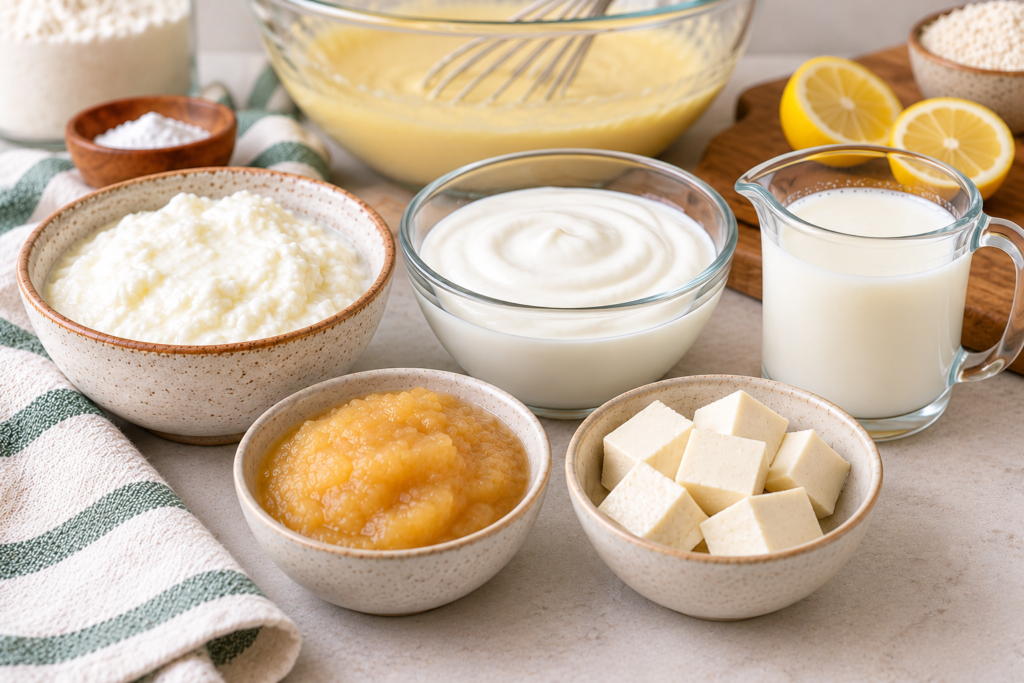
| Substitute | When to consider it | What to check before using it |
|---|---|---|
| Plain Indian curd (dahi) | Many Indian eggless cake recipes | Compare its thickness with the yogurt specified in the recipe. Acidity can vary, especially in homemade curd. |
| Plain, unsweetened dairy-free yogurt | Vegan or dairy-free cakes | Check the consistency and ingredients. Soy, coconut and other varieties can behave differently. |
| Milk with lemon juice or vinegar | Recipes formulated for acidified milk | Follow the recipe’s proportions. The mixture will generally be thinner than yogurt. |
| Buttermilk | Cakes developed or tested with buttermilk | Check the recipe’s liquid balance and acidity. |
| Sour cream or kefir | Recipes tested with these ingredients | Consider their consistency, fat content and acidity. |
| Applesauce | Recipes developed or tested with fruit purée | Account for the fruit solids, natural sweetness and possible changes to the crumb. |
| Silken tofu | Recipes formulated to use it | Consider how its moisture and body affect the finished cake. |
Plain Indian curd (dahi)
Fresh, plain, unsweetened Indian curd works in many eggless cake recipes. If its consistency is similar to the yogurt specified in your recipe, you can use the recipe’s quantity as a starting point—but do not assume that the result will be identical.
Consistency and acidity are not the same thing. This distinction matters particularly in recipes that use baking soda. Homemade curd can vary from batch to batch, so observe the batter and assess the finished cake before making further adjustments.
Plain, unsweetened dairy-free yogurt
If you need to avoid dairy, consider a plain plant-based yogurt with a consistency suitable for your recipe. Soy, coconut and other dairy-free products differ in composition, fat content and acidity. A recipe tested with your chosen product is the more reliable starting point.
Acidified milk or buttermilk
These may work in recipes specifically formulated for them, but they are generally thinner than yogurt. Follow a tested recipe rather than replacing yogurt with an assumed equal quantity.
Sour cream or kefir
These can work in suitable formulations, but their fat content, acidity and consistency differ. Use them in a recipe that specifies or has been tested with them.
Applesauce or silken tofu
Both are options for recipes developed or tested with these ingredients. Applesauce adds fruit solids and may increase sweetness; silken tofu contributes moisture and body. Neither is a universal replacement for yogurt.
My advice: If you are making a familiar Indian eggless cake, plain curd is a practical first option to consider. For other substitutes, choose a recipe tested with that ingredient rather than changing several parts of an established recipe at once.
3. What Is the Best Yogurt Substitute in an Eggless Cake?
Choosing an ingredient is only the first step. To understand why a substitution may affect your cake, look at three things: acidity, batter consistency and the flour blend.
Acidity: Why yogurt can matter when using baking soda
In some eggless cake recipes, yogurt supplies acidity that reacts with baking soda. This reaction releases carbon dioxide, which helps the batter rise.
If the replacement provides a different amount of suitable acidity, the leavening reaction may change. The effect depends on the recipe and whether other acidic ingredients are present.
Baking powder is different because it contains its own acid component. Some recipes use baking powder alone, while others combine it with baking soda to achieve the intended rise and texture.
What should you do? Check the recipe’s raising agents before changing the substitute or adjusting the quantity of baking soda. Do not add extra baking soda simply because the cake has not risen as expected; too much can leave an unpleasant taste and affect the crumb.
Batter consistency: Why thickness matters
Yogurt contributes moisture and body. A thinner replacement can make the batter more fluid, while a thicker one may make it heavier. Either change can affect how the cake’s structure develops during baking.
Adding flour immediately is not always the answer. Too much flour can leave the cake dense or dry, while adding extra liquid without checking the formulation can upset the moisture balance.
What should you do? Compare the batter with the consistency expected from your original recipe. If it looks noticeably different, investigate the quantity and properties of the substitute before making further adjustments.
Gluten-free eggless cakes need extra care
Gluten-free flours do not all absorb and retain moisture in the same way. Rice flour, millet flour, almond flour and different starches can produce different textures, even when the liquid quantity stays the same.
Binders such as xanthan gum and psyllium husk can help provide structure in many gluten-free formulations. If the moisture balance changes, the cake may develop a gummy centre, a crumbly texture or a heavier crumb.
What should you do? When testing a yogurt substitute in a gluten-free cake, keep the flour blend and binder unchanged. This makes it easier to assess the effect of the substitution without introducing several variables at once.
4. How to Test a Yogurt Substitute in Your Eggless Cake
If you already have an eggless cake recipe that works well, use it as your baseline. A controlled test will tell you more than changing several ingredients and trying to guess what went wrong.
Step 1: Record the original recipe
Note the yogurt quantity, flour blend, raising agents, tin size, oven setting and baking time.
Step 2: Change only the yogurt
Use your chosen substitute and leave the other ingredients unchanged. Do not simultaneously change the flour, liquid, raising agents or binder.
Step 3: Keep the baking conditions consistent
Use the same tin and oven setting, and follow the original baking instructions. If the cake is not fully baked at the stated time, continue baking as needed rather than removing it just to match the clock.
Step 4: Assess the cake after cooling
Once the cake has cooled completely, check its rise, centre, crumb, moisture and flavour. A warm cake can feel softer or more fragile, so assess the final texture after cooling.
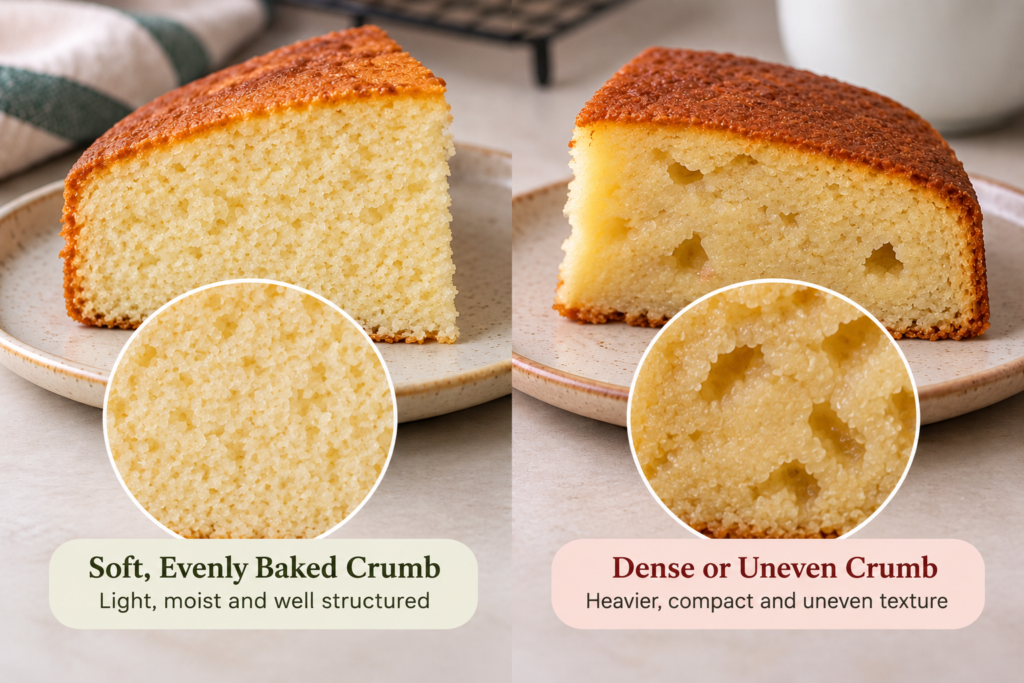
Step 5: Use the symptom to guide your next check
If the result is disappointing, investigate the most relevant cause before changing anything else.
- Sunken centre: Why Does My Eggless Cake Sink? Causes, Troubleshooting & Easy Fixes
- Dense crumb: Why Is My Cake Dense? 7 Reasons & How to Fix It
- Gummy centre: Why Is My Eggless Cake Gummy in the Middle? Causes & Easy Fixes
- Poor rise: Why Is My Egg-less Cake Not Rising? Causes & Easy Fixes
- Dry or firm cake after cooling: How to Make Eggless Cake Soft and Moist: A Practical Guide to a Tender Crumb
For a broader troubleshooting reference, visit the Eggless Baking Guide: Common Problems, Causes & Easy Fixes.
5. Frequently Asked Questions
Can I use curd instead of yogurt in an eggless cake?
Yes. Plain, unsweetened Indian curd works in many eggless cake recipes. You can start with the same quantity by weight when its consistency is similar to the yogurt specified in the recipe.
However, homemade curd can vary in thickness and acidity, so the result may not be exactly the same. Pay particular attention to this difference if your recipe uses baking soda.
Can I use milk instead of yogurt in an eggless cake?
Milk is thinner than yogurt and does not provide the same body. Milk mixed with lemon juice or vinegar may work in a recipe formulated for that combination, but I would not replace yogurt with milk in equal quantities without a tested recipe.
What can I use instead of yogurt in a vegan eggless cake?
Plain, unsweetened dairy-free yogurt is worth considering. Soy, coconut and other plant-based products differ in composition and acidity, so choose one suitable for your recipe. A recipe tested with your chosen product is the safer starting point.
Can I use applesauce instead of yogurt in a cake?
Only if the recipe has been developed or tested with applesauce. It contributes moisture and fruit solids and may make the cake sweeter or change its crumb. It also does not necessarily supply the acidity needed in a recipe that relies on baking soda.
Can I replace yogurt in a gluten-free eggless cake?
Yes, but test the substitute without changing the flour blend or binder at the same time. Gluten-free flours absorb moisture differently, and ingredients such as xanthan gum or psyllium husk affect the cake’s structure. Keeping the rest of the recipe unchanged makes it easier to assess the effect of the substitution.
Final Thoughts
If you have run out of yogurt while making an eggless cake, plain Indian curd is often the simplest place to start. If you need a dairy-free option, consider a plain plant-based yogurt that suits your recipe.
For other substitutes, pay attention to acidity, batter consistency and the balance of the remaining ingredients. If the cake does not turn out as expected, check the most likely cause first rather than changing several ingredients together.
A little careful observation will help you understand your recipe better and make your next eggless cake more predictable.
Sharmila Sengupta | Baking Expert & Educator | 25+ Years of Baking Experience