

Red Lentil Bread Problems: Why Is It Gummy or Dense?
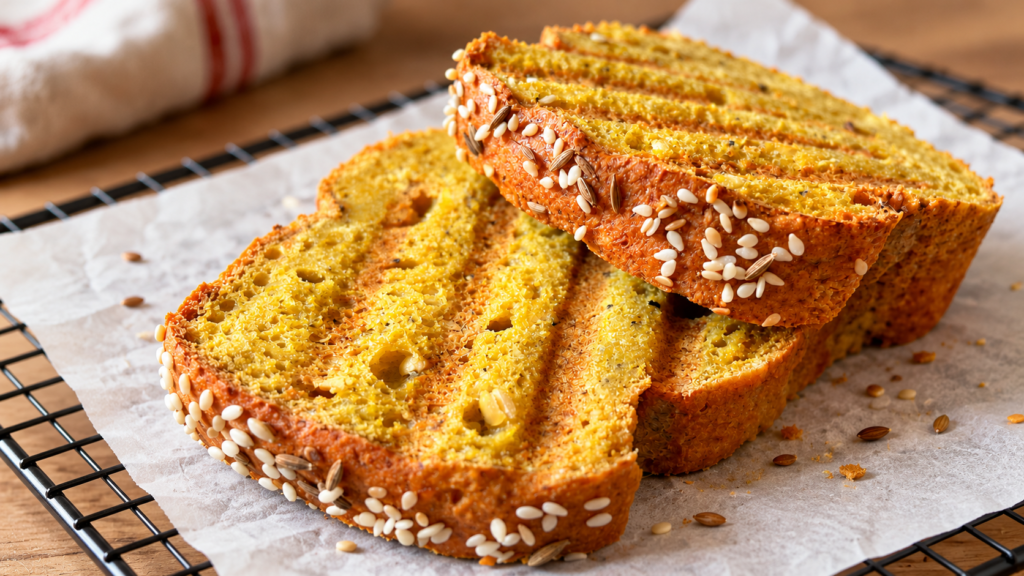
Red lentil bread problems can be frustrating, especially when the loaf looks beautifully baked on the outside but has a gummy centre, a compact crumb or a hollow space beneath the crust.
When a loaf does not turn out as expected, it is tempting to change the water quantity, add more psyllium husk or increase the oven temperature. I prefer to look at the crumb first. A moist loaf, a dense loaf and an underbaked loaf are not the same, and understanding the difference helps you decide what to do next.
In this guide, I’ll walk you through common red lentil bread problems, what to look for and how to troubleshoot them without making unnecessary changes to the recipe.
For more guidance on gluten-free ingredients and baking techniques, visit my Gluten-Free Baking Guide.
Quick Diagnosis: What Should You Check First?
| What you notice | Where to begin |
|---|---|
| Gummy bread after cooling | Check whether the crumb holds its shape or remains pasty. |
| Dense bread | Examine the crumb structure and lentil preparation. |
| Hollow space beneath the crust | Look at the crumb immediately below the gap. |
| Brown crust with a wet centre | Check the actual oven temperature and baking time. |
| Bread crumbles after cooling | Check the crumb structure and ingredient measurements. |
| Dough feels stiff or sticky | Check the consistency before adjusting the water. |
Find the symptom that most closely matches your loaf. Start with that observation rather than changing several things at once.
1. Why Is My Red Lentil Bread Gummy or Wet Inside?
Red lentil bread can have a naturally moist crumb. The important question is whether the bread holds its shape when sliced.
Allow the loaf to cool completely before cutting through the centre. Then examine the texture.
- Moist but holds together: The crumb may be perfectly acceptable if the slices remain intact and do not smear.
- Sticky and clings to the knife: Make sure the loaf has cooled completely before judging its texture.
- Pasty and smears like uncooked batter: The centre may not have baked through. Follow the oven and baking-time checks in Section 4.
Do not judge the loaf by moisture alone. The way the crumb holds together tells you much more.
2. Why Is My Red Lentil Bread Dense?
When troubleshooting red lentil bread problems, remember that a dense loaf is not necessarily an underbaked loaf. First, check whether the crumb is compact but holds together, or whether it has a pasty centre.
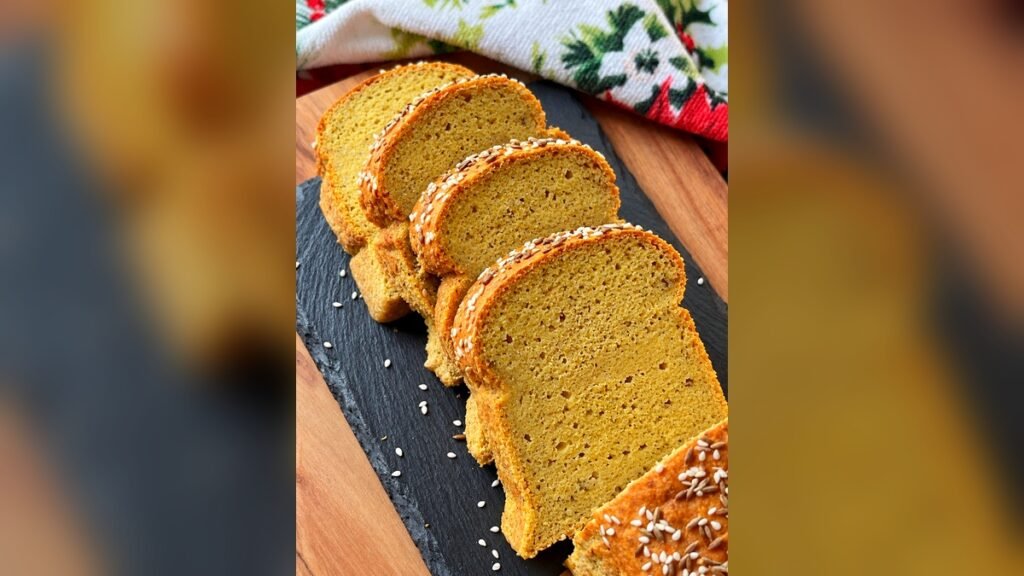
If the crumb is compact but fully baked
Check that the lentils were soaked for approximately eight hours, drained and rinsed thoroughly, and blended as directed. Also confirm that you weighed the ingredients accurately.
If you followed the recipe, record the result before changing the ingredient proportions. A compact crumb alone does not tell you which ingredient, if any, needs adjusting.
If the crumb is dense and pasty
Do not immediately add more psyllium husk or change the water quantity. First, check your oven temperature and baking time, as explained in Section 4.
If the loaf was baked at the intended temperature and still has a pasty centre, review the baking time before experimenting with ingredient ratios.
3. Why Is My Red Lentil Bread Hollow at the Top?
A hollow space beneath the crust is a clue, but it does not identify the cause on its own. Look at the crumb immediately below the gap.
- Wet or pasty: Investigate whether the centre baked through.
- Compact but fully baked: Review the lentil preparation and ingredient measurements.
- Evenly baked with a normal crumb: Note the result and see whether the hollow appears again before changing the recipe.
Use the specified 8 × 4-inch loaf pan. A different pan changes the shape and depth of the loaf, which can affect how it bakes.
4. Why Is My Red Lentil Bread Brown Outside but Wet Inside?
A brown crust does not necessarily mean the centre is fully baked. If the outside looks ready but the middle remains pasty, check the oven and baking time before changing the ingredients.
First, check the actual oven temperature. Use an oven thermometer to see whether your OTG is close to the recipe setting of 180°C (350°F). The temperature dial alone may not reflect the temperature inside the oven.
Next, review the baking time. If the oven is close to the intended temperature but the centre remains pasty, the loaf may need additional baking time. Continue baking while monitoring the crust so it does not become excessively dark.
A toothpick can provide a useful indication, but it is not a guarantee that the centre is fully baked. Follow the tested baking time, allow for oven variation and assess the cooled crumb before deciding whether the loaf has baked through.
If you are unsure about preheating, oven settings or rack position, read my guide on how to use an oven for baking. It explains how to check your oven’s temperature and understand the factors that can affect baking results.
5. Why Does My Red Lentil Bread Crumble or Feel Sticky?
If the bread crumbles after cooling
Let the loaf cool completely before assessing its texture. If it still breaks apart easily, check that the psyllium husk, xanthan gum and other ingredients were weighed accurately.
If your measurements match the recipe, record the result before experimenting with a binder adjustment. Change one variable at a time so you can identify whether the adjustment actually helps.
If the mixture feels stiff or sticky
The recipe starts with 275 g of water. Use this measured quantity as your starting point rather than adding extra water automatically.
If the mixture is too stiff to handle using the tested method, add water gradually, mixing and checking the consistency after each addition. Psyllium husk absorbs water, so small additions are easier to assess than a large adjustment.
Record any extra water you use so you can reproduce the result in your next batch.
6. Red Lentil Bread Recipe
Ingredients
- Red lentils — 350 g
- Psyllium husk — 35 g
- Water — 275 g, plus additional water only if needed according to the tested method
- Coconut flour — 10 g
- White rice flour — 20 g
- Pink salt — 5 g
- Turmeric powder — 1 teaspoon
- Baking soda — 5 g
- Xanthan gum — ½ teaspoon
- Olive oil — 30 g
- Apple cider vinegar — 2 tablespoons
For decoration
- Cumin seeds — 1 tablespoon
- White sesame seeds — 1 tablespoon
Weighing the ingredients makes it easier to reproduce the recipe and compare results between batches.
Method
Step 1: Soak and drain the lentils
Soak the lentils in water overnight, for approximately eight hours. Drain and rinse them thoroughly.
Step 2: Prepare the oven and pan
Preheat the oven to 180°C (350°F). Grease an 8 × 4-inch loaf pan and line it with parchment paper.
Step 3: Blend the lentils and psyllium husk
Combine the drained lentils with the psyllium husk, then transfer the mixture to a food processor. Add the measured water and blend until a sticky consistency is achieved, scraping down the sides as needed.
Step 4: Form the dough
Transfer the lentil mixture to a large bowl. Add the coconut flour, white rice flour, pink salt, turmeric powder, baking soda, xanthan gum, olive oil and apple cider vinegar.
Mix with your hands to form a smooth dough. If it is too stiff to handle using the tested method, add extra water gradually, mixing and checking the consistency after each addition. The amount needed may vary.
Step 5: Prepare the loaf
Place the dough in the prepared loaf pan. Level the top with a spatula and sprinkle the cumin and white sesame seeds evenly over the surface.
Step 6: Bake
Bake in the centre of the preheated oven at 180°C (350°F) for approximately 50–55 minutes, following the timing established for this recipe.
Baking time can vary between ovens. Use the toothpick test as one indication, not the sole measure of doneness. Allow the loaf to cool completely before checking whether the crumb holds its shape and the centre is fully baked.
Step 7: Cool the bread
Let the loaf cool in the pan for 30 minutes. Lift it out using the parchment paper and transfer it to a wire rack. Cover it with a cloth and cool for approximately another hour before slicing. If the centre is still warm, allow more time.
Enjoy your gluten-free, vegan red lentil bread!
7. How to Store Red Lentil Bread
- Room temperature: Up to two days in an airtight container.
- Refrigerator: Approximately five to seven days in a sealed container.
- Freezer: Up to three months when properly wrapped.
Allow the bread to cool completely before storing it. For freezing, slice the loaf and wrap the portions individually so you can take out only what you need.
To reheat a slice, wrap it in a microwave-safe paper towel and heat for about 20 seconds. Repeat if necessary, checking that the bread does not dry out.
Learn More About Gluten-Free Bread Baking
If you would like structured instruction in making bread without maida, wheat or eggs, explore my Gluten-Free Bread Baking Class.
A Final Troubleshooting Tip
When dealing with red lentil bread problems, write down what you observe before changing the recipe.
- Does the loaf hold its shape when sliced?
- Is the centre moist, sticky or pasty?
- Is the crust browned before the centre is ready?
- Does the actual oven temperature match the setting?
- Did you follow the measured ingredients and tested method?
These details help you decide what to investigate next. Make one change at a time and note the result.
That way, each loaf teaches you something useful, and you can improve your results without changing ingredients unnecessarily.
Sharmila Sengupta | Baking Expert & Educator | 25+ Years of Baking Experience