MY book

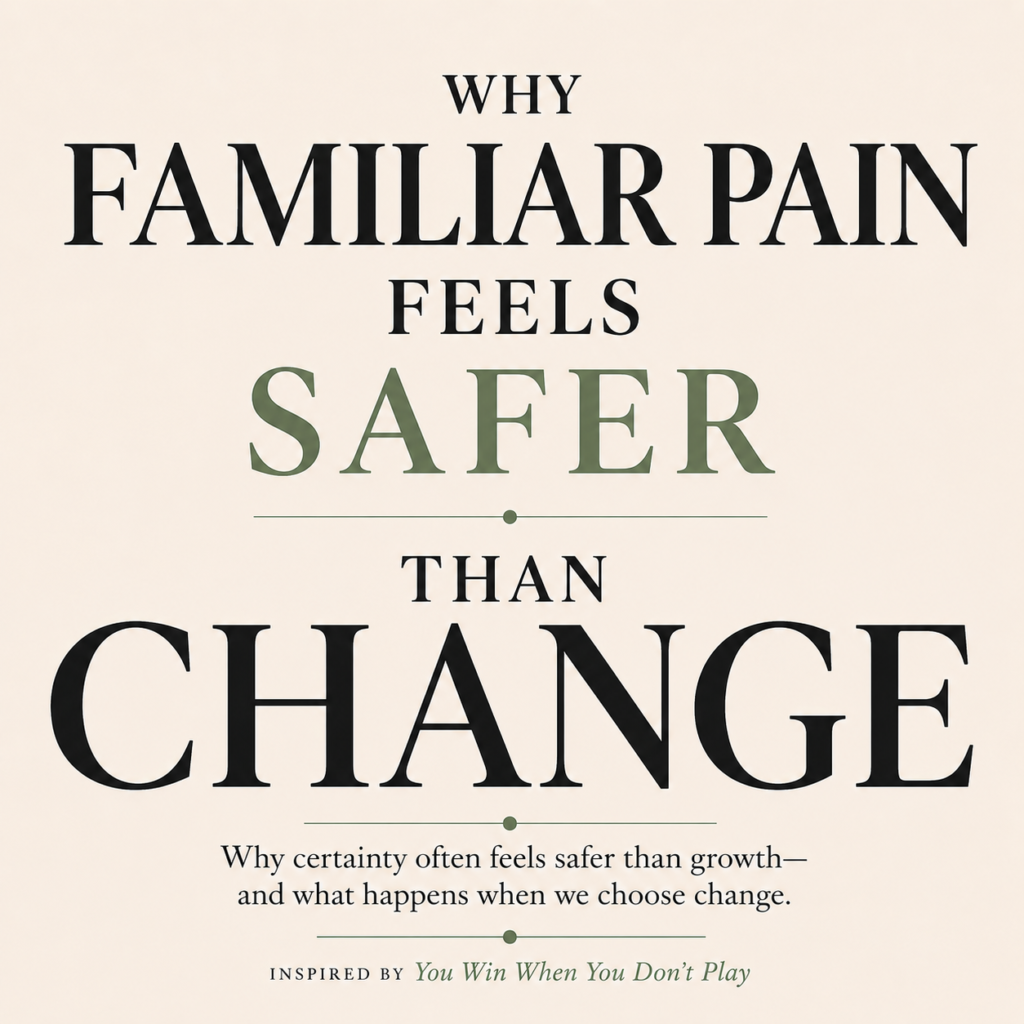
Editorial blog featured image titled "Why Familiar Pain Feels Safer Than Change" exploring fear of change, self-trust, emotional patterns, uncertainty, and personal growth.

Why Familiar Pain Feels Safer Than Change

The Hidden Psychology of Staying Stuck Why do we stay in situations we’ve already outgrown? Understanding why familiar pain feels safer than change can help us recognize emotional patterns, overcome the fear of uncertainty, and build the self-trust needed for lasting personal growth. Familiar pain often feels safer than change because the brain prefers certainty

Why Familiar Pain Feels Safer Than Change Read More »

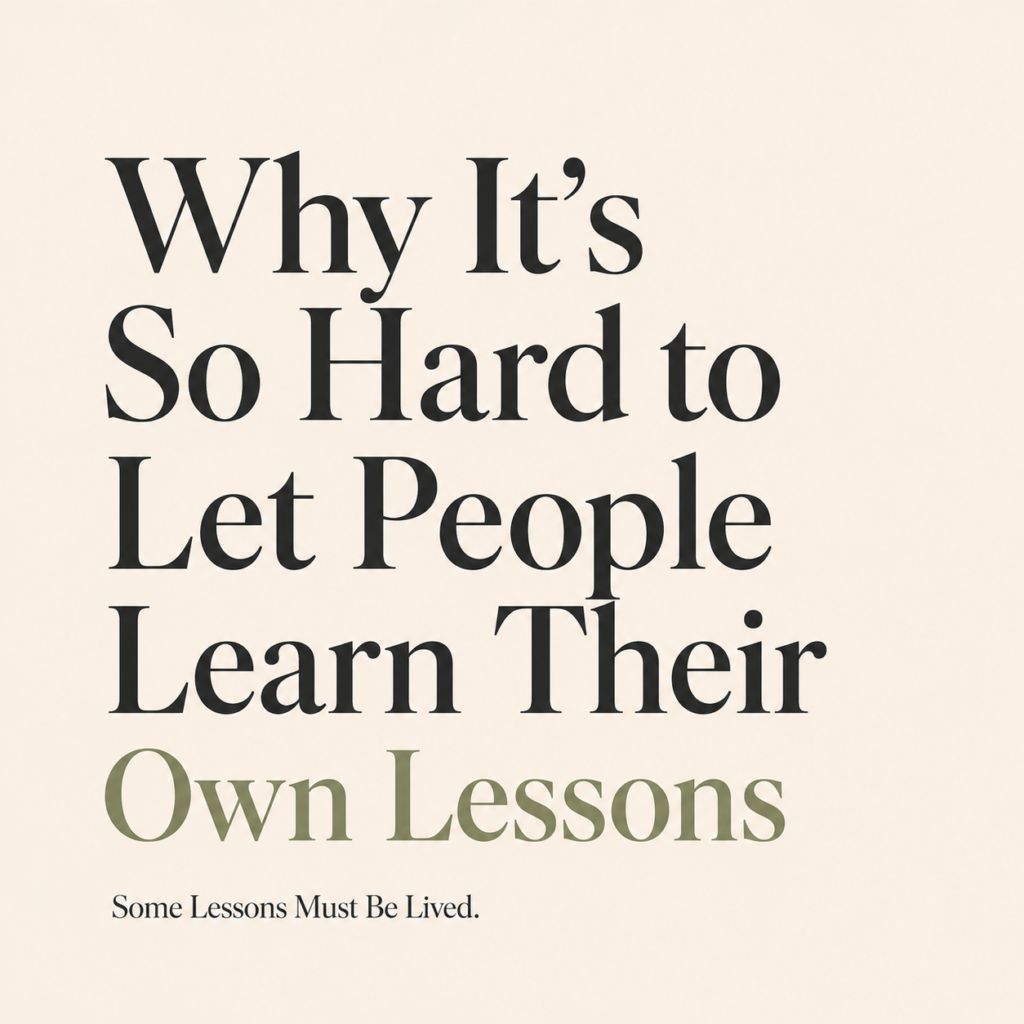
Editorial blog featured image for Why It's So Hard to Let People Learn Their Own Lessons, exploring learning through experience, personal growth, self-discovery, emotional maturity, and wisdom gained through life lessons.

Why It’s So Hard to Let People Learn Their Own Lessons

Many of life’s most important lessons emerge through experience, self-discovery, emotional maturity, and personal insight. Few things are more frustrating than watching someone you care about ignore advice you know could help them. You see the warning signs. You see the consequences coming. You can almost predict how the situation will unfold. Yet no matter

Why It’s So Hard to Let People Learn Their Own Lessons Read More »

Why You Apologize Even When You Did Nothing Wrong blog featured image about emotional responsibility, people-pleasing, healthy boundaries, and excessive apologizing.

Why You Apologize Even When You Did Nothing Wrong

Learn how people-pleasing, emotional responsibility, and weak boundaries lead to over-apologizing. Many people find themselves saying “sorry” even when they have not made a mistake. Perhaps a friend seemed disappointed, a colleague appeared irritated, or a family member reacted negatively to a decision you made. Even though you had done nothing wrong, you apologized anyway.

Why You Apologize Even When You Did Nothing Wrong Read More »

People Pleasing and Emotional Exhaustion blog featured image explaining how people-pleasing, emotional labor, approval seeking, and weak boundaries can lead to emotional exhaustion and burnout.

When Caring Becomes Carrying

People Pleasing and Emotional Exhaustion People pleasing and emotional exhaustion often go hand in hand. Many people who constantly put others first eventually find themselves emotionally drained, overwhelmed, and struggling to protect their own wellbeing. Caring about other people is a beautiful quality. It helps us build meaningful relationships, support loved ones through difficult times,

When Caring Becomes Carrying Read More »

When Other People's Expectations Become Your Burden blog featured image about people-pleasing, weak boundaries, emotional exhaustion, self-worth, and approval seeking.

When Other People’s Expectations Become Your Burden

How people-pleasing, approval seeking, weak boundaries, emotional labor, and the need for validation can lead to emotional exhaustion and emotional burnout. Why Do Other People’s Expectations Feel So Heavy? Do you constantly worry about disappointing others? Do you find yourself saying yes when you want to say no? If other people’s expectations often feel heavier

When Other People’s Expectations Become Your Burden Read More »

Why You Feel Drained by Other People's Problems blog featured image about emotional exhaustion, people pleasing, weak boundaries, emotional overwhelm, and protecting your energy.

Why You Feel Drained by Other People’s Problems

If you constantly worry about other people’s emotions, carry burdens that are not yours, and struggle to switch off mentally, you may be experiencing emotional exhaustion, emotional overwhelm, and chronic stress. Many people who care deeply about others absorb emotions, worries, and responsibilities that were never theirs to carry. Over time, this emotional labor can

Why You Feel Drained by Other People’s Problems Read More »

Why You Feel Emotionally Exhausted All the Time blog featured image about emotional exhaustion, overthinking, chronic stress, mental fatigue, emotional burnout, and feeling emotionally drained.

Why You Feel Emotionally Exhausted All the Time

You may feel emotionally exhausted because of chronic stress, overthinking, people-pleasing, emotional labor, weak boundaries, or constantly seeking validation. Emotional exhaustion occurs when your mental and emotional energy is depleted faster than it can be restored. If you feel emotionally drained even after resting, your exhaustion may not be physical. It may be the result

Why You Feel Emotionally Exhausted All the Time Read More »