
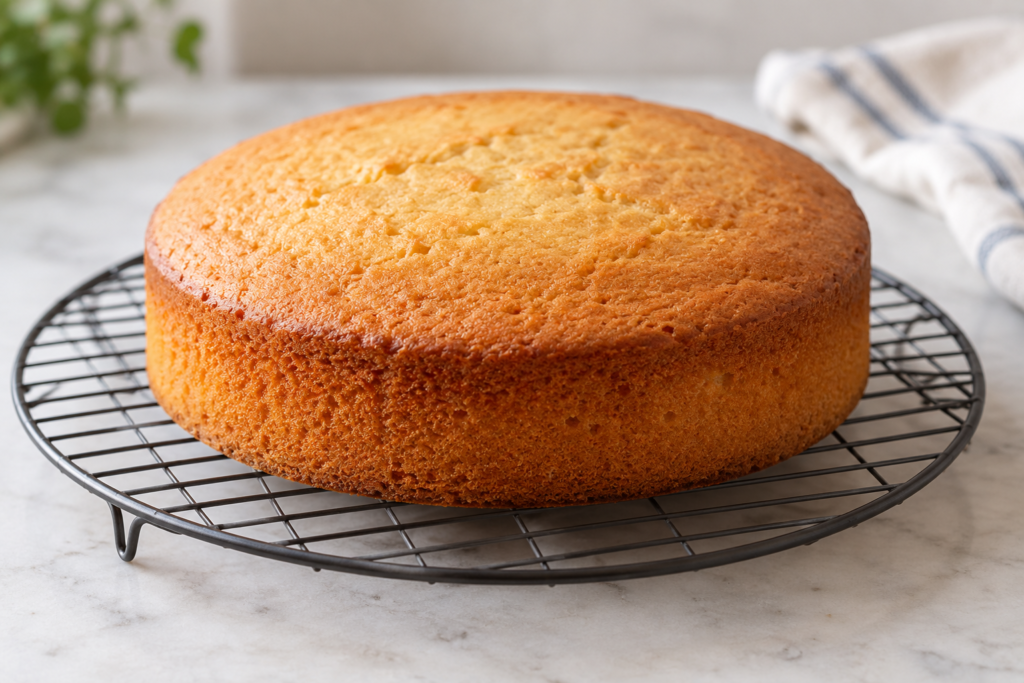
How to Cool a Cake Properly: Avoid a Soggy Bottom, Crumbling and Other Cooling Problems
Your cake has come out of the oven, but how to cool a cake properly is the next question. How long should it rest before you remove it from the tin? And what if the bottom feels damp, the cake breaks when turned out, or the centre sinks as it cools?
Before changing your method, look at the cake itself. Is the centre wet or simply moist? Does the cake break during removal, or crumble when sliced? Did the surface become sticky only after you covered it?
These observations help you narrow down the problem instead of changing several things at once.
Cooling helps a cake settle and become easier to handle, but it cannot correct problems caused by underbaking or a weak crumb structure. The key is to identify what has gone wrong before deciding what to do next.
If you are troubleshooting other eggless cake problems, my Eggless Baking Guide: Common Problems, Causes & Easy Fixes offers further guidance on identifying common baking problems and understanding what to check.
Quick Problem Finder: What Should You Check First?
| What you notice | What to check first |
|---|---|
| Wet or pasty centre | Check whether the cake is fully baked |
| Sticky surface after covering | Look for signs of condensation |
| Damp bottom | Check whether the centre is baked through and whether moisture is trapped underneath |
| Cake breaks when removed from the tin | Check the recipe’s recommended resting time and removal method |
| Cake crumbles when sliced | Review the flour blend, binding ingredients and moisture balance |
| Centre sinks during cooling | Check doneness, then review the recipe proportions and oven conditions |
| Frosting slides or melts | Check whether the cake has cooled completely |
Use these checks to narrow down the likely problem. The sections below explain how to interpret what you find and what to do next.
1. How to Cool a Cake Properly: When to Remove It from the Tin
There is no single cooling time that works for every cake. The right approach depends on the recipe, the size of the cake, its structure and the type of tin you have used.
For many everyday cakes, resting in the tin for around 10–15 minutes is a useful starting point, but it is not a fixed rule. Always follow the recipe’s instructions, especially for delicate cakes.
During this initial rest, the cake has time to settle and become easier to handle. Turning it out too soon may cause a fragile crumb to break, while leaving it in the tin for longer than the recipe recommends can sometimes trap moisture.
Once the cake is ready to turn out:
- Check the recipe’s instructions for removing it from the tin.
- If appropriate, loosen the edges gently with a thin spatula or knife.
- Place a wire rack or suitable plate over the tin and turn the cake out carefully.
- Lift the tin away without pulling at the cake.
- Let the cake cool further on a wire rack if the recipe allows.
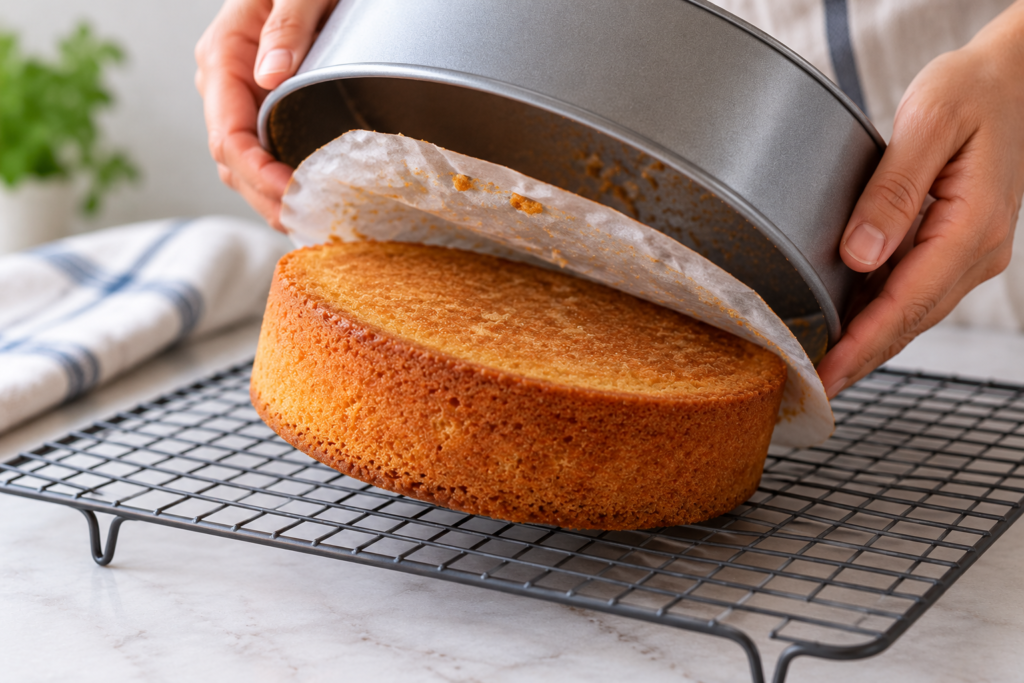
A wire rack allows air to circulate around the cake, including underneath it. This is particularly helpful when you want to prevent moisture from collecting at the base.
However, some cakes need a different approach. Delicate cakes may need to remain in their tins, while chiffon and angel food cakes are commonly cooled upside down according to the recipe and tin design. Do not turn out or invert a cake simply because another recipe recommends it.
If the cake resists release or seems fragile, stop and check the recipe rather than forcing it.
2. Why Does a Cake Have a Soggy or Damp Bottom?
A damp bottom can have more than one cause. Before changing your baking method, look at the texture. Is the centre wet and pasty, is the cake gummy throughout, or has only the surface become sticky after covering? Each clue points towards a different possibility.
The centre is wet or pasty
If the middle is wet while the edges appear set, the cake may not have finished baking.
Check the recipe’s doneness cues. A skewer should generally not come out coated in wet batter, although moist crumbs may be normal for some cakes. For dense or delicate cakes, a skewer test alone may not be enough.
Consider whether the tin size, batter depth, oven temperature or baking time differed from the recipe.
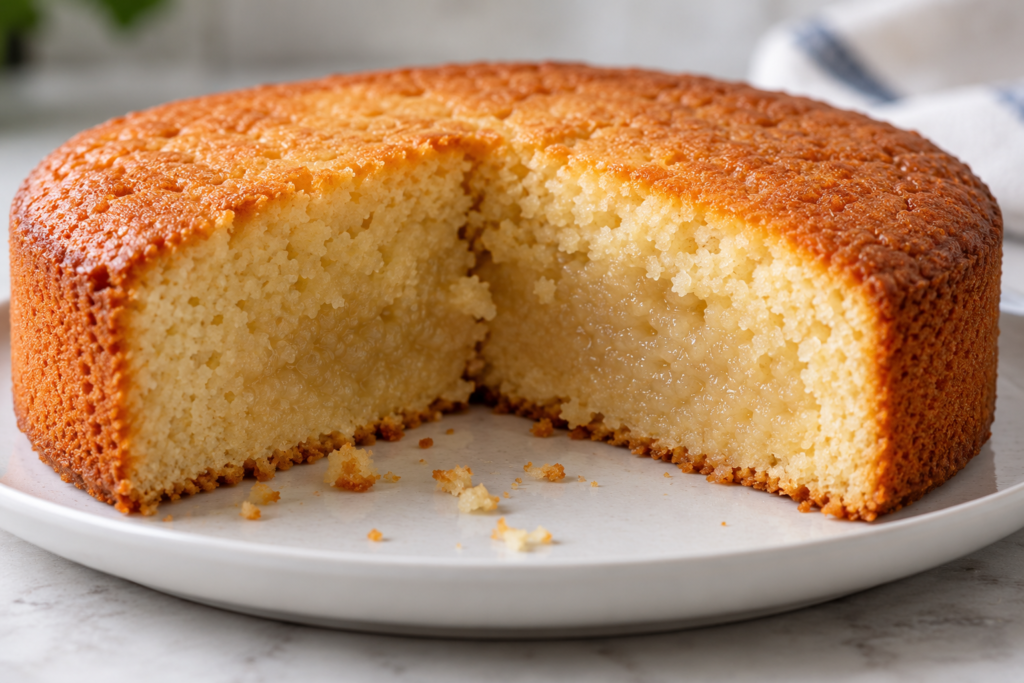
A wire rack improves airflow; it does not finish baking an underbaked cake. If the centre is still wet, focus on whether the cake has baked through.
The surface becomes sticky after covering
If the cake seemed fine initially but developed a sticky surface after being covered, condensation may be contributing to the problem.
A warm cake releases steam. When moisture becomes trapped under a tight cover, it can settle back onto the surface.
For an ordinary cake without perishable fillings or toppings, allow the steam to escape before covering it airtight. Once cooled as directed, store the cake according to the recipe.
If the cake contains cream, custard or another perishable filling or topping, follow the recipe’s refrigeration and food-safety instructions rather than delaying refrigeration to avoid condensation.
The cake feels gummy throughout
A gummy texture throughout the cake calls for a closer look at the recipe, not just the cooling method.
Check the ingredient proportions, liquid balance, mixing method and raising agents. In gluten-free baking, the flour blend matters too. Rice flour, millet flour, almond flour and different starches vary in their absorption and structural properties.
Review any substitutions you made and check whether the recipe’s method was followed. Change one variable at a time so you can identify what improves the result.
If your eggless cake repeatedly develops a sticky or gummy centre, read Why Is My Eggless Cake Gummy in the Middle? for more troubleshooting guidance.
The base feels damp after cooling on a plate
A solid plate restricts airflow underneath the cake and may contribute to a moist or sticky base.
If the centre is fully baked and the dampness is mainly on the underside, try cooling the cake on a wire rack if the recipe’s method allows. If the dampness accompanies a wet centre or a gummy crumb, investigate the baking process and recipe instead of assuming that airflow is the only issue.
A wire rack can help moisture escape from the base, but it cannot correct an underlying baking or recipe problem.
3. Why Does an Eggless Cake Crumble or Break After Cooling?
A cake that breaks while being removed from the tin and one that crumbles when sliced may have different problems. The timing matters.
The cake breaks when you turn it out
The cake may not have rested long enough, or its structure may be too delicate to turn out in the way you attempted.
Follow the recipe’s cooling instructions and avoid forcing the cake from the tin. Some cakes need to settle before removal; others are designed to cool in the tin.
If the cake continues to break despite following the recommended method, consider whether the recipe produces a particularly fragile crumb.
The cake crumbles when you slice it
If the cake has cooled completely but falls apart when sliced, investigate the crumb structure rather than assuming that cooling is the only cause.
Eggless cakes rely on other ingredients to provide binding and structure. Gluten-free cakes also lack the gluten network found in wheat-based cakes. The flour blend, starches, binding ingredients, moisture balance, mixing and baking conditions all influence how well the cake holds together.
Review your ingredient measurements and any substitutions. If the problem occurs repeatedly, the recipe’s binding system and flour proportions may need attention.
For a more detailed explanation, see Why Does My Eggless Cake Crumble?
4. Why Does a Cake Sink While Cooling?
If the centre dips as the cake cools, compare the centre with the edges and consider whether anything changed in the recipe or baking setup. These clues can help narrow down what to investigate, but they do not confirm a single cause.
- The centre is wet, but the edges are set: Underbaking in the middle is one possibility. Check the recipe’s doneness cues and whether the cake baked for long enough.
- The centre sinks even though the crumb appears baked: Review the oven temperature and the amount of raising agent used, along with the recipe’s proportions.
- The problem started after changing the recipe or tin size: Check ingredient quantities and tin dimensions. Changes in batter depth or ingredient proportions can affect how the cake bakes and sets.
Compare the result with your usual bake and change one variable at a time. If the problem persists, investigate the recipe and oven conditions together rather than assuming cooling alone is responsible.
If your cake repeatedly sinks as it cools, read Why Does My Eggless Cake Sink? for a more detailed look at underbaking, excess moisture, leavening and cake structure.
5. How to Cool a Cake Properly Before Slicing, Frosting or Covering
The cake’s intended use matters just as much as the time it has spent cooling.
Before slicing
Let the cake cool sufficiently for its crumb to settle. Cutting too early can compress a delicate crumb or make the slices appear gummy, even when the cake has been baked properly.
This is particularly relevant to eggless and gluten-free cakes, although the exact cooling time depends on the recipe. Follow the recipe’s instructions rather than relying on a universal waiting period.
Before frosting
Allow the cake to cool throughout before applying frosting unless your recipe specifically instructs otherwise. A warm cake can soften buttercream, melt certain frostings or cause a topping to slide.
For layered cakes, check that the centre is cool as well as the surface. Some recipes recommend chilling the layers before assembly, so follow the method specified for your cake.
Before covering or storing
For an ordinary cake without perishable fillings or toppings, let steam escape before covering it tightly. Trapped moisture can lead to condensation and a sticky surface.
Once the cake has cooled as directed, store it according to the recipe. Cakes containing cream, custard, cream cheese frosting or other perishable ingredients may require refrigeration. Follow appropriate food-safety guidance rather than leaving such cakes at room temperature until completely cool.
Frequently Asked Questions
Can I put a hot cake straight into the refrigerator?
It depends on the cake and its ingredients. For an ordinary, unfilled cake, follow the recipe’s cooling and storage instructions. If it contains cream, custard or other perishable ingredients, prioritise food safety and refrigerate it as required rather than leaving it out simply to cool completely.
Can I cover a cake while it is still warm?
For an ordinary cake without perishable fillings or toppings, allow steam to escape before covering it tightly. Trapped moisture can cause condensation and a sticky surface. If the cake contains perishable ingredients, do not delay necessary refrigeration just to avoid condensation.
Final Thoughts
Cooling is an important part of baking, but it is only one part of the process. When a cake does not turn out as expected, consider its texture, the recipe, the flour blend and the baking conditions before assuming that cooling was the cause.
With eggless and gluten-free cakes, understanding how the ingredients work together can be especially helpful. Observe the result, change one variable at a time, and use what you learn to guide your next bake.
The aim is not just to cool the cake correctly, but to understand what the cake is telling you.
Sharmila Sengupta | Baking Expert & Educator | 25+ Years of Baking Experience